


- Shashi Shekhar, a former IAS officer, played a key role in shaping India’s energy and water policies through initiatives such as the Energy Conservation Act of 2002 and the creation of the Bureau of Energy Efficiency.
- He challenged traditional water management approaches by advocating water budgeting, groundwater conservation, and ecosystem-based river management instead of relying solely on dams and supply-side solutions.
- His career highlights the importance of long-term institutional reform, with his ideas on sustainable water and river governance becoming increasingly relevant as India faces growing environmental and water security challenges.
There’s a type of courage you don’t always notice, but it takes real guts and a special kind of patience: the courage to challenge the system from inside. Think about the researcher who puts out findings nobody wants to hear, or the judge who gives an unpopular verdict. Then there’s the administrator who tells the government its most basic assumptions are dead wrong. That last form of courage sums up Shashi Shekhar’s career. He joined the Indian Administrative Service in 1981, Tamil Nadu cadre, and over the years, he’s left his mark on India’s energy, water, and rivers which are three issues that will tell the story of the country’s environmental future. You might not recognize his name, and honestly, that’s not unusual. People rarely remember the folks who build institutions, especially in a media world obsessed with political.
celebrities. But if you’ve heard of the Energy Conservation Act of 2002, the Bureau of Energy Efficiency, or noticed the shift from just building dams to actually understanding water ecosystems in government talk, you’re seeing Shashi’s fingerprints. His push to treat rivers as living systems, not just infrastructure, is another sign of his impact. These changes still ripple through India’s policies today.
From Rocks to Reforms
Shashi Shekhar studied geology at Patna University before cracking the IAS. Geology wasn’t just a background detail. Studying rocks means you learn how systems connect, how an action in one place messes with things somewhere else, how underground water links to rivers, how long-term changes unfold. These are exactly the kinds of perspectives India’s water and energy policies have missed. Shashi kept trying to weave that systems thinking into big, complex bureaucracies built on simple, convenient assumptions.
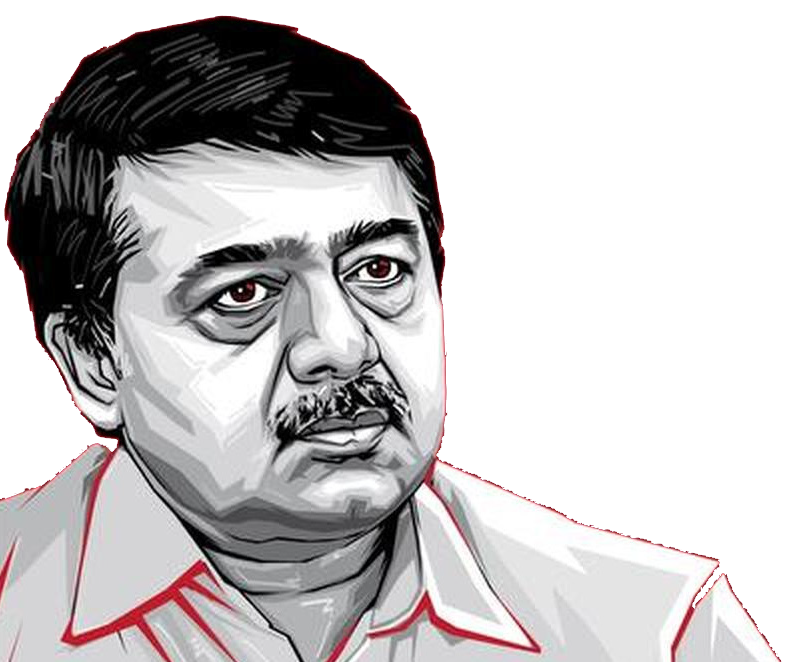
In his early days, He served as a collector in Pudukkottai and The Nilgiris, senior stints in the Municipal and Water Department, as well as roles in transport and urban infrastructure finance. Running agencies like Tamil Nadu Minerals Limited and the Urban Development Fund gave him a rare, hands-on sense of how state governments put big projects together. When he moved to Delhi for a central government post as Joint Secretary in the Ministry of Power, he brought both street-level experience and a habit of seeing the bigger picture.
Building Energy Governance from Scratch
The Energy Conservation Act of 2002 stands out as Shashi’s clearest legislative legacy. Multiple sources, including profiles by the World Resources Institute and the Sadhguru Encyclopedia credits him with drafting what eventually became this cornerstone law. The Act did a lot: it forced energy-hungry industries to follow efficiency norms, mandated energy audits, kicked off the Energy Conservation Building Code, and, maybe most important, set up the Bureau of Energy Efficiency (BEE).
Shashi was BEE’s first Director-General. And here’s what people often miss, he didn’t just write a law and walk away. He actually built the system to make that law work on the ground. That meant setting up rules, training teams, sonvincing industries, and building the data pipelines needed to track how much energy people really used. The Bureau of Energy Efficiency has since become a pillar of India’s energy policy, and the appliance standards it set up have changed. Shashi was BEE’s first Director-General. And here’s what people often miss, he didn’t just write a law and walk away. He actually built the system to make that law work on the ground. That meant setting up rules, training teams, convincing industries, and building the data pipelines needed to track how much energy people really used. The Bureau of Energy Efficiency has since become a pillar of India’s energy policy, and the appliance standards it set up have changed what people buy and how homes use power. Those origins trace straight back to Shashi’s work.
Later, at the Ministry of New and Renewable Energy, Shashi pushed a new idea in the 12th Plan draft: India shouldn’t forever subsidize wind and solar. They needed a real market, not endless welfare. At the time, most people didn’t see it that way. But since then, Indian solar prices fell from around Rs 17 per unit in 2010 to below Rs 2 by 2020 in competitive bids — a drop documented in MNRE and CERC auction records. Sure, price drops have had many causes but treating renewables as a real market was a leap the system had to make before the rest followed.
Challenging Water Orthodoxy
When Shashi became Secretary at the Ministry of Water Resources, River Development and Ganga Rejuvenation, he walked into a ministry run by the old story: build more supply, solve the problem. More dams, more canals, big inter-basin transfers, these were seen as the answer. Politicians love big water

projects because they’re easy to point to during elections. Water conservation is a harder sell since its wins are blurry and spread out.
Shashi didn’t just go along with this. In a rare, blunt interview as a senior bureaucrat, he said: “Our overall approach…needs an overhaul. So far, our entire thrust has been on the supply side. We need to fundamentally understand the water ecosystem and unless we do that, we will never be able to form a proper action plan or policy.” That’s a bold thing to say from inside the system.
He didn’t stop talking. Shashi pushed for official policies that focused on water budgeting and accounting but on ways to treat water as a scarce resource, not something you just grab and distribute. He advocated shifting crop patterns to use less water, instead of just building more irrigation. He kept highlighting that 64 percent of India’s irrigation depends on rapidly depleting groundwater, something dam-focused policies ignore because groundwater doesn’t come from those surface projects.
Rethinking Rivers
Maybe the deepest shift Shashi has pushed is to treat rivers as living ecosystems instead of plumbing. His work nudged ministries to ask new questions: not just “Can this dam deliver water efficiently?” but “Will this change wreck river flows, kill off local species, disrupt communities, or ruin essential ecological roles?” India’s law has long required environmental checks for big water projects, but, to be honest, those reviews often felt like paperwork. Shashi helped push the idea that proper ecosystem assessment should actually influence outcomes, not just tick boxes.
After he retired, Shashi didn’t exactly disappear. He joined the Rally for Rivers board, supported policies pushing for buffer zones along rivers, sat on the National Water Policy committee, worked with the World Resources Institute, and brought hands-on experience to debates around river interlinking—a project he’s seen up close instead of just theorizing about.
What Shashi Shekhar’s Career Really Shows

There’s a lesson in all this about working as a reformer inside India’s bureaucracy. The Energy Conservation Act and the Bureau of Energy Efficiency stood strong long after Shashi left. His demand for smarter water management and deeper ecosystem thinking has changed the conversation, but old habits and political incentives keep pulling things back toward shiny new dams and supply-side fixes. The idea that rivers are complex, living systems? That’s still up for debate, even when it’s written into official statements. Does that mean Shashi failed? Not at all. That’s just how institutional change works in a giant democracy, leaders make policy, but the machinery carries slow, heavy habits. Shifting how a system thinks and acts, building a framework that lasts, and staying engaged for decades is a rare feat in any field.
In 2026, as India faces a weak monsoon, a worsening groundwater crunch, and a water management model still hooked on old-school supply thinking, the vision Shashi spent his career fighting for is more urgent than ever. He always saw water not just as a resource, but as a system—one that asks for patience,
courage, and for the rare person willing to challenge the basics. India’s water crisis in 2026 is unfolding much like Shashi warned it would three decades ago — back when few people in the ministry were willing to listen. Today, the debate is no longer about whether his concerns were valid. The real question is whether the system can still act quickly enough to prevent the situation from getting worse.
Clear Cut Climate, ResearchDesk
New Delhi, UPDATED: June 24, 2026 09:00 IST
Written By: Janmojaya Barik