

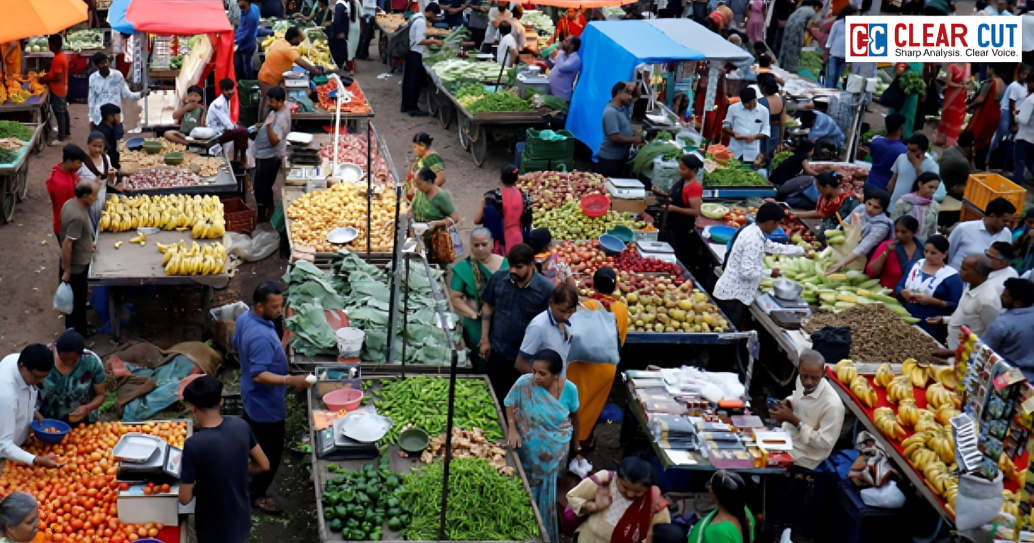
- India’s headline CPI inflation rose to 3.9% in May 2026, while food inflation increased to 4.8%, highlighting rising pressure on household budgets despite overall inflation remaining below the RBI’s target.
- Higher energy and fertiliser costs driven by Middle East tensions have fuelled imported inflation, even as India’s economy continues to post strong GDP growth and policymakers balance inflation control with economic expansion.
A NUMBER THAT SOUNDS SMALL UNTIL YOU BUY GROCERIES
3.9%. Said out loud, India’s May 2026 headline inflation figure sounds almost reassuring. It is comfortably below the Reserve Bank of India’s 4% medium-point target and below market expectations of 4% as well. But headline inflation numbers, by design, average away the specific pain points that households actually feel at the till, and India’s May data conceals exactly that kind of uneven pressure beneath an outwardly calm topline figure.
The Reserve Bank of India’s own data shows headline CPI inflation rose to 3.9% in May 2026, up from 3.5% in April. It is the highest reading since January of the previous year. Buried inside that aggregate number is a far less comfortable detail: food inflation, the component that dominates household budgets for India’s lower and middle-income families specifically, jumped to 4.8% in May from 4.2% in April, also a 16-month high.
| 3.9% Headline CPI Inflation (May 2026) | 4.8% Food Inflation (May 2026) | 18.5% Personal Care/Misc. Inflation | 4.0% RBI Medium-Point Target |
THE MIDDLE EAST CONNECTION NOBODY’S GROCERY BILL MENTIONS
The driving force behind this specific food and energy price pressure traces back, somewhat surprisingly for a domestic household budget, to a geopolitical conflict thousands of kilometres away. India’s official inflation data explicitly attributes the rise to the ongoing war in the Middle East, which has lifted global energy and fertiliser prices. They are both critical, structural inputs into Indian food production costs, from diesel-powered irrigation and transport to imported potash and phosphate fertilisers that Indian farmers depend on for major crop cycles.
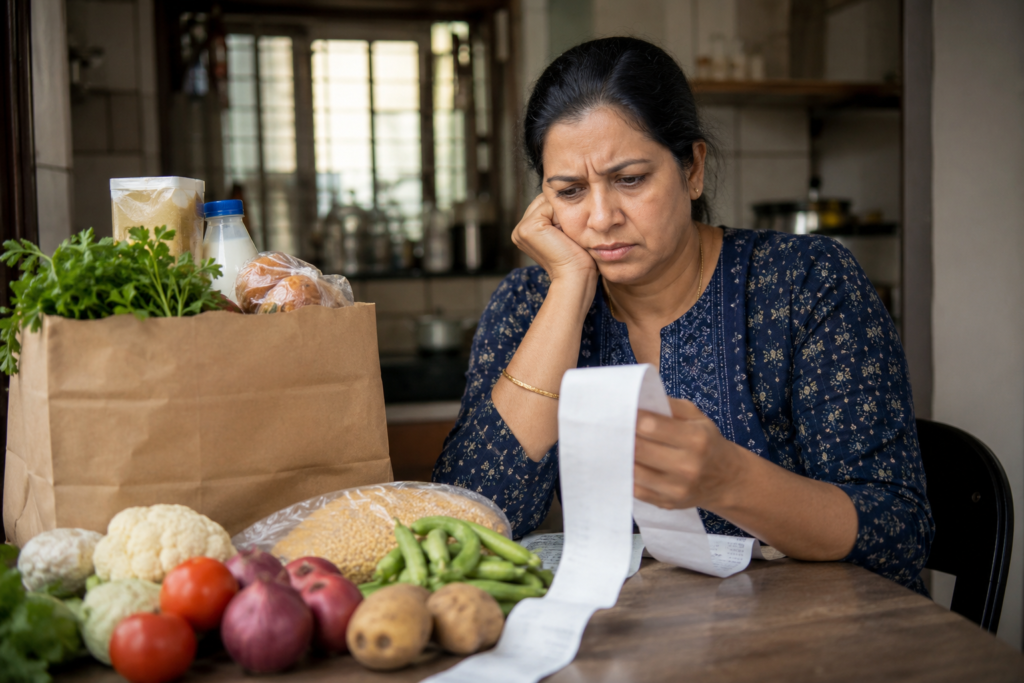
This is the kind of imported inflation that domestic monetary policy has limited tools to address directly. The RBI can manage interest rates and liquidity, but it cannot lower the price of a barrel of crude oil or a tonne of imported fertiliser disrupted by conflict half a world away. The data also showed price growth accelerating sharply for personal care, social protection, and miscellaneous goods, up 18.5%, alongside restaurants and accommodation rising 5.75%. These categories that disproportionately affect discretionary household spending beyond basic survival needs.
WHY GROWTH FORECASTS STILL LOOK STRONG ANYWAY
Remarkably, India’s broader growth trajectory remains robust even against this inflation backdrop. Goldman Sachs Research forecasts India’s real GDP growth at 6.9% for calendar year 2026 while S&P projects 6.5% for fiscal year 2026. The RBI’s own data shows real GDP grew 8.2% in the second quarter of FY 2025-26, up sharply from 5.6% in the same quarter a year earlier. It is driven substantially by resilient domestic consumption, a recovering rural economy, and continued high public capital expenditure on infrastructure.
The RBI has navigated this period with one of its sharpest easing cycles in recent history, cutting policy rates by a full percentage point within 4 months starting in February, using a window of cooling food inflation and stable global energy prices at the time to shift decisively toward supporting growth. The May uptick in food and energy costs, linked directly to Middle East tensions, now tests whether that accommodative stance can hold without reigniting the broader inflationary pressure the RBI spent the better part of a year working to bring down.
WHAT POLICY MUST DO BEFORE THE NUMBERS WORSEN
The RBI’s Monetary Policy Committee faces a genuinely difficult balancing act in its coming reviews: India’s growth story remains structurally sound, but a sustained climb in food inflation driven by an external, geopolitically volatile shock could erode the real purchasing power gains lower-income households have only recently begun experiencing through tax relief and welfare spending. The government should accelerate strategic reserves and import diversification for key fertiliser inputs specifically, reducing exposure to Middle East-linked price shocks before the next agricultural cycle, rather than waiting for inflation data to force reactive policy.
India’s macroeconomic fundamentals genuinely justify the confidence international observers continue to express. But fundamentals measured in GDP percentage points and fundamentals felt in a household’s monthly food budget are not always the same conversation. Closing that gap is the policy challenge this single data point from May 2026 has made newly urgent.
Clear Cut Research Desk
New Delhi, UPDATED: July 04, 2026 13:00 IST
Written By: Tanmay J Urs