

- India’s 2026 Monsoon Session (July 21–August 12) will focus on clearing pending legislation, especially the Delimitation Bill, while debates on inflation, federal relations, and coalition politics are expected to dominate proceedings.
- With only three weeks available, the session’s success will depend on effective floor management, coalition support for constitutional amendments, and maintaining parliamentary productivity through meaningful debate rather than just passing bills quickly.
THREE WEEKS TO CLEAR A BACKLOG BUILT OVER MONTHS
Parliamentary Affairs Minister Kiren Rijiju has confirmed the dates: India’s 2026 Monsoon Session will run from July 21 to August 12, a roughly 3-week window that, by design, overlaps with the southwest monsoon at its peak intensity in the national capital. The compressed timeline carries unusual weight this year, because the government is using it to clear what officials themselves describe as a backlog of measures that slipped through earlier sessions. It is most notably the Delimitation Bill and its companion constitutional amendment, defeated for lack of a special majority during the Budget Session in April.
Beyond the headline delimitation fight, the session’s agenda is expected to include a mix of financial, administrative, and sector-specific reform bills, with the government keen to use treasury bench numerical strength to clear measures requiring only a simple majority. A distinction in legislative arithmetic that, as the Budget Session demonstrated decisively, proved the deciding factor between what passed and what didn’t.
THE OPPOSITION’S PRESSURE POINTS
Opposition parties have already signalled their priority demands ahead of the session: sustained floor pressure on price rise, a direct extension of the inflation anxiety reflected in recent food-price data, alongside renewed debate on federal and centre-state relations. A category of concern that has only intensified following Tamil Nadu’s dramatic May 2026 political realignment and the broader north-south tension underlying the delimitation debate itself.
With sitting days deliberately limited to roughly three weeks, every day lost to procedural disruption or walkouts carries proportionally higher cost than in a longer session; raising the stakes for floor management on both sides. The Budget Session’s own track record offers a useful benchmark: it ran 31 sitting days, originally scheduled to end April 2 but extended to April 18 specifically to accommodate debate on the delimitation-linked bills, which ultimately failed anyway for want of a special majority.
COALITION MATHEMATICS AS THE REAL STORY
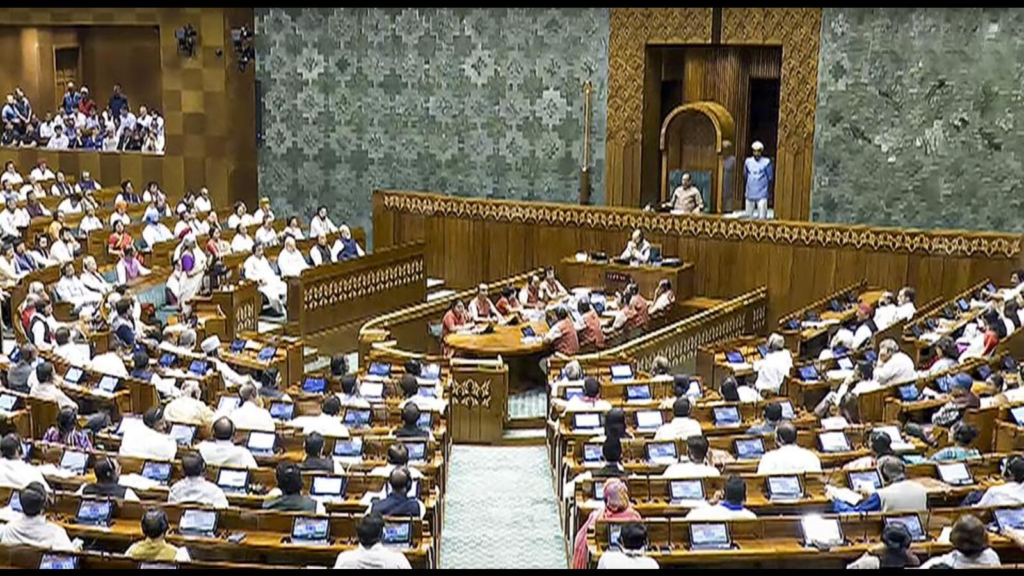
The session’s substantive outcome will likely hinge less on the merits of any individual bill and more on a specific, narrower question: whether the government can convert its ongoing outreach to DMK and Trinamool Congress MPs into the special majority the Constitution requires for amendments like the delimitation bill. A threshold that simple-majority legislation does not face, explaining why the government has comfortably passed other measures even while delimitation stalled twice.
Separately, an unresolved internal Lok Sabha matter adds further texture to the session’s expected temperature: TMC MP Kakoli Ghosh Dastidar has formally sought the expulsion of fellow MP Kalyan Banerjee, alleging repeated misogynistic remarks, verbal abuse, and intimidation directed at women parliamentarians. An internal disciplinary matter that, if it surfaces during the Monsoon Session, could consume floor time and media attention regardless of the government’s preferred legislative agenda.
WHAT A PRODUCTIVE SESSION ACTUALLY LOOKS LIKE
Parliamentary productivity in India is too often measured crudely, by the number of bills passed rather than the quality of debate that preceded passage. It is a metric that rewards speed over scrutiny, particularly for constitutional amendments with multi-generational consequences like permanent Lok Sabha seat redistribution. The government should commit, ahead of July 21, to allocating dedicated, undisrupted floor time specifically for delimitation debate, rather than treating the bill’s passage as primarily a numbers exercise to be managed through last-minute coalition arithmetic.
Equally, the Lok Sabha Speaker’s office should resolve the Banerjee expulsion matter with transparency and dispatch rather than allowing it to fester unaddressed through another session. The parliament’s credibility as an institution depends on visibly, consistently enforcing its own standards of conduct toward women members, independent of whatever legislative drama dominates the headlines. Three weeks is not a long window. How India’s Parliament uses it will say as much about the health of its democratic institutions as any single bill’s final vote count.
Clear Cut Awards & Events Desk
New Delhi, UPDATED: July 04, 2026 17:00 IST
Written By: Tanmay J Urs