
- A UN study warns that India’s steel exports could decline by up to 30% by 2035 if the country delays adopting low-carbon steelmaking, while early climate action could limit losses to around 10%.
- The report highlights that MSMEs and workers in the steel sector are likely to face the greatest impact from carbon border taxes, making timely decarbonisation essential for protecting jobs and export competitiveness.
- As countries introduce carbon border adjustment measures, India must accelerate cleaner steel production and compliance efforts to remain competitive in global markets.
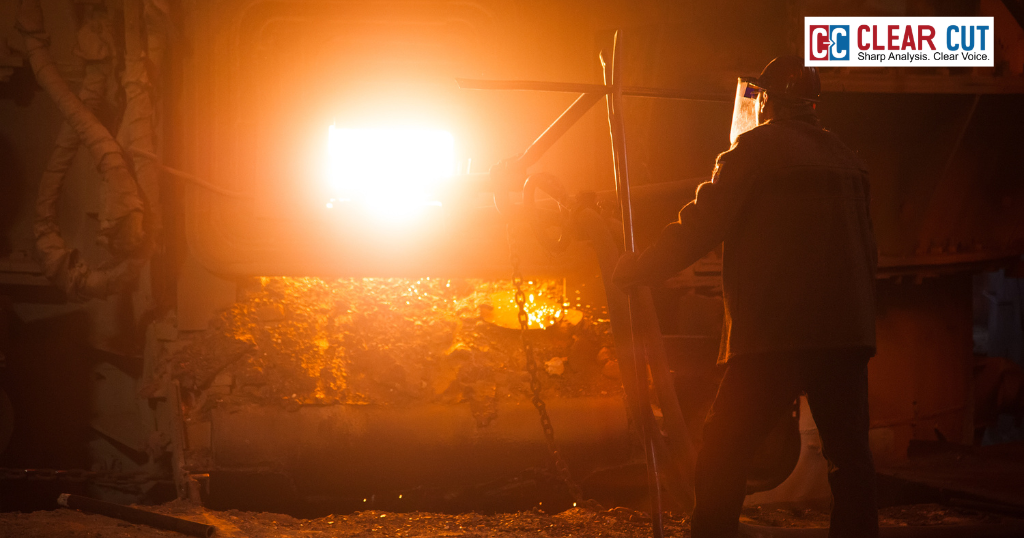
If India lags in switching to a more climate-friendly steelmaking method, a recent United Nations report finds that its top steel exports could decline by up to 30 percent by 2035 as key trading nations impose a carbon-content-based border tax. But if India moves early, then it can trim the decline to just 10 percent. This distinction is the core of a case study the United Nations Framework Convention on Climate Change’s Katowice Committee of Experts on the Impacts of the Implementation of Response Measures (KCI) unveiled on 3 July 2026 (Study-finds-early-climate-action-can-help-reduce-risks-from-carbon-border-pricing) -the committee’s first ever to focus on India-mapping out what a coordinated round of border carbon adjustments would look like in terms of India’s production, trade, jobs, and most important, workers.
The Scenario
Presented at the June climate summit in Bonn (SB64), the case study Indian-Case-study.pdf offers an alternative history scenario where the six biggest destinations of Indian exports – Canada, Europe, Japan, the Pacific (Oceania), the United Kingdom, and the United States – implement coordinated border tax adjustments in the same year. To date, the EU’s Carbon Border Adjustment Mechanism (CBAM), in effect since 1 January 2026 (carbon-border-adjustment-mechanism-cbam-eu-india-msme-exporters) and applied to steel, aluminium, cement, fertilizers, hydrogen, and electricity, is the only real-world example. Using a globally calibrated computable general equilibrium model that analyses how changes in a particular sector spill over into prices, trade, and wages, researchers simulated several outcomes with one variable changed: when other developing nations and India begin decarbonizing.
Where the actual impact lands
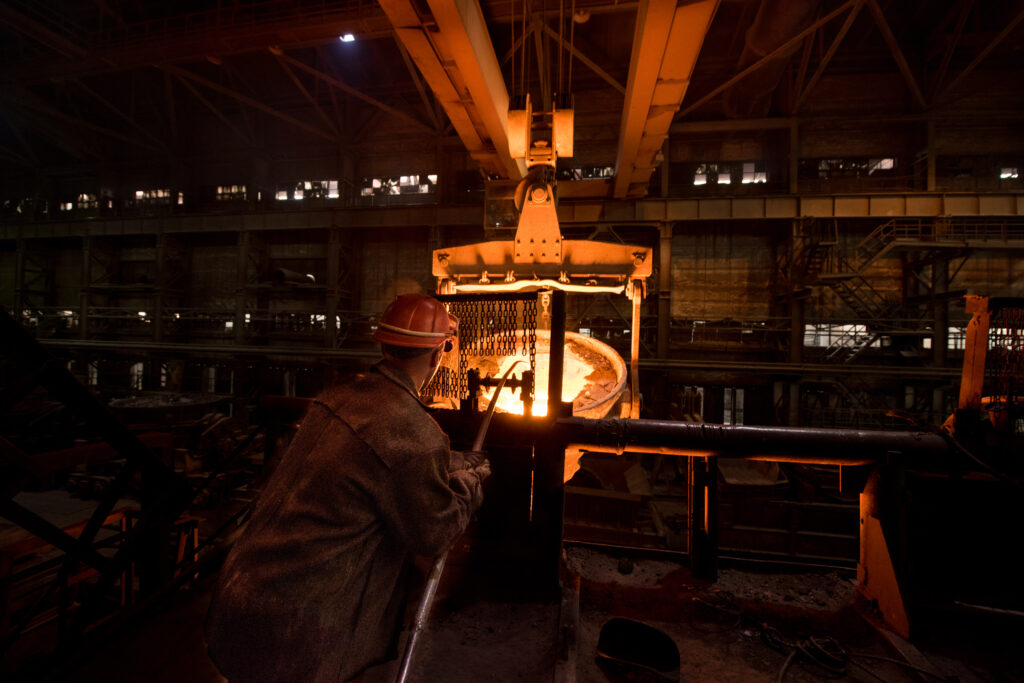
In every scenario, Indian GDP falls by 0.03 percent when taxes kick in – and this sounds more or less manageable until the details come into sharp relief. All of the economic hit is focused on iron and steel, a sector responsible for 12 percent of India’s carbon emissions – twice the world average – and which sends a fifth to a third of its product to other countries. All scenarios show Indian households’ wages falling, with skilled workers’ incomes declining much more steeply than those of unskilled labour; the longer India waits to act (and particularly so if New Delhi waits while others lead), the harder it bites. As the authors say, “proactive mitigation efforts can play an important role in reducing adverse impacts.” These percentages do add up in real-world supply chains. India’s MSMEs are a big and growing part of the exporting landscape – nearly three times larger from 2020-21 to 2024-25 to nearly 170,000 units, exporting nearly $150 billion in 2024-25, according to the Observer Research Foundation (The-cbam-challenge-for-India’s-steel-msmes). Many clusters of industrial activity (Rajkot, Coimbatore, Mandi Gobindgarh) have large concentrations of small workshops and rolling mills that supply the tier-2 and tier-3 supply chains serving larger exporters.
“Large firms have the resources to upgrade technology, absorb compliance costs…smaller enterprises, however, lack both the capital and the systems required to report emissions in the EU’s new regulatory frameworks,” writes R.R. Rashmi of The Energy and Resources Institute, describing what she calls a two-tier impact. The Global Trade Research Initiative (Carbon-at-the-border-india-must-turn-its-climate-trade-argument-into-architecture) estimates that exporters of steel, cement, and related products will need to lower their prices by 15% to 22% to remain competitive with alternative suppliers once the EU imposes a carbon price. Even in the first year of implementation (2024-25), EU-bound goods that fall within the scope of the EU’s CBAM already constituted nearly one-tenth of all of India’s exports, according to research by the Centre for Science and Environment. The Indian government has proposed covering 90 percent of small firms’ compliance costs.
A shared, unequal exposure
The Indian position differs from that of other developing economies analysed within the same KCI program. In an accompanying case study on Ghana (Ghana_Case_Study_June_Bonn.pdf), delivered at the same meeting in Bonn, the share of carbon-intensive goods was as low as roughly 4% of Ghana’s total exports, compared with 13% in the Indian case, yet Ghana simultaneously suffered an intensified squeeze due to its economy’s reliance on cocoa. With Europe’s anti-deforestation measure now bearing down, the case is similar across KCI’s five regions: the extent to which households absorb costs depends less on a country’s emissions figures and more on a government’s own capabilities and preparedness for early action. India, along with other emerging economies like Brazil, South Africa, and China, had collectively urged the World Trade Organisation against unilateral carbon border measures in trade, given that they not only disturb trade but also create a greater distance between countries; an official protest separate from but parallel to the arguments that encourage faster decarbonisation within domestic borders.
The KCI study does not specify the precise action; however, it clearly states that the size of the potential shock India may experience varies with its response. India can significantly reduce the magnitude of the shock by acting quickly and increasing the scale if it is one of the last to respond; since the Indian exports at stake employ 20% of its steel industry and a significant number of MSMEs, this temporal difference can either help cushion workers or place the burden squarely upon them.
Clear Cut Climate Desk
New Delhi, UPDATED: July 07, 2026 17:33 IST
Written By: Yatharth Pathak