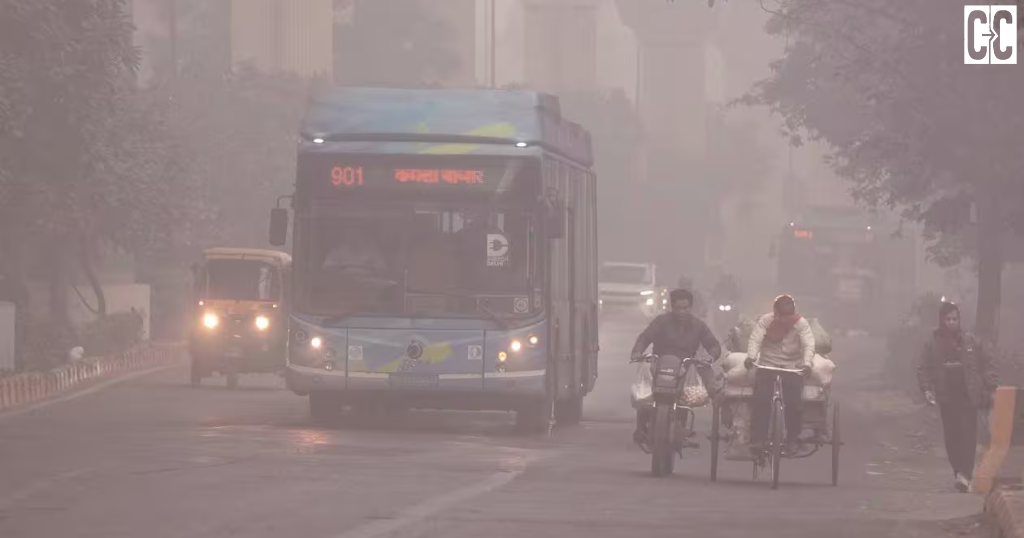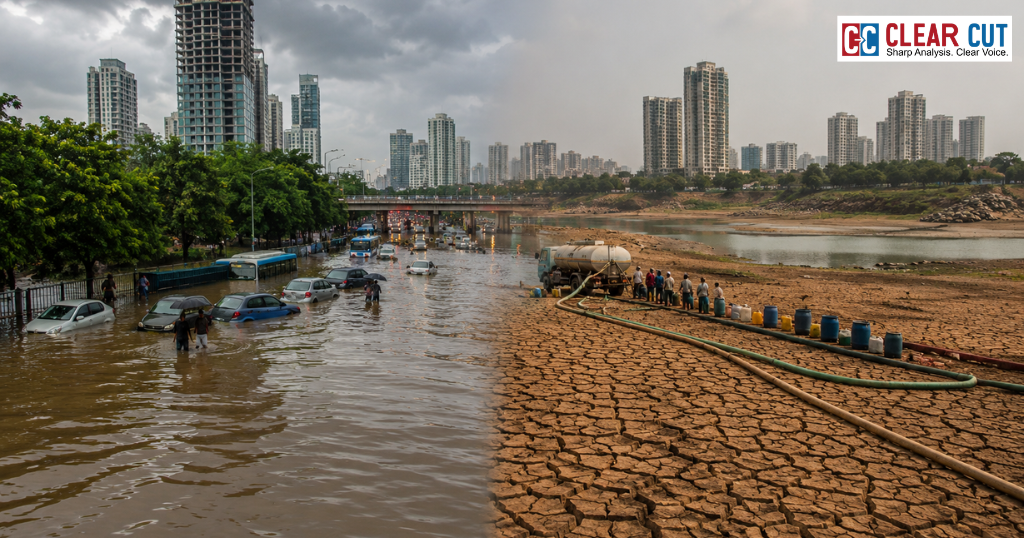
- Indian cities face floods during the monsoon and water shortages in summer because rapid urbanisation has destroyed wetlands, lakes, and natural drainage systems.
- Poor drainage, excessive groundwater extraction, leaking water infrastructure, and changing rainfall patterns have turned water into a year-round urban crisis.
Every year, the same Indian cities make headlines twice over. In June, newspapers report bone-dry reservoirs and residents lining up behind water tankers. By August, the same streets are underwater, cars floating past flooded metro stations. Bengaluru, Chennai, Mumbai, and Delhi have all lived through this strange double crisis: too little water one season, too much the next. It sounds like a contradiction, but it isn’t. It’s the predictable result of how these cities have grown, and how they’ve chosen not to plan for water at all.
The Same Root Cause, Two Different Symptoms
At the heart of the problem is a fundamental disruption of the natural water cycle. As cities have expanded, lakes have been reclaimed, wetlands converted into commercial developments, and floodplains transformed into residential neighbourhoods. Areas that once absorbed, stored, and slowly released rainwater have been replaced by concrete and asphalt, leaving water with nowhere to go except onto roads and into homes. This rapid urban expansion has been significant. A recent WRI India analysis found that built-up areas within 20 kilometres of city centres increased sharply between 2000 and 2020. Cities such as Surat witnessed an increase of well over 100 percent, while rapidly developing peripheral areas around Pune expanded even more, highlighting the pace at which natural landscapes have been replaced by urban infrastructure.

This matters for both floods and droughts, because it’s the same land doing two jobs. Wetlands and lakes absorb monsoon rain and slowly release it, recharging groundwater over months. Once that land is concreted over, rain has nowhere to soak in. Instead, it rushes straight into drains and rivers, overwhelming them within hours and causing the flash flooding cities now see almost every monsoon. Meanwhile, without that slow percolation, aquifers never get refilled, so by the time summer arrives, groundwater tables have crashed. Experts researching land subsidence describe this directly: as one geologist put it in a recent Outlook India report, concretisation leaves less space for water to percolate into the ground, which simultaneously increases flooding and reduces groundwater recharge.
Broken Infrastructure Makes It Worse
It isn’t just about lost natural drainage. The built infrastructure is failing too. Investigations into India’s urban drainage systems have found that stormwater drains in many cities, including Delhi, are illegally connected to sewage lines, so what should carry only rainwater ends up clogged with sewage and waste. When a heavy downpour hits, these already-compromised drains simply can’t cope, and the result is waterlogged streets mixed with contaminated water, a public health hazard on top of a flood.
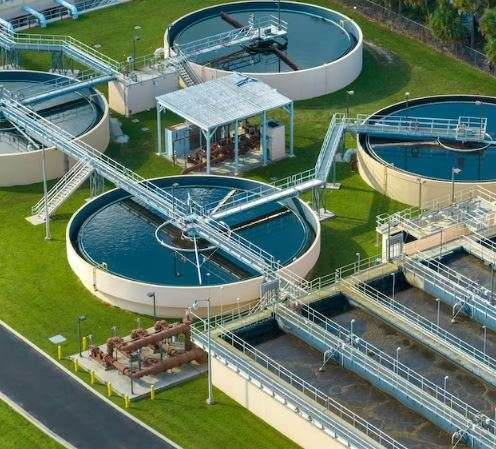
At the same time, the pipelines meant to deliver clean water to homes are old, leaky, and poorly maintained, meaning a large share of treated water is lost before it reaches a tap. Cities are essentially losing on both ends: rainwater that could recharge supplies is wasted through poor drainage, and treated water that has already been processed is wasted through poor distribution.
Groundwater: The Hidden Battleground
Groundwater is really where this crisis converges. India’s cities have grown heavily dependent on borewells to make up for unreliable municipal supply, and that dependence has been fed by unregulated digging over decades. Government data shows India’s per capita water availability has been steadily falling, and with over a third of the country’s population now urban, pressure on aquifers near cities is intense. A World Bank estimate suggests a large share of India’s aquifers could reach critical or over-exploited levels within the coming decades.
When groundwater is pulled out faster than rain can replenish it, land itself can begin to sink. A 2025 study in Nature Sustainability identified thousands of structures across Delhi, Mumbai, and Chennai at elevated risk from this kind of subsidence. This isn’t a distant, abstract effect; it’s builders, homeowners, and city planners inadvertently working against the very ground stability their buildings depend on.
Climate Change Is Sharpening Both Ends
Rainfall patterns are also becoming more erratic. Cities are increasingly seeing what would once have been a month’s worth of rain fall in just a few days, sometimes hours, followed by long dry spells. This kind of “feast or famine” rainfall pattern is harder for existing infrastructure to absorb in real time, whether that infrastructure is meant to store water or drain it away.
What Would Actually Help
The fixes aren’t mysterious, even if they’re politically and financially difficult. Cities need to restore, not pave over, their lakes and wetlands, since these serve as natural flood buffers and recharge zones simultaneously. Drainage networks need to be physically separated from sewage lines and properly desilted before monsoons, not during them. Mandatory rainwater harvesting, stricter groundwater extraction rules, and real investment in leak-proof water distribution would address both problems from opposite directions, since saved and recharged water reduces summer scarcity while restored natural drainage reduces monsoon flooding.
Until cities start treating water as a single connected system, rather than a drought problem and a flood problem handled by different departments, the same neighbourhoods will likely keep going thirsty in April and wading through floodwater in July.
Clear Cut Climate Desk
New Delhi, UPDATED: July 07, 2026 09:00 IST
Written By: Muskan Pal
Designation: Communication Manager at Devinsights