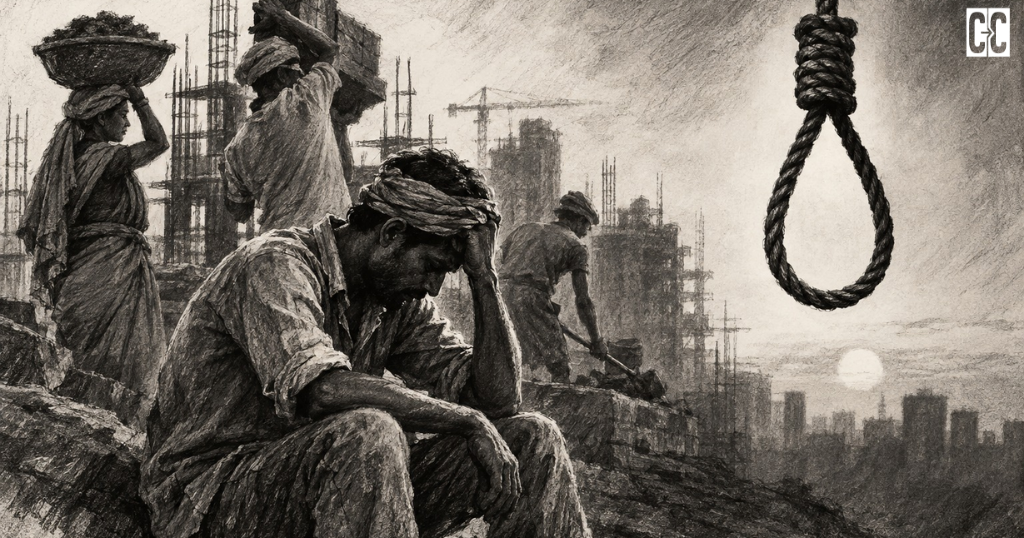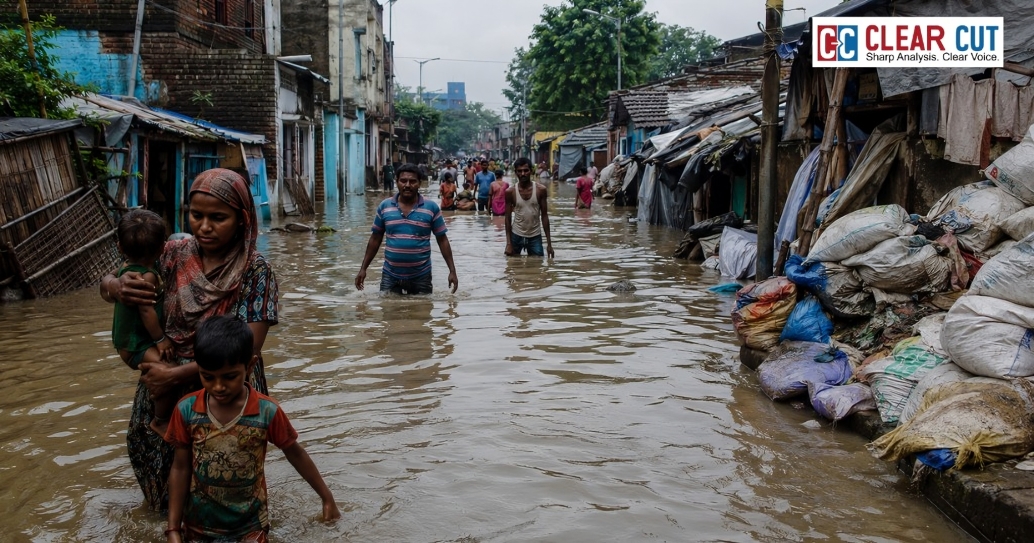
- The article highlights how heavy monsoon rainfall in India triggers a hidden public health crisis, leading to outbreaks of waterborne and mosquito-borne diseases due to contaminated water and poor sanitation.
- It explains that climate change, inadequate infrastructure, and weak public health preparedness worsen these risks, particularly in flood-prone and densely populated regions.
- The article concludes that integrating flood management with disease surveillance, improving water and sanitation infrastructure, and strengthening climate-resilient healthcare are essential to reducing the long-term health impacts of monsoons.
With every monsoon, Indian urban centers and rural communities prepare themselves for disruption caused by the downpour – waterlogging of roads, halted train services, and flooding of houses. However, when the floodwaters dry up and the media stops paying attention to them, a silent public health crisis often emerges, and Indian health officials have yet to become familiar with this problem.
First of all, monsoons can result in waterborne diseases through contamination of the drinking water supply system. Due to heavy rains and frequent flash floods, the system gets overwhelmed and mixes waste and drinking water, leading to widespread diarrhoea, cholera, typhoid, hepatitis A and hepatitis E.
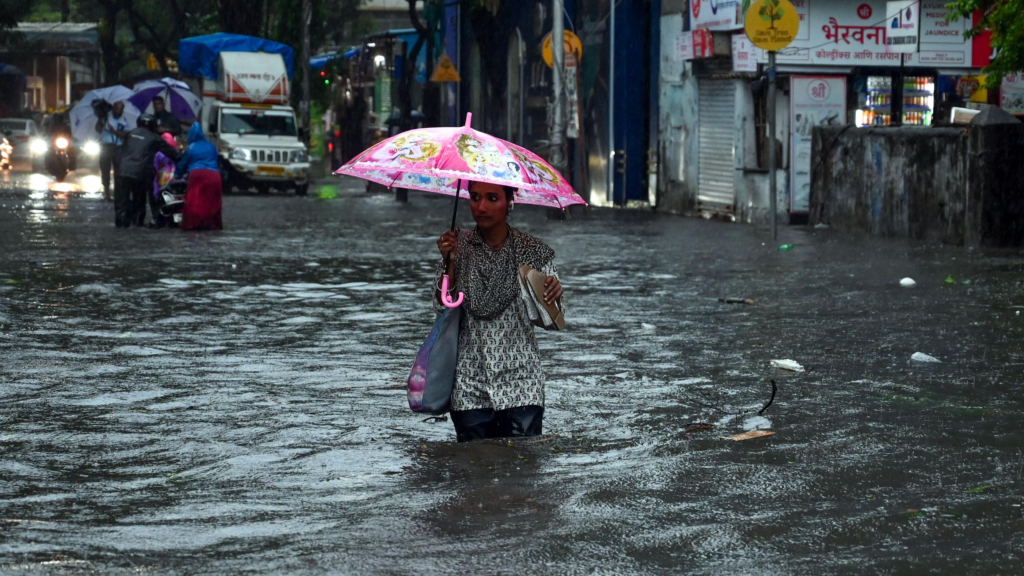
About 70% of all disease outbreaks in India are waterborne and their number increases due to unpredictable and intense monsoons. In particular, West Bengal, Andhra Pradesh and Uttar Pradesh states suffer the greatest losses due to the high population density, floods and poor sanitation facilities. There was a significant outbreak of cholera in Kolkata alone due to waterlogging after the monsoons in 2015, and there were double hospitalizations for diarrhoea than the average season.
The floods’ impact on urban India’s health does not only happen in the eastern cities. Accordingly, in July 2023, due to flooding in the Yamuna, many parts of the capital city, Delhi, were flooded while thousands of people had to be relocated to relief camps. Moreover, health experts have drawn red marks regarding a high incidence rate of typhoid, cholera, malaria, and dengue fever owing to stagnant water, which acts as a breeding ground for mosquitoes. Likewise, in Mumbai, where there is yearly rainfall that leaves the city devastated, apart from dengue fever and chikungunya (which are transmitted through mosquitoes), leptospirosis is common.
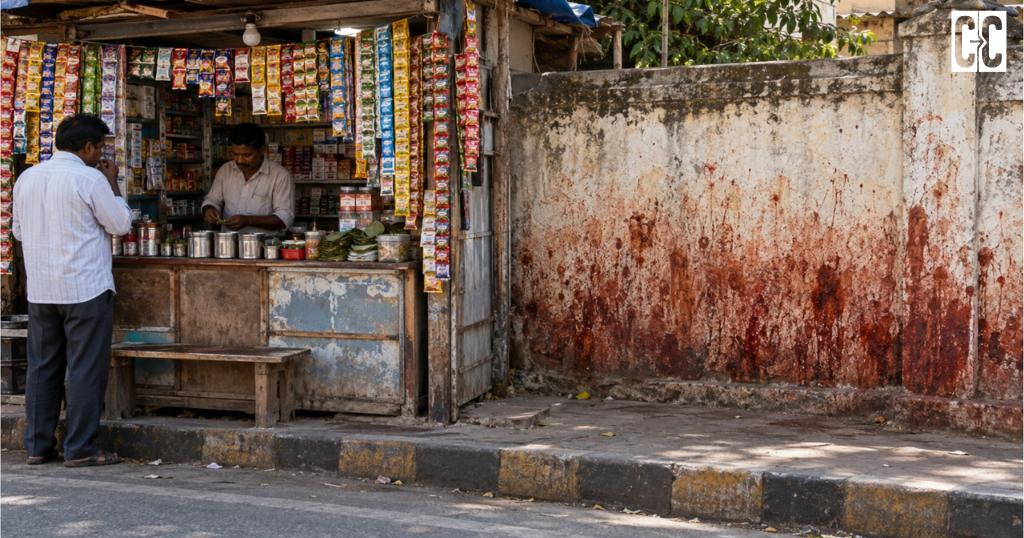
Apart from infectious diseases, there are long-term implications of the floods. The wetness in houses leads to the growth of molds, which cause breathing problems and other infections, besides causing mental problems due to displacement and loss of homes and income sources. Consumption of street foods, which is common in monsoons in India, increases due to poor hygienic conditions during the rains.
Given the unpredictability of the monsoons in India due to climate change, it is imperative for public health authorities to realize that an epidemic response cannot wait until after the floods have subsided. Improved surveillance mechanisms like the Integrated Disease Surveillance Program, development of climate-resilient PHCs, and investment in urban drainage and purification facilities will be key to managing the epidemic that occurs in the aftermath of the flood.
The magnitude of the vulnerability cannot be overstated. Around 37.7 million Indians suffer from waterborne diseases every year, while over one lakh deaths are reported due to these diseases every year; but this becomes more pronounced during and post-monsoon The peer-reviewed studies further validate the regional trend reflected in the health ministry numbers – West Bengal consistently tops the list of states in terms of the prevalence of acute diarrheal disease in the years 2014 to 2018, while Andhra Pradesh comes second and Uttar Pradesh third in the subsequent years. A vast majority of this vulnerability is rooted in the lack of basic infrastructure facilities as opposed to being caused by the monsoon itself. As per district-level data, almost all districts in West Bengal, Bihar, Jharkhand, Odisha, Madhya Pradesh, and Uttar Pradesh use more than 75% of unsafe drinking water sources, and hence, the slightest flood can force contaminants into these houses which do not have any form of purification mechanism in the first place.
Towards a resilient approach
According to public health practitioners, India’s flood-induced disease problem requires a systems approach instead of a collection of separate outbreaks. There are three main areas of change recommended. First, the need for early warning integration by connecting rainfall forecasts of the Indian Meteorological Department with health surveillance in districts so that water testing and chlorination programs are undertaken prior to a disease outbreak rather than following an outbreak where admissions in hospitals start increasing. Secondly, the need for decentralized water treatment by undertaking water purification measures at point of use and chlorination in districts where piped water is inconsistent, especially the high-burden districts of West Bengal and Andhra Pradesh which have been identified using district-wise surveillance system. Thirdly, filling the mental health gap as there are gaps in India’s disaster management policy for psychological problems among flood-displaced populations even though anxiety, depression, and trauma are prevalent problems.
In conclusion, the impact of the monsoon rains on India’s health status does not necessarily have to happen due to rain alone but depends on other factors such as infrastructure, preparation, and response by the public health sector after the beginning of the rains. Combining the responses to the monsoon rains and to diseases together rather than treating them as different emergencies is probably the best move for reducing this silent impact.
Clear Cut Health Desk
New Delhi, UPDATED: July 09, 2026 17:00 IST
Written By: Mitali Tapar