
Clear Cut Magazine

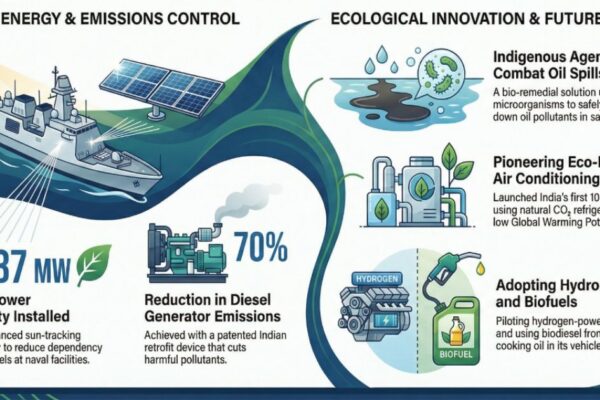
Strategic Seas, Sustainable Choices: Indian Navy’s Green initiatives

India honours the bravery, dedication and nautical prowess of our Indian Navy. A navy that protects over 7,500 kilometres of large coastline and the mighty Indian Ocean Region (IOR) on 4th December every year. Traditionally, Navy Day tributes emphasise India’s strategic maritime power, operational readiness and the bravery of naval personnels. However, in recent years,…

Read More

Transforming Indian Cities: Integrated, Inclusive, and Sustainable Urban Transport

The Sustainable Development Goal (SDG) 11 calls for making cities inclusive, safe, climate resilient, sustainable and inclusive. Urban mobility has become a top goal for cities around the world. This objective is strongly related to the Nationally Determined Contributions (NDCs) of India agreed under the Paris Agreement and the New Urban Agenda (NUA), which together…

Read More

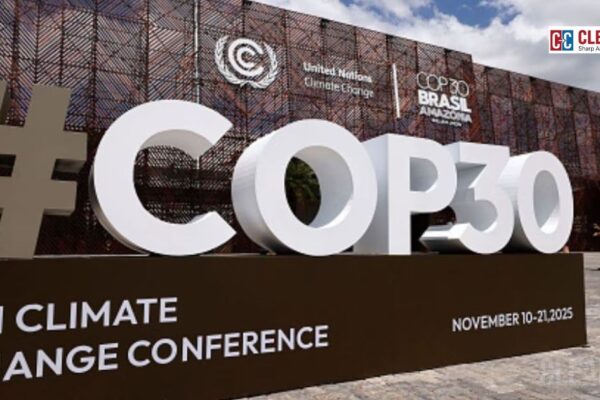
Beyond Belem: What COP30 Means for Transforming Rural India

The conclusion of COP30 in Belém marks a decisive moment for India’s rural development sector. For the first time, global climate negotiations placed local resilience, nature-based livelihoods and community-led adaptation at the centre of the climate transition narrative. This shift creates both an opportunity and a responsibility for NGOs in India, particularly those working with…

Read More

EU Rejects India’s Bid for Carbon Border Tax Exemption: What the Decision Really Means

The European Union has just ruled out an exemption for India from its Carbon Border Adjustment Mechanism-the new climate-linked tariff that will tax carbon-intensive imports coming into the bloc. The news, reported in the Financial Times on 16 November 2025, affects some of the most trade-dependent industries in India, like steel, aluminium, cement and fertilizers….

Read More

India at COP30: From Climate Ambition to Climate Delivery for Global Climate Action

As climate negotiations enter a new decade, COP30 in Belém, Brazil, has emerged as a defining moment for global climate governance. India presented a strong and forward-thinking climate position at the High-Level Segment, one that combines local resilience, global equity, and national ambition. Three reinforcing pillars- implementation, justice, and decentralised climate leadership can be used…

Read More
Aerial view of dense mangrove forests along India’s coastline, representing the MISHTI restoration initiative.

MISHTI: Restoring India’s Mangrove Belt

In June 2023, the Government of India launched the Mangrove Initiative for Shoreline Habitats and Tangible Incomes, a program that quietly yet firmly repositions the restoration of mangroves from an afterthought in conservation to a national climate and livelihood mission. As the Ministry of Environment, Forest and Climate Change expands its implementation through 2025, MISHTI…

Read More

Global Currents in the Green Northeast: How International Partnerships Are Powering India’s Net-Zero Frontier

At COP26, when India made its bold promise to achieve net-zero carbon emissions by 2070, very few places captured the promise of this ambition as vividly as the Northeast. Nestled in the Himalayas and enriched by forests, rivers, and biodiversity, the eight Northeastern states of Arunachal Pradesh, Assam, Manipur, Meghalaya, Mizoram, Nagaland, Tripura, and Sikkim…

Read More

UN Sounds the Alarm: FAO’s SOFA 2025 finds 1.7 Billion People Living on Yield-Shrinking Land

When the UN shared the Food and Agriculture Organization’s shocking headline “Nearly 1.7 billion people live in areas where land degradation is impacting agricultural productivity and threatening food security,” it summarized a global assessment effort, but that’s a complicated technical report condensed down to a single socialize media line. However, the line encapsulates a broad…

Read More