

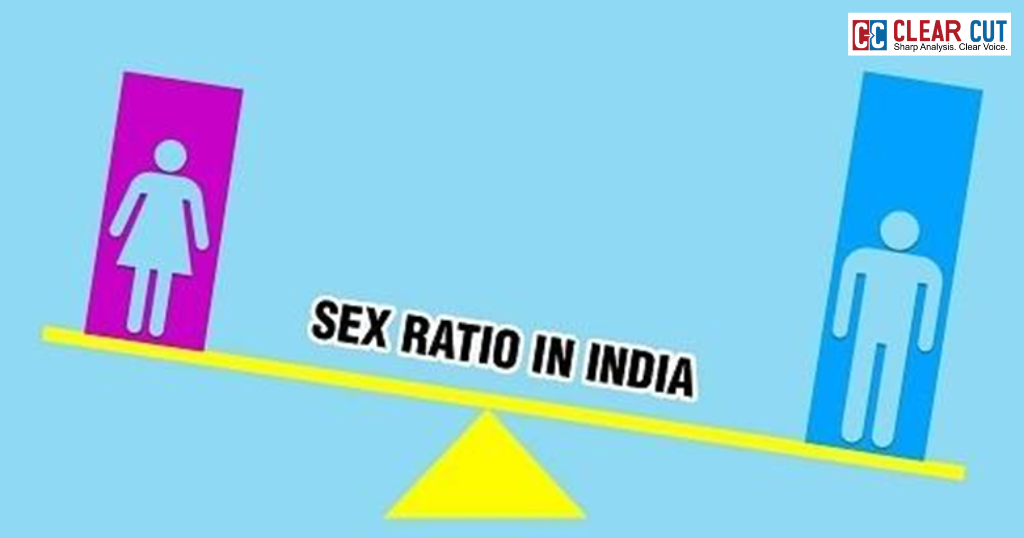
Haryana’s sex ratio has fallen to 910 despite years of government campaigns and CSR efforts, revealing that awareness alone has failed to address deep-rooted son preference. Real change requires tackling economic, legal, and social structures driving gender bias.
A Number Nobody Wanted to Talk About
Start with the arithmetic. Of the 516,402 children born in Haryana in 2024, just under 48 percent were girls. That works out to 910 girls for every 1,000 boys. The lowest the state has recorded since 2016.
The data comes from the Civil Registration System. Government officials, when the figures surfaced earlier this year, described it as a minor fluctuation. Activists said there was a crisis. The two words cannot mean the same thing here, and the one that gets used tends to reflect whose career depends on the programme looking successful.
This is Haryana. The state where Prime Minister Modi stood in Panipat in 2015S launched Beti Bachao Beti Padhao on national television, and pointed to a sex ratio of 871 at birth as a national shame that demanded a national response. The improvement was announced loudly. The reversal arrived quietly.
What the Money Actually Went Toward
Beti Bachao Beti Padhao received Rs 446 crore in its early phases. Independent audits found that in several years, over half the budget went to advertising. Billboards. Radio spots. Television campaigns showing fathers proud of their daughters. The message was not wrong. The proportion was. The families selecting against daughters were not selecting against daughters because they hadn’t seen an advertisement. They were doing it because a daughter, in the economic logic of rural and peri-urban Haryana, comes with costs that begin at birth and don’t end until the wedding, which itself costs more than most families can absorb. The dowry system didn’t get a budget line in Beti Bachao. Neither did inheritance reform. The PCPNDT Act, which exists specifically to ban sex determination technology, was enforced aggressively between 2015 and 2019 and has been enforced much more loosely since. The correlation between that loosening and the numbers going back down is not subtle.
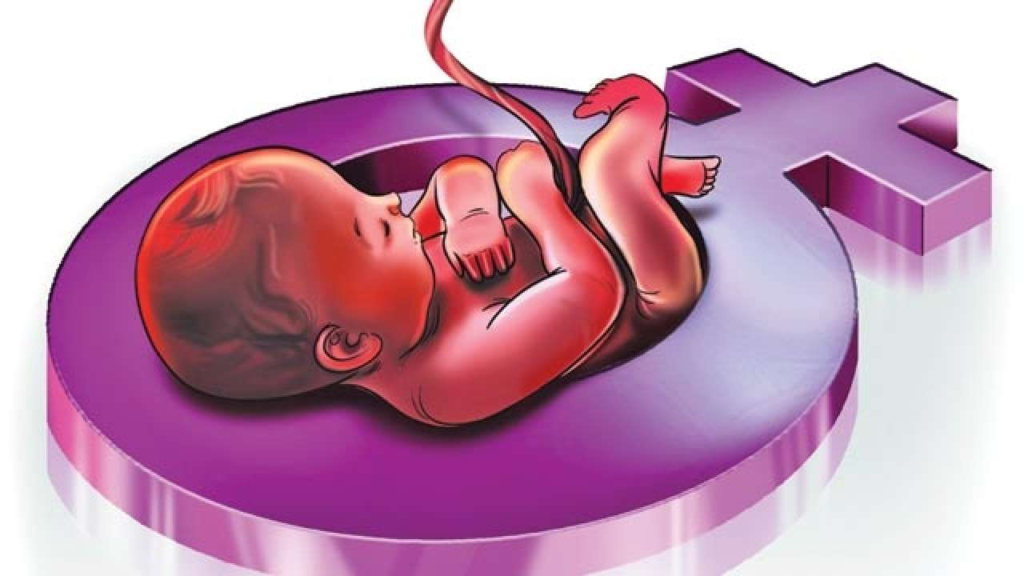
A 2023 survey by the Haryana Institute of Social Sciences found that 60 percent of sex-selective abortions in the state were driven by family or social pressure. Not by ignorance. By pressure. No awareness campaign defeats pressure. You don’t change a family’s economic calculus by changing the message on a hoarding.
The Five Districts That Tell the Whole Story
In 2024, five Haryana districts recorded sex ratios below 900. Charkhi Dadri was at 869. Rewari was at 873. Rohtak was at 888. And Gurugram, India’s corporate showcase, the city whose skyline you see in every “emerging economy” documentary, was at 899.
Gurugram. Where the headquarters of multinationals crowd along the expressway, where ESG reports get filed, where Women’s Empowerment Principles get signed, where HR teams run gender sensitisation workshops and companies photograph their women leaders for International Women’s Day. 899 girls per 1,000 boys born in 2024. The city that hosts corporate India’s gender commitments produced fewer girls than the national average and fewer than it was producing in 2016.
What Corporate CSR Has to Do With It
The connection feels indirect until you sit with it for a moment. Gurugram’s corporate community has spent years investing in women’s leadership, girl-child education scholarships, skilling programmes, and gender-parity targets. All of this happens at some distance from the specific decision a Gurugram family makes, usually in a private ultrasound clinic or across the border in a state with looser enforcement, to not have a daughter.
CSR as it is currently designed has no real language for engaging with son preference at the community level. Schedule VII of the Companies Act lists gender equality as an eligible CSR activity, but the eligibility is so broad that a company can count a one-day girl-child painting competition as a gender equality intervention and file it in the annual report. Nobody is checking whether the surrounding community’s birth ratio has changed. Nobody is asking that question at all.
The Gurugram numbers suggest that twelve years of high-visibility corporate gender programming, happening within kilometres of families making sex-selective decisions, has not materially disrupted those decisions. This is not an argument against corporate gender CSR. It is an argument for different corporate gender CSR, the kind that funds community-level, sustained, locally embedded norm change work rather than scholarships and leadership summits that reach women who were probably going to be fine anyway.
Why This Keeps Happening
Son preference in Haryana is not a mysterious cultural force that resists all analysis. It has specific material roots. Land inheritance customs that favour male heirs. A dowry system that makes daughters expensive at every stage. An old-age support logic that assumes sons, not daughters, are the economic safety net for ageing parents. And the continued availability, for anyone who knows the network, of illegal sex determination services just a phone call away.
The PCPNDT Act addresses the technology access point. In theory. In practice, enforcement has always been cyclical in Haryana, peaking during political attention and dropping off when attention moves elsewhere. The drop from 923 in 2019 to 910 in 2024 maps fairly cleanly onto that cycle. Aggressive enforcement under scrutiny, relaxation when the cameras leave, the numbers sliding back.
Schemes like Sukanya Samriddhi Yojana try to soften the financial burden of raising a daughter by creating a savings vehicle for her education and marriage costs. It is useful. It is also treating the symptom. A family that does not want to have a daughter will not be persuaded by a savings account that makes having a daughter slightly cheaper. The underlying preference has to change, and that requires years of work at the community level, with men as much as women, that is neither fast nor filmable.
Conclusion
Haryana’s sex ratio is 910. After ten years of Beti Bachao, after nearly Rs 450 crore of central government money, after hundreds of corporate gender-equality campaigns, Gurugram is producing 899 girls per 1,000 boys. The campaigns were real. The money was real. The slide is also real, and it is asking an uncomfortable question that nobody in the policy space or the corporate CSR space seems to want to answer directly. A hopeful and optimistic angle can be expected.
A girl in Haryana is still, in too many households, framed as a cost before she is a child. The billboards didn’t fix that. The scholarships didn’t fix that. Until the economic and legal architecture that produces son preference is addressed directly, the numbers will keep doing what they are doing now. Sliding back, quietly, while the campaigns keep running.
Clear Cut Gender Desk
New Delhi, UPDATED: April 13, 2026 01:00 IST
Written By: Jay