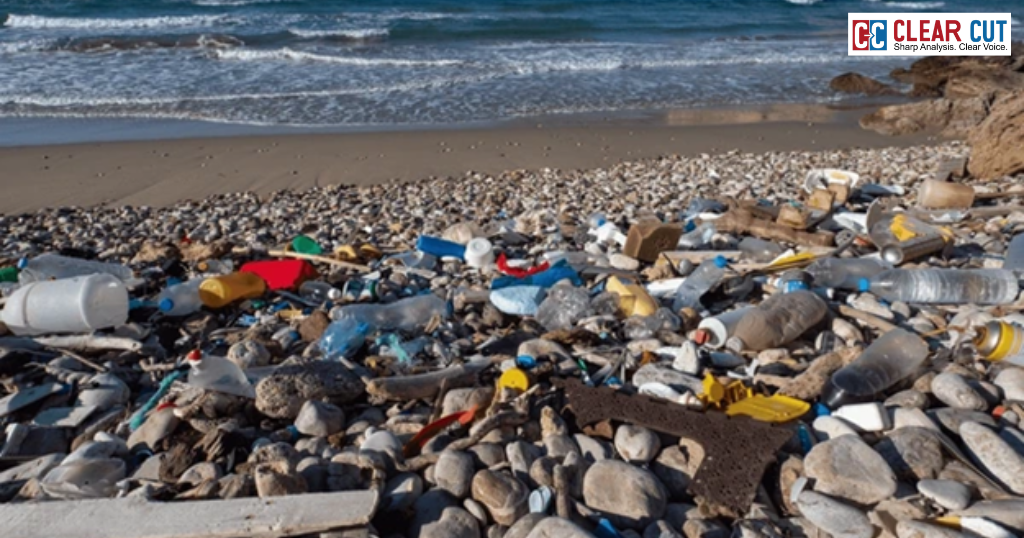
A global study shows a direct one-to-one link between plastic production and pollution, highlighting that higher corporate output leads to greater environmental damage. It argues for stronger accountability through policies like Extended Producer Responsibility rather than relying on voluntary corporate commitments.
Humanity produces more than 400 million tonnes of plastic each year. The majority ends up in the environment. A landmark study published in Science Advances in April 2024, led by researchers from 12 universities across 9 countries and drawing on 1,576 audit events in 84 countries over 5 years, produced the first robust quantification of the global relationship between corporate plastic production and environmental plastic pollution. Its central finding was direct: every 1% increase in a consumer goods company’s plastic production is associated with a 1% increase in plastic pollution. There is no dilution effect. More production means more pollution (Cowger et al., 2024a).
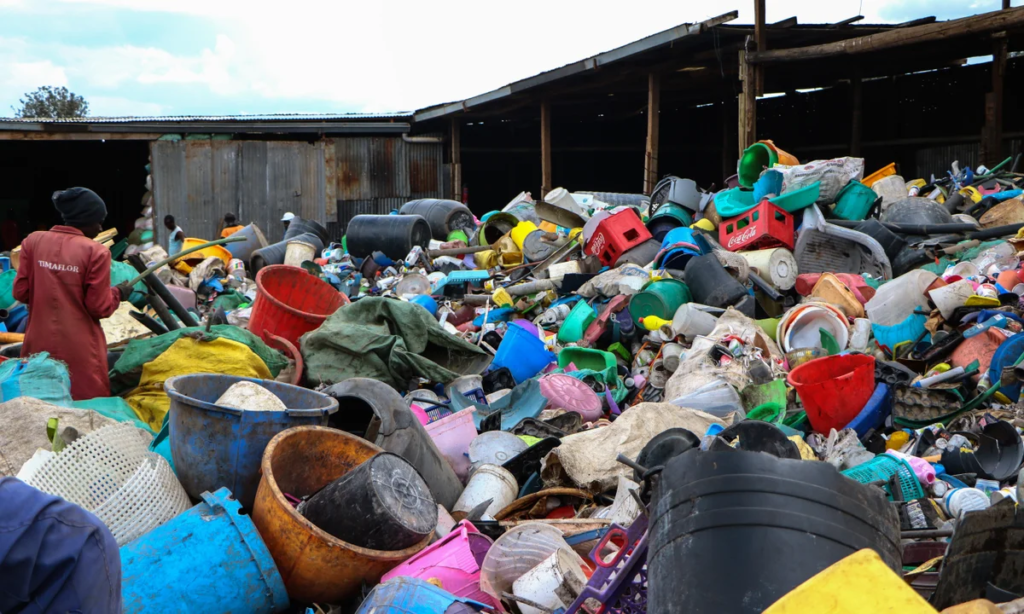
The study identified 56 global companies as responsible for more than half of all branded plastic pollution found in the environment. Fast-moving consumer goods companies disproportionately contributed, because their products have shorter use periods and are more likely to be consumed outdoors. An estimated 39% to 43% of the plastics used by three major global beverage corporations over the 23 years between 2000 and 2023 were openly dumped, mismanaged, or leaked into ocean sinks, amounting to between 14 and 21.3 million metric tonnes (Cowger et al., 2024a).
The Accountability Gap
The narrative that plastic pollution is primarily a consumer behavior problem has been extensively challenged by research. Dr. Jorge Emmanuel of Silliman University, a contributor to the 2024 Science Advances study, noted that global companies displaced traditional biodegradable materials in developing nations beginning in the 1960s, introducing cheap single-use plastics into communities that previously used reuse and refill systems. The resulting pollution was framed by industry as a waste management problem, but its origin was a production decision (Cowger et al., 2024b).
More than half of the plastic items found during the audit events analyzed in the 2024 study were unbranded. A finding that calls for mandatory producer labelling and reporting requirements, so that plastic leakage can be traced to its source with legal precision. Without traceability, accountability is impossible. Without accountability, voluntary commitments, even ambitious ones operate without enforcement.
What Extended Producer Responsibility Means
Extended Producer Responsibility (EPR) is a policy framework that assigns financial and operational accountability for a product’s packaging throughout its lifecycle to the company that manufactures or imports it, rather than to the public waste management system. The United Nations Environment Program has provided technical support to over 30 countries developing EPR regulations for plastic packaging. Approximately 40 countries now have EPR schemes operational. In the United States, seven states have passed EPR laws for packaging since 2022. These laws hold producers financially accountable for post-consumer collection and recycling (Extended Producer Responsibility | International Environmental Technology Centre, n.d.).
The EU’s Single-Use Plastics Directive bans the most common single-use plastic items found in European beach cleanups and requires member states to collect 90% of plastic bottles by 2029. It also mandates that plastic bottles sold in the EU contain at least 25% recycled content by 2025 and 30% by 2030. These regulatory instruments are materially changing corporate packaging decisions in Europe. Companies that operate globally but are headquartered in regions without equivalent regulation have less structural incentive to change.
Who Is Changing and How
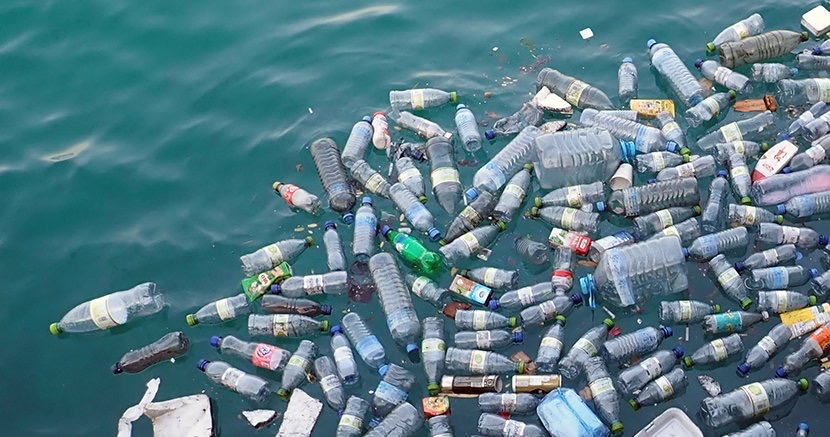
Voluntary corporate action on plastics exists, but its integrity is contested. Coca-Cola’s World Without Waste initiative, launched in 2018, committed to collecting and recycling a bottle or can for every one sold by 2030 (The Coca-Cola Company Announces New Global Vision to Help Create a World Without Waste :: The Coca-Cola Company (KO), n.d.). Independent analysis by Vandenberg (2024), published in Global Environmental Politics, found that the initiative functioned in part as a political CSR strategy, using the company’s institutional influence to shape regulatory discourse in ways that emphasised individual and consumer responsibility while deferring structural production change. Similar critiques have been levelled at PepsiCo and Nestlé, both of which have faced ongoing allegations of failing on voluntary plastic reduction commitments.
Structural change is what the scale of the problem requires. That means reducing virgin plastic production, redesigning packaging for reuse rather than single use, supporting extended producer responsibility legislation, and funding waste collection infrastructure in the developing world markets where most branded plastic leakage occurs. The UNEP’s proposed Global Plastics Treaty, under negotiation since 2022, would create the first legally binding international instrument for plastic production reduction. Its outcome will be a significant indicator of whether corporate influence over climate policy is serving public or private interests.
References
Cowger, W., Willis, K. A., et al. (2024). Global producer responsibility for plastic pollution. Science Advances, 10(17), eadj8275. https://pmc.ncbi.nlm.nih.gov/articles/PMC11042729/
Break Free From Plastic. (2024). New research confirms plastic production is directly linked to plastic pollution. https://www.breakfreefromplastic.org/2024/04/25/new-research-confirms-plastic-production-is-directly-linked-to-plastic-pollution/
UNEP. (2024). Taking on plastic pollution. UNEP Annual Report 2024. https://www.unep.org/annualreport/2024/stories/taking-plastic-pollution
Vandenberg, J. (2024). Plastic politics of delay: How political corporate social responsibility discourses produce and reinforce inequality in plastic waste governance. Global Environmental Politics, 24(2), 122–145. https://direct.mit.edu/glep/article/24/2/122/119987/Plastic-Politics-of-Delay-How-Political-Corporate
Frontiers in Sustainability. (2024). Corporate engagement in mitigating plastic pollution: Examining voluntary initiatives and EU regulations. https://www.frontiersin.org/journals/sustainability/articles/10.3389/frsus.2024.1420041/full
Ocean Conservancy. (2024). United States of Plastics Report. https://oceanconservancy.org/work/plastics/policy/united-states-of-plastics-report/
53 workplace mental health statistics you can’t ignore in 2025. (n.d.). Retrieved April 17, 2026, from https://www.spill.chat/mental-health-statistics/workplace-mental-health-statistics
Cowger, W., Willis, K. A., Bullock, S., Conlon, K., Emmanuel, J., Erdle, L. M., Eriksen, M., Farrelly, T. A., Hardesty, B. D., Kerge, K., Li, N., Li, Y., Liebman, A., Tangri, N., Thiel, M., Villarrubia-Gómez, P., Walker, T. R., & Wang, M. (2024a). Global producer responsibility for plastic pollution. Science Advances, 10(17). https://doi.org/10.1126/SCIADV.ADJ8275
Cowger, W., Willis, K. A., Bullock, S., Conlon, K., Emmanuel, J., Erdle, L. M., Eriksen, M., Farrelly, T. A., Hardesty, B. D., Kerge, K., Li, N., Li, Y., Liebman, A., Tangri, N., Thiel, M., Villarrubia-Gómez, P., Walker, T. R., & Wang, M. (2024b). Global producer responsibility for plastic pollution. Science Advances, 10(17), 20. https://doi.org/10.1126/SCIADV.ADJ8275;JOURNAL:JOURNAL:SCIADV;WEBSITE:WEBSITE:AAAS-SITE;REQUESTEDJOURNAL:JOURNAL:SCIADV;WGROUP:STRING:PUBLICATION
Extended Producer Responsibility | International Environmental Technology Centre. (n.d.). Retrieved April 17, 2026, from https://www.unep.org/ietc/what-we-do/extended-producer-responsibility
Rising Work Stress Surpasses Inflation and AI Anxiety as the Leading Threat to Employee Mental Wellness, Highlighting a Growing Crisis | Onrec. (n.d.). Retrieved April 17, 2026, from https://www.onrec.com/news/news-archive/rising-work-stress-surpasses-inflation-and-ai-anxiety-as-the-leading-threat-to
Sohal, A., & Sharma, D. (2025). Exploring workplace mental health among Indian employees: A systematic literature review and future research agenda. Social Sciences & Humanities Open, 11, 101290. https://doi.org/10.1016/J.SSAHO.2025.101290
The Coca-Cola Company Announces New Global Vision to Help Create a World Without Waste :: The Coca-Cola Company (KO). (n.d.). Retrieved April 17, 2026, from https://investors.coca-colacompany.com/news-events/press-releases/detail/923/the-coca-cola-company-announces-new-global-vision-to-help-create-a-world-without-waste
Work Stress Tops Employee Wellbeing Concerns in 2025: Wellhub Report. (n.d.). Retrieved April 17, 2026, from https://wellhub.com/en-us/blog/press-releases/work-life-wellness-2025/
Clear Cut CSR, Climate Desk
New Delhi, UPDATED: April 19, 2026 09:00 IST
Written By: Tanmay J Urs