
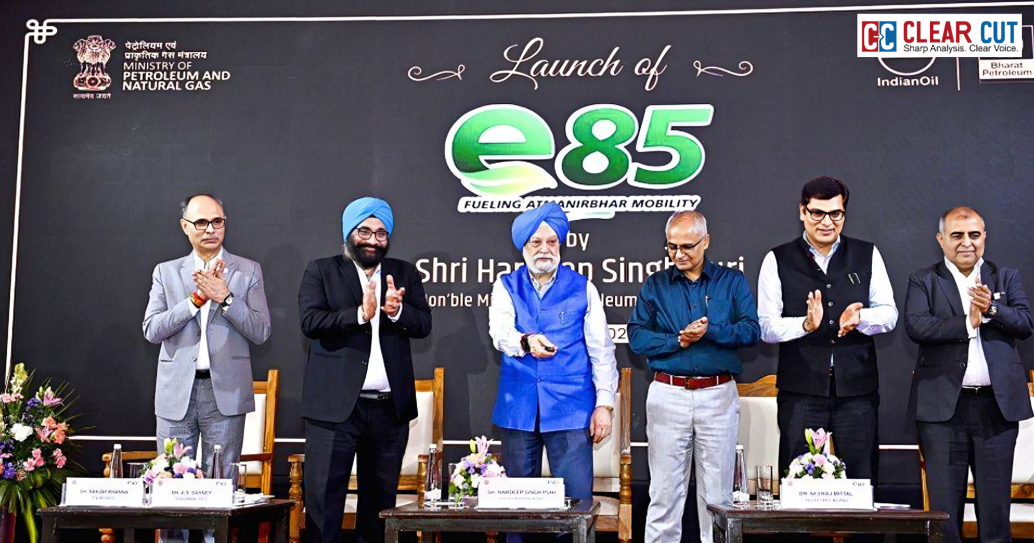
On the morning of World Environment Day 2026, Union Minister Hardeep Singh Puri did something deceptively simple: he filled up a car. The vehicle was a Maruti Suzuki Wagon R Flex Fuel. This was India’s first mass-market flex-fuel car, launched just a day earlier. The fuel was E85, a blend of 80–85% ethanol and 14-19% petrol. The location was an IndianOil outlet in New Delhi. But what happened was nothing but routine. India had officially entered the age of high-ethanol mobility.
What E85 Means and Why It Matters Now
E85 is not petrol with an additive. It is a fundamentally different fuel architecture that powers flex-fuel vehicles (FFVs) designed to run on any blend from E20 to E100. The rollout began at 48 public sector oil marketing companies (OMC) outlets across the country. The government has a clear scale-up path: 500 outlets by December 2026 and approximately 5,000 outlets by December 2027. By 2030-31, the initiative is projected to raise India’s aggregate ethanol blending to nearly 26%, up from the current 20%.
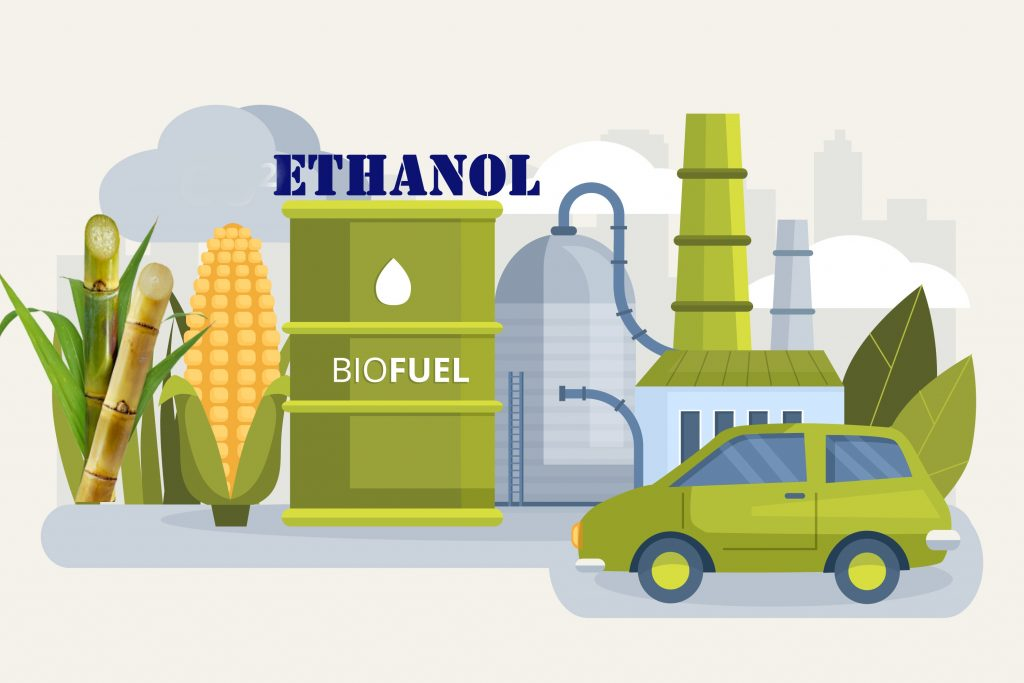
For context, achieving 20% blending is itself a milestone India reached five years ahead of the original 2025 schedule. It is also a number built on real sacrifice and scale: ethanol blending has climbed from just 1.53% in 2014 to 20% in 2026. That journey has saved India over ₹1.84 lakh crore in foreign exchange and eliminated the need to import nearly 302 lakh metric tonnes of crude oil.
The Advantage of Price: Cheaper and Cleaner
E85 is expected to be priced approximately ₹20 per litre lower than conventional petrol, creating a direct consumer incentive to switch. This price differential becomes the programme’s most powerful adoption lever: it converts environmental intent into economic logic. For the average FFV owner, the annual savings over petrol are significant. Crucially, E85 can reduce greenhouse gas emissions by up to 61% compared to petrol, according to government data.
Farmers as Energy Providers
Minister Puri framed India’s ethanol success as inseparable from agrarian transformation. Indian farmers, he said, have evolved from being the nation’s ‘Annadatas’ to ‘Urjadatas’. Domestic sugarcane and grain-based ethanol production has been the backbone of the blending program. These reframing matters because it anchors clean energy transition not in imported technology but in domestic agricultural output, simultaneously boosting rural income and energy sovereignty.
The Road Ahead: Infrastructure and Industry
The simultaneous launch of the Wagon R Flex Fuel signals that auto OEMs are now aligned with the government’s fuel transition plan. The critical pressure point going forward is infrastructure: scaling from 48 to 5,000 outlets in eighteen months is an ambitious logistics challenge. The pace of FFV adoption, availability of trained service technicians, and consistent ethanol supply chains will determine whether the E85 rollout delivers at scale or stalls at the pilot stage.
Conclusion: The Fill That Changed the Fuel Map
India’s E85 launch is not a ceremonial event, it is the opening move in a structural overhaul of transportation energy. The numbers are real: 20% blending, ₹1.84 lakh crore saved, 302 lakh metric tonnes of crude displaced, and a 61% emissions reduction potential. The policy vision is bold, and the economic case is sound. What is now required is ruthless execution on outlet expansion, on fleet electrification incentives, and on FFV manufacturing scale. Every state government must treat the 5,000-outlet target as a deadline, not a suggestion. Every automobile manufacturer must fast-track FFV model lines. India has the fuel, the framework, and the farmer. The only remaining question is whether delivery will match the promise. The clock started on June 5, 2026.
Clear Cut Climate, Research Desk
New Delhi, UPDATED: June 13, 2026 09:00 IST
Written By: Tanmay URS