
- Meera Mahadevan founded Mobile Creches in 1969 to provide childcare, education, nutrition, and support to children of migrant construction workers.
- Her pioneering work influenced India’s childcare system, including the development of ICDS and Anganwadi centres, while her legacy continues through advocacy for migrant children and working parents.
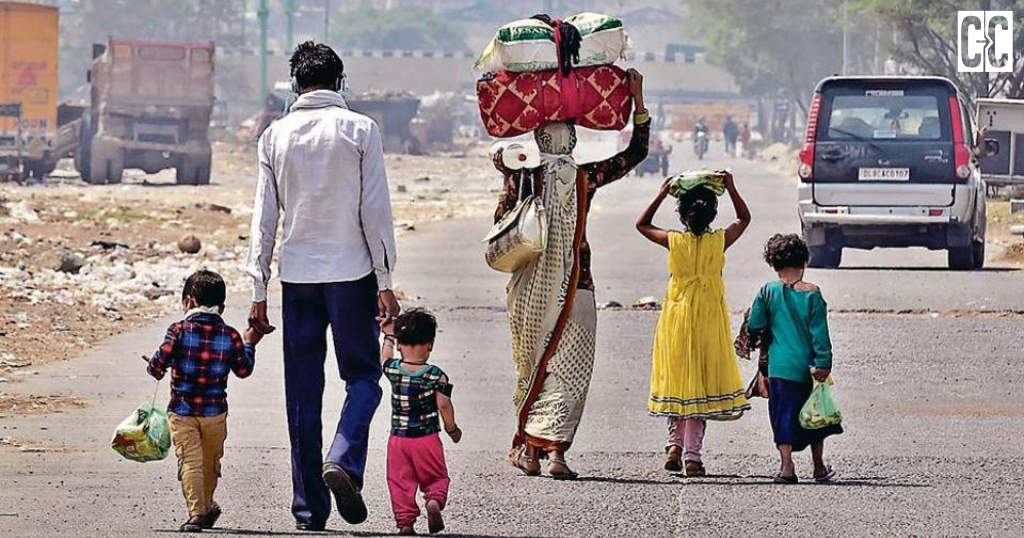
In March 1969, huge pavilions were being constructed at Gandhi Darshan, for an exhibition honouring Gandhi’s birth centenary. A young member of the Centenary Planning Committee, Meera Mahadevan, noted the plight of children at the site. Infants lay in the flying dust, toddlers wandered around cement mixers and sledgehammers, older children helped their parents fetch and carry, lay bricks. Construction labour families from rural Rajasthan were put up in makeshift jhuggis. Struck by the irony of the situation, Meera Mahadevan soon set up a crèche. It was rudimentary, in a tent, with a charpoy, one helper, and some toys. Called Kasturba Shishu Vihar, this became a refuge for children of all ages. They played here, and received a smattering of education.
A refugee, writer, and social reformer, Meera Mahadevan transformed personal loss into a lifelong mission for migrant children, founding Mobile Creches and pioneering childcare systems that continue to impact millions across India.
When construction wound up at Gandhi Darshan, workers moved to another site, and needed a crèche there. Within the year, Meera Mahadevan, joined by educationists Mina Swaminathan, Devika Singh, Kumkum Ghosh, Manju Vaish and their ilk, registered an organization: Mobile Creches.
Mobile Creches is today well-known as a pioneer, its work sustained over the decades. At the start, everything was improvised: cradles of tough cotton fabric tied onto wooden stands; games and toys made from sticks, stones, sand, bricks, wastepaper, old magazines and cartons. Storytelling, songs, counting, and simple nutritious meals were introduced. Systems crystallized. By 1971, ten daycare centres were in place. In 1972, Mobile Creches-Bombay was launched.
Meera Mahadevan and her colleagues lobbied with building contractors, some of whom agreed to meet part-cost of creches. Mobile Creches planted the idea of daycare in the hard soil of state departments—Ministries of Labour, Education, Health, Housing. The organisation had created a model for high-quality daycare, and they wanted it to be replicated at scale. Influenced by Mobile Creches, the Integrated Child Development Services (ICDS) was launched in 1975, and currently runs some 14 lakh Anganwadi.
Meera Mahadevan began from scratch, and laid the first bricks. The foundations have stood the test of time. Having volunteered with Mobile Creches, I recall their creches as warm, vibrant and creative; and remain in awe of the crèche “Didis”, who teach, medicate, feed, soothe, sing, dance, play, sew, sweep, wash, cook, conduct meetings, counsel parents—8 hours a day, 6 day a week. Infants and pre-school children are with them for 8 hours, older children after school hours.
In an art exhibition called “Building Dreams,” children showed a beautiful mural made with material from construction sites—bajri, broken tiles and, bits of wood. A visitor noted, ‘Say the word mother and they draw a woman breaking stones—they don’t miss even the nose ring. Ask them where they came from and they draw fields and also show a train.’
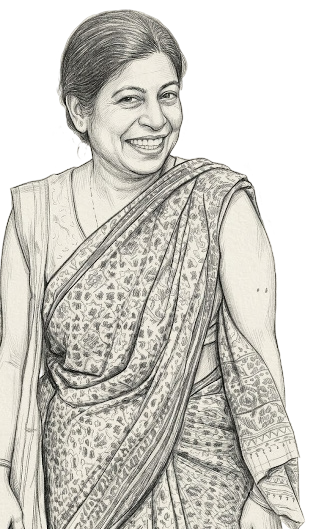
Meera Jacob Mahadevan (1929-77)
Meera Mahadevan lurks in every crèche, a friendly ghost. Colleagues knew her as a `woman of warm responses and rich imagination’. Indeed she was an exceptional person—with an unusual life-story. Meera Mahadevan’s birth-name was Miriam Jacob Mhendekar. A Bene Israeli Jew, she grew up in Karachi, a secure, carefree childhood with several siblings. Her brother Daniel recalls Miriam as a very creative girl who sang, acted and played music. They were part of a close-knit community of 2,500 Jews, migrants from rural Konkan, employed in Karachi in railways, civil services, oil mills, etc. They spoke Urdu and English, celebrated multiple festivals, savored mixed cuisines. With the founding of Israel in 1948, however, a wave of anti-Semitism disrupted their peaceful life. Jews were attacked, their synagogue
looted. Miriam’s family, like many others, fled to Bombay with few belongings.
Miriam felt disoriented, a refugee. Her parents, Aaron and Shegulla Mhendekar, were unable to find employment. Pulling herself together, she found work to support the family. They debated
shifting to Israel. She clearly opted to stay on in India. Then, she fell in love and decided to marry a Hindu. The consequences were severe—Miriam was excommunicated by the Bene Israel community. Even more traumatic, her family disowned her, cutting off contact forever.
Miriam felt disoriented, a refugee. Her parents, Aaron and Shegulla Mhendekar, were unable to find employment. Pulling herself together, she found work to support the family. They debated
shifting to Israel. She clearly opted to stay on in India. Then, she fell in love and decided to marry — a Hindu. The consequences were severe—Miriam was excommunicated by the Bene Israel community. Even more traumatic, her family disowned her, cutting off contact forever.
Meera joined B.A. in English Literature at Delhi University, and began writing short stories, and a novel. Her novel Apna Ghar was published in 1961, and later translated into English with
a different title: Shulamith (Arnold-Heinemann, 1975). This was the first-ever novel centered on the Bene Israelis. Its theme, storyline and characters were based on people and places she knew intimately. Shulamith’s family migrates from Karachi to Bombay; her husband, and later son, migrate to Israel, while she stays back. Shulamith expresses a view that is actually
Meera’s stance: “The birth of Israel spelt misery to thousands of people. Thousands of Arabs
have been forced into becoming refugees. I feel it is not right”. Further, ‘I c an’t imagine having to leave this house and this country. I don’t want to be a refugee again.’ But Shulamith is lonely, depressed and ill; Michael returns, but she dies soon after.
Shulamith (Arnold-Heinneman, 1975). This was the first-ever novel centered on the Bene
Israelis. Its theme, storyline and characters were based on people and places she knew intimately. Shulamith’s family migrates from Karachi to Bombay; her husband, and later son, migrate to Israel, while she stays back. Shulamith expresses a view that is actually Meera’s stance: “The birth of Israel spelt misery to thousands of people. Thousands of Arabs have been forced into becoming refugees. I feel it is not right”. Further, ‘I can’t imagine having to
leave this house and this country. I don’t want to be a refugee again.’ But Shulamith is lonely, depressed and ill; Michael returns, but she dies soon after.
Slowly but surely, Meera Mahadevan moved towards a different way of being, building wider connections with humanity. Often she helped her husband edit the journal “Gandhi Marg”.
She read proofs and compiled the index for a book, published in 1967, with writings of leading
scholars on the contemporary relevance of Gandhian thought, non-violence, satyagraha, ahimsa.
Her Life’s Work: With Migrant Labour Children
From 1969 onwards, Mobile Creches was Meera’s driving passion. The organization expanded rapidly. Launching Mobile Creches in Bombay was an interesting occasion to return to the city—with a new kind of family, a new community, replacing her lost family and community. The same year (1972) she also co-founded Action India, which worked initially with migrant labour in Mehrauli.
Meera was acutely sensitive to the suffering of construction workers. Employment was precarious, payment minimal, housing squalid, with no access to toilets, hospitals, schools. Laws on migratory labour, minimum wages, health facilities, were routinely flouted. She was tempted to begin organizing construction labor to demand their rights. But she and her colleague knew that at any whiff of agitation politics, contractors would throw them out and close down the creches. This they could not risk. Strategically, they began running adult education classes. Workers learned literacy, and discussed concerns such as ration cards, labour laws, women’s rights, child marriage, health, alcoholism. Mobile Creches’ drama troupe, Lokdoot, staged plays on critical issues for the workers. The community’s language, folklore, puppetry, phads (story-scrolls), songs were incorporated, in a culturally rich process.
In the mid-70s, Delhi government demolished lakhs of inner-city jhuggis. Most affected were migrants with casual employment in the informal sector—casual labour, domestic servants, hawkers, weavers, riksha-pullers, scavengers. Trans-located to remote resettlement colonies, these hard-working people desperately needed daycare facilities for children. Mobile Creches responded, setting up creches in several resettlement colonies.
Meera Mahadevan and her team faced endless challenges. Understanding that childcare is a skilled job, requiring well-trained professional staff, they developed pre-service and in-service training. Funds were strenuously raised, for material costs and dignified salaries, through grants, donations, sale of children’s artwork, music programs, film premieres. Although Mobile Creches set the template for India’s ICDS program, the state pays its frontline childcare workers a mere “honorarium.” The diluted state version runs its centres (Anganwadi) half-day, thus failing to provide daycare, necessary for children of working parents. Mobile Creches continues tirelessly to advocate for full-day Anganwadis, with well-paid staff. Its own high-quality creches in Delhi, Bombay and Pune, still set the standards.
Volunteering with Mobile Creches, off and on during the 1980s, was a marvelous learning experience. I found the space flowing with creative energy and genuine affection. Children—from tough backgrounds—were wonderfully spontaneous, curious, active, and engaged. The staff was outstanding, the systems well-honed.
Meera Mahadevan’s memory lurked in the background. I could not meet her in person. For, she had passed away — in 1977. Just 42 years old. She was buried in the Jewish Cemetery at Humayun Road, New Delhi.
A Pillar of Fire
Meera’s grand-nephew, 15-year old Benjamin Cohen Jacob, writes about her after searching the net and interviewing his grandfather – Meera’s brother Daniel Aaron Jacob Mehndrekar, who moved to Israel long back: ‘…her special qualities, such as humanity, leadership, perseverance, care for fellowmen, are qualities that move me. I see in her a heroic figure,
raw courage and determination. By the force of her personality she served as a pillar of fire for
those who followed. She looked between religious differences and saw what others failed to see; pluralism and tolerance. Not only India but the world needs people like Meera like they need air to breathe’.
Benjamin’s words, across the oceans, connect threads across generations, helping heal the
pain of his ancestors. He adds: ‘I believe that every person has the strength to bring about a change. Meera believed in her vision and she a “small woman” was able to influence a large number of good people’.
Shulamith, in Meera Mahadevan’s novel, could not bear the thought of leaving her home with its big peepul tree. Meera left home, even though she could hardly bear the loss. She found the strength and wisdom to make new homes, where tens of thousands of children felt welcome through the day. Each daycare center a home away from home, became safe space for her too.
Mobile Creches continues to run its signature daycare centres. It advocates for laws and policies protecting rights of migrant labour and their children, trains ICDS functionaries, and capacitates various organisations who run daycare centres at workplaces and neighbourhoods. It is active in networks of workers, women workers, creche workers, and
alert to the politics of women’s unpaid work.
In 1992 Brinda Singh, then chairperson of Mobile Creches, noted, ‘It’s hard to tell how much
good we’ve done. These women and their children are like nomads. But I think we’ve probably
touched the lives of over 200,000 children.’ The cumulative impact made by this one organization is out of all proportion to its size. By 2025-26, Mobile Creches has directly reached over a million children.
Yet the big picture on childcare and child health is still bleak, as detailed in the well-researched
report State of the Young Child in India (Mobile Creches, 2020). And there are ever-new challenges, like the childcare crisis among women gig workers in Delhi NCR (see Navigating
Work and Care, Mobile Creches, 2026). In the absence of political will and a responsive policy
regime, Meera Mahadevan’s vision remains unfulfilled, for millions of children still lack the
care they deserve.
About the Author: Dr Deepti Priya Mehrotra is a political scientist, teacher, and consultant with specialization on gender, education and social issues. She writes in English and Hindi, has authored several books including acclaimed biographies of Irom Sharmila, Gulab Bai,
stories of single mothers, and a history of street theatre in India.
Clear Cut Child Protection Desk
New Delhi, UPDATED: August 15, 2026 06:00 IST
Written By: Dr. Deepti Priya Mehrotra