

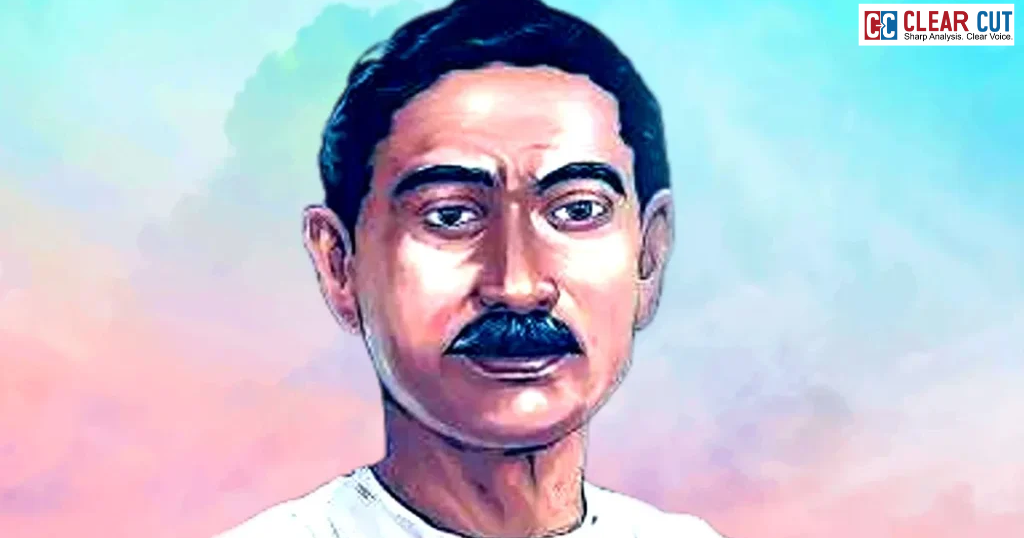
Munshi Premchand, born Dhanpat Rai Srivastava on July 31, 1880, in the small village of Lamhi near Varanasi, Uttar Pradesh, remains one of India’s most beloved authors. As “Premchand,” he helped launch a new wave of modern Hindi and Urdu literature through his storytelling about the myriad social realities of Indian society under colonial rule. In a lifetime, he wrote over a dozen novels and over 300 short stories, along with essays and translations, all of which were deeply influenced by a commitment to social reform and human dignity.
Early Life and Influences
Premchand’s early life was characterized by significant adversity and the loss of loved ones. When Premchand was only 13 years old, his father died, which created financial problems for the family.
Despite this setback, he was an outstanding student who displayed a remarkable aptitude for Urdu and Persian language and literature. Following his education, he took a position as a teacher; later, he
became a government servant. But he saw literature as a means of social transformation, for which he had a longing since his childhood. His pen name, “Premchand,” which he assumed sometime in 1909, showed a literary identity that had developed as he gave up his original pen name, “Nawab Rai.”
The socio-political context of the time, marked by British colonial dominance in all aspects of life, greatly influenced his outlook. Premchand closely witnessed the omnipresent poverty, social and caste discrimination, gender inequity, and rural exploitation impacting the lives of ordinary people in India. Premchand’s observations motivated him to commit to realistic writing aimed at moving the masses toward the idea of change.
A Literary Journey: From Idgah to Godaan
Premchand’s body of work comprised a remarkable range of forms – novels, short stories, plays, and essays – all designed as reflections on societal ills and a demonstration of human compassion and
empathy to motivate social reform. He published his first collection of short stories in 1907 under the title
Soz-e-Watan (Sorrow of the Nation), indicating his nationalist and reformist inclination. Premchand’s novels are recognized for social critique that draws attention to the pictorial realities that faced various sections of Indian society whilst under British colonial rule. His literary brilliance involves engaging with
these sociological problems through rich character development and enticing narratives that brings to the forefront what it is invisibly there and forgotten.
“Idgah” is one of his most famous short stories, reflecting the innocence of childhood, its resilience enough to expose the theme of poverty. It tells the story of Hamid, a poor, orphaned boy who spends
his little change on a gift for his grandmother, which could have purchased toys for himself, creating tension by highlighting the themes of sacrifice and love of family.
“Godaan” (The Gift of a Cow) is regarded by many as Premchand’s greatest work. Through the character of Hori, a poor farmer caught in the endless cycle of debt and exploitation, he reveals life experiences
of people who hail from villages and endure poverty. The novel is set in a remote impoverished village and is a stinging critique of poverty in rural life; it mainly examines the feudal structures established and implemented by zamindars (landlords). Hori’s desire to own a cow and be seen as wealthy and respectable speaks to the lived experience of villagers, which usually is challenged by the socio-economic dynamics of rural life contemporaneous with or preceding colonial participation throughout the Indian subcontinent. Premchand’s writing demonstrates how the conditions of their existence plummet peasants further into the depths of misery, with colonial economic reform and ingrained caste systems. Despair tempers the peasants’ abhorrent existence, let alone the injustice and struggle to survive at all.
“Nirmala” highlights the traumatic effects of the dowry system on women. The story’s lead character, Nirmala, is forced into an ill-fated marriage with a much older widowed man because her family cannot afford to care for her. The violent mental and emotional abuse she suffers exposes the patriarchal social structure that treats women as little more than a financial transaction in marriage, trapping them into cycles of anguish. Premchand’s sympathetic yet thoughtful revelations also advocate social change and women’s rights and dignity. As a critique of the dowry system’s brutality, this text articulates a powerful argument for female agency and social reform during a period in time when few would even dare to
discuss such topics.
In “Premashram” and “Rangbhoomi,” the topics of degradation, corruption, and justice are easier to talk about, taking a broader look at social structures while still discussing socio-political struggle. “Premashram” addresses the plight of harijans (scheduled castes) and the need to combat the caste system of discrimination. “Rangbhoomi,” or “The Arena,” chronicles the violence between oppressed poor and the rich bourgeoisie while calling attention to land rights, social justice, and the development of
industrial capitalism. The two novels together encapsulate Premchand’s dedication to social egalitarianism and the call to fight social corruption, and preserve the dignity of the humanity.
In “Gaban,” Premchand exposes the destructive force of social pressure and greed that erodes moral values. The protagonist, Ramanath, a middle-class man who feels the pressure to sustain his family’s social status with a wedding and extravagant gifts, falls into a trap of deceit and extravagance. This story satirizes a society that expects people to have status based on wealth and appears to be hypocritical at best, causes moral collapse and tragic outcomes. Premchand, in “Gaban,” examines the dilemmas of the
middle-class man and shows the complexity of being caught between the societal pressures of belonging and one’s ethics.
“Seva Sadan” shifts attention to the need for women to be liberated; it tells a redemptive story about Sumati, a wife who is neglected and becomes both a social reformer and manages an orphanage.
This novel reflects issues related to the rights of women: education, empowerment, and advocating for women to move out of their domestic roles, including taking an action to elevate their status
as moral and productive civilians. The story also shows how personal tragedy can be transformed into service for outcast women, such as those stigmatized by prostitution. Therefore, “Seva Sadan” is both the individual journey of Sumati’s transformation and the larger story of women’s place in society.
Along with these novels, Premchand’s earlier stories and collections often dealt with serious social evils, such as caste discrimination and the remarriage of child widows and widowers. The progressive nature of his views is complemented by his ability to place human meaning into stories, which always raised questions about the established truths of a society, and often encouraged readers and audiences to reject accepted beliefs. In his life and work, Premchand continuously reiterated the moral obligation, albeit
with different types of protagonists, seeming to be paramount to address education, dignity, and equality for social reform.
In short, Premchand’s literary imagination rested squarely in imposing a dialectical reflection on the inequalities and injustices of his era. Premchand’s novels are not just stories; they are forms of social criticism and reform, and they seek to generate a moral sense of empathy about the marginalized and the conception of a just society.
Each piece of writing is a microcosm of a larger social reality rendered with empathy and psychological depth and moved through topics in Indian literature toward a literature rooted in realism.
Impact on Society and Legacy
Premchand’s literary contribution has had an extraordinary and lasting impact on Indian society and literature. His stories provided a voice for entirely voiceless communities and a critique of oppressive
structures.
The works of Premchand became reading materials in all school programs and urged young Indians to understand the significance of social justice and national identity, among other things.
The adaptions of his works into film, theater, and television made his messages accessible in generations and decades. Additionally, Premchand’s literary style was often based on simplicity, lucidity, and emotionality which updated Indian literature and inspired countless authors to rank social themes in their works. For a young India in the burgeoning ideas of independence and post colonialism his work posited a sense of community in a diverse society. It identified commonalities and shared struggles, which seems
particularly poignant during the pre-independence and partition context / landscape. His call for women’s education and support of widow remarriage, along with many other social changes he wished to advocate, began a gradual process of social reformation for India in the 20th century.
The name “Upanyas Samrat,” or “Emper or Among Novelists” given to Premchandby the literary scene is a mark of the respect and deep regard for him to this day. He continues to be significant within India’s cultural heritage, paralleling the belief that literature’s ability to mark and impact social revolutions as a
heralding of change is possible.
Munshi Premchand’s literary narrative was more than just a narrative; it was imbued with his passionate engagement with the lives and aspirations of the people of India. His depth of feeling for those at the edges of society, coupled with an abiding critical view of those forces that perpetuate social ills, ensured that his stories would remain contemporary forever. He has long been studied and read, even dramatized, because they evoke modern struggles for justice, equality, and human dignity. While synonymous with narrative style, Premchand’s activism elevated the work to a standing in world literature and Indian social history unlike any other writer. His influence is a powerful counterpoint to the depth and immensity
of literature’s ability to stimulate social change and elevate humanity.
The long-form piece incorporates elements of his biography, to recount the arc of his literary corpus from short stories like “Idgah” to his most famous novels, such as “Godaan,” as well as his social impact through activism, to represent all aspects of Munshi Premchand’s lasting contribution to Indian society and letters.
Clear Cut Education Desk
New Delhi, UPDATED: Feb 02, 2026 09:00 IST
Written By: Antara Mrinal