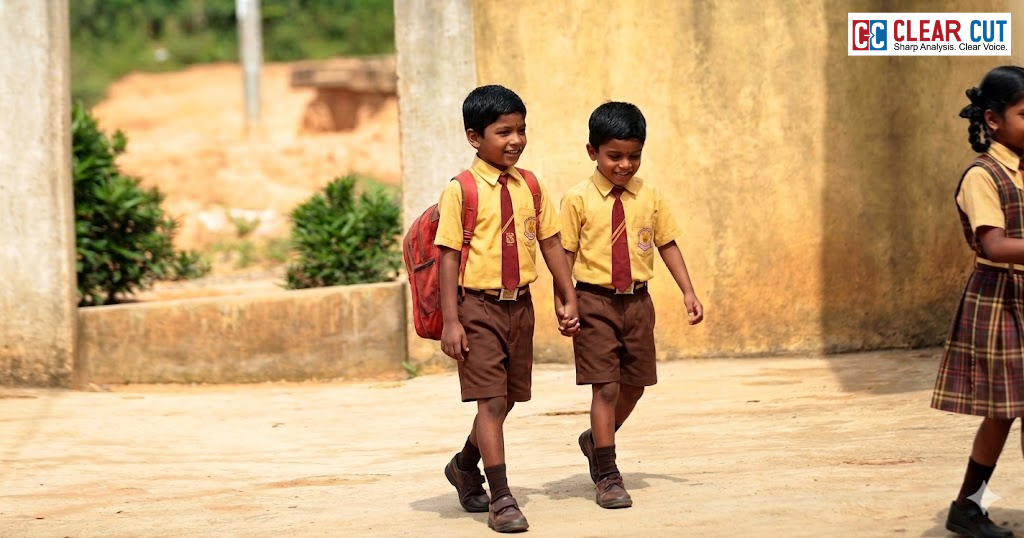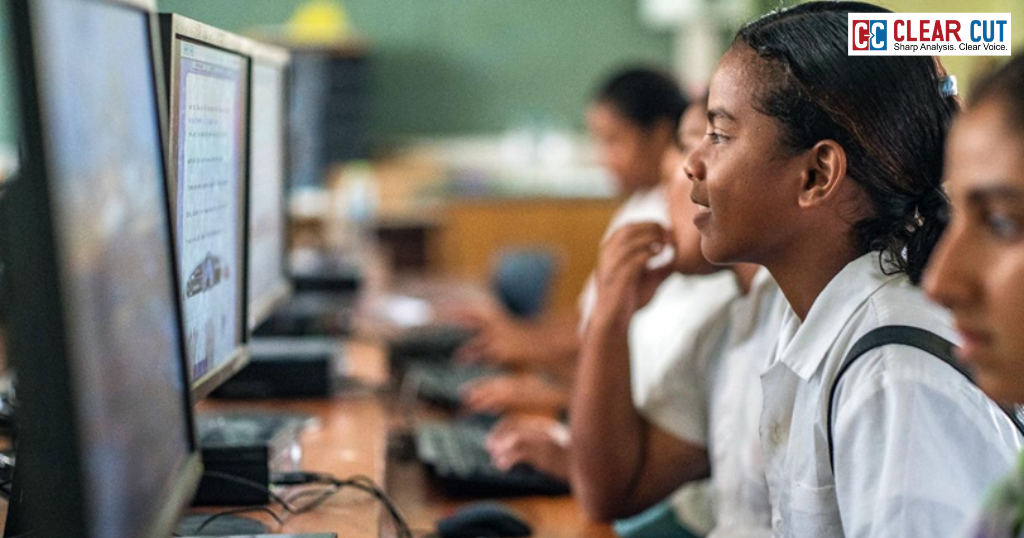


In the last week of December 2025, the Andhra Pradesh government rolled out a programme called Mustabu. It was announced without much fanfare. It did not come with a long list of promises. The focus was limited to government schools and to something very basic. Hygiene support for students.
According to The Times of India (December 2025), the programme is expected to cover around 7.5 million school-going children across the state. Officials described it as a step to improve cleanliness and grooming among students from low-income families.
For many children, this is not a small issue.
Government schools bring together students from very different backgrounds. Some arrive well-prepared. Others come carrying the signs of poverty that are hard to hide. Teachers often say this affects how children behave in class. It also affects how they are treated by peers.
India has managed to get most children enrolled in school. What remains uneven is attendance, retention and engagement. According to the UNICEF State of the World’s Children Report 2024, children from poorer households continue to face higher risks of absenteeism and early disengagement. Health and sanitation are among the contributing factors.
Hygiene does not usually feature in education debates. It appears somewhere between health, WASH, and social norms. But its impact is very much visible in classrooms. Children who feel uncomfortable about their appearance tend to engage less and withdraw. And over time, this can turn into irregular attendance.
The World Health Organisation (WHO), in a 2023 brief on school health, noted that regular hygiene interventions in schools can reduce illness-related absenteeism by 20 to 30 percent, especially in resource-poor settings. The emphasis, however, is on regularity. One-time efforts do not last.
Mustabu appears to be designed with this in mind.
Instead of functioning as a distribution drive, the programme operates through schools. Reporting in The Times of India suggests that hygiene-related activities are meant to take place as part of routine school functioning. Teachers and school staff are involved in supervision. The activities are expected to repeat, not conclude after a single event.
Officials have also indicated that Mustabu is aligned with existing school health and sanitation initiatives. This reduces the need for separate delivery systems. It also means the programme depends heavily on how schools function on a day-to-day basis.
This approach is not new.
In Japan, cleanliness is part of school routine. Students clean classrooms and shared spaces themselves. According to Japan’s Ministry of Education, this is meant to encourage responsibility and equality. Researchers have observed that the practice reduces stigma and creates a sense of shared ownership.
Similar work has been done elsewhere. In Kenya, schools that received support for basic hygiene through UNICEF programmes reported changes that went beyond health. A UNICEF Kenya evaluation published in 2022 noted that attendance improved in many of these schools, and teachers reported better classroom participation, especially among girls.
Indian states have tried related approaches as well. Tamil Nadu’s school health programme is one such example. According to the National Health Mission Tamil Nadu Annual Report 2023, regular health and hygiene activities in government schools helped identify health problems at an early stage and were linked to improved student retention in several districts.
What stands out in these cases is not the scale of the intervention, but how it was delivered. Hygiene became part of the school routine. It was not treated as a special campaign or a one-time exercise.
Mustabu also touches a larger issue.
Children from economically weaker families often carry visible signs of disadvantage into public spaces. These signs affect confidence. They also affect social interaction. According to the UNDP Human Development Report 2024, early interventions that address both physical well-being and psychosocial factors are more likely to produce long-term benefits.
In this sense, Mustabu is not only about cleanliness. It is about reducing everyday discomforts that quietly shape school experience.
The programme will not be easy to run at scale. It depends heavily on how schools function on a daily basis, and on whether teachers and local officials are able to sustain the work over time. Experience suggests this is often where such efforts slow down. A NITI Aayog working paper on school health systems published in 2023 notes that many state-led initiatives begin well but struggle once the initial phase passes.
What happens next will depend on whether the government keeps track of how the programme is actually working inside schools. Attendance trends, basic health outcomes, and student retention will need to be followed over time. Without this kind of tracking, it will be hard to tell whether Mustabu is changing anything beyond its launch.
For now, Mustabu remains a modest intervention. It does not claim to change the education system. It addresses one part of it that often goes unnoticed.
Whether that is enough will depend on how consistently it is carried out inside schools.
Clear Cut Education Desk
New Delhi, UPDATED: Dec 26, 2025 07:00 IST
Written By: Paresh Kumar