
A new national vision document and expanding enforcement powers signal a harder push against narcotics trafficking. But prison data and public-health research suggest India’s weakest link remains what happens after the arrest.
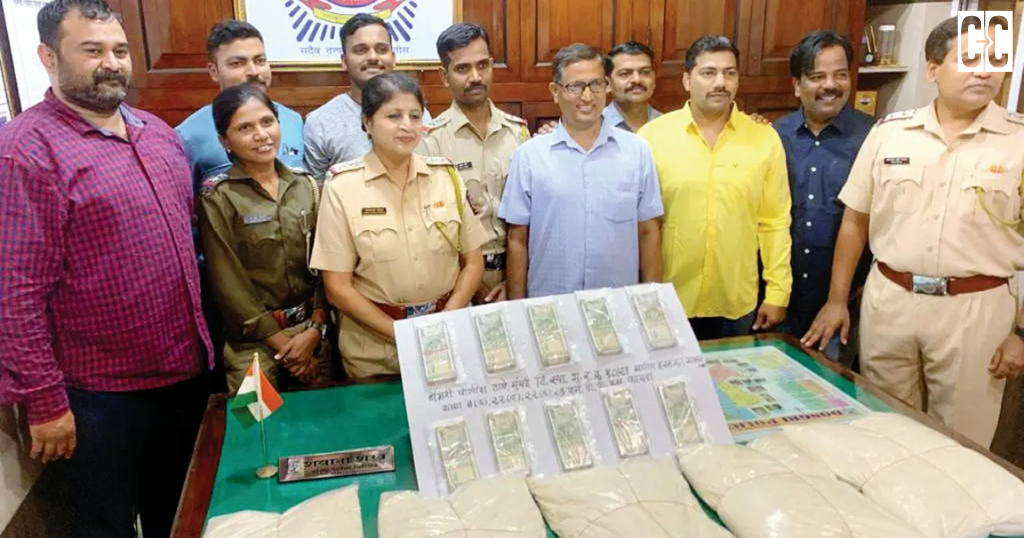
Drug Law Enforcement Agencies have used India’s Preventive Detention Law against 810 “habitual” narcotic offenders in the country in 2025. The measure was applied against a further 427 in just the first half of 2026 – an indicator of how quickly the country’s anti-trafficking efforts are expanding. India’s Union Ministry of Home Affairs detailed the strategy behind its enforcement approach in a written reply to the country’s Rajya Sabha on August 12, 2026, establishing a four-layer NCORD (Narco-Coordination Centre) system running from the central to the district levels.
India also has an Anti-Narcotics Taskforce in each state and a three-year plan known as the Vision Document on Narcotics Control (2026-2029).
The plan’s four key focus areas include enforcement, precursor and synthetic drug control, demand reduction and treatment, and building capability and enhancing coordination. Collaboration is another element of the initiative, in which the Union Home Ministry has identified 11 central government and 75 state-level joint steering meetings so far and launched an NCORD Portal designed to facilitate shared learning across all relevant enforcement agencies in the country.
A Shifting Trafficking Map
A state-wise breakdown of seizure data annexed to the reply, taken from National Crime Records Bureau files, pinpointed where the pressure is mounting – and the map shows how it is moving. In 2022, as this report will detail, Rajasthan reported three to five times more opium-based drug seizures than Punjab for the first two months. Since last year, according to regional security researchers, traffickers, unable to push Pakistan consignments across Punjab as it moved toward better border fences and surveillance, are now increasingly diverting them via Rajasthan’s desert border.
| Year | All-India Opium-based (kg) | All-India Cannabis-based (kg) | Rajasthan Opium-based (kg) | Punjab Opium-based (kg) |
| 2022 | 3,37,169.9 | 17,16,700.0 | 1,46,889.2 | 46,502.6 |
| 2023 | 4,08,104.3 | 5,46,767.6 | 2,21,162.0 | 45,954.3 |
| 2024 | 3,69,695.8 | 5,37,675.0 | 1,89,729.7 | 41,855.5 |
NDPS Act seizures by category, 2022–2024. Rajasthan’s opium-based seizures have consistently outpaced Punjab’s three-to five-fold, reflecting a documented shift in trafficking corridors along India’s western border. Source: NCRB data annexed to Rajya Sabha reply, Ministry of Home Affairs, 12 August 2026.
Indeed, a separate written answer to the Rajya Sabha in July earlier had cautioned about the other wing where the pressure was growing – the Moreh-Tamu border-crossing in Manipur with the Myanmar border reported the seizure of over 4,600 kg of amphetamine-type stimulants and over 2,650 kg of heroin during the period 2021-25. The asymmetry is as much geographic as it is economic, with states on the borders bearing the strain of trafficking and enforcement. At the same time, the population that consumes these drugs increasingly merge in urban centres like Mumbai, Delhi, and Bengaluru. Squeezed between the Golden Crescent to the West and the Golden Triangle to the East, India’s problem is further exacerbated by the fact that in the “Golden Triangle” the UN Office on Drugs and Crime’s World Drug Report 2026 reveals Myanmar has now eclipsed Afghanistan as the largest supplier of illicit opium in the world, with the push of a “dizzying range of new psychoactive substances” onto the market, according to UNODC Executive Director Monica Juma.
Who Carries the Weight
The government’s flagship programme for demand reduction, the Nasha Mukt Bharat Abhiyaan, reports that over 29.05 crore Indians have been covered since its introduction in August 2020 (11.05 crore youth and 7.81 crore women) through awareness programs that now reach every district. But the supply of treatment for people seeking recovery is relatively limited: by official estimates, there were fewer than 800 centres across India, including community reach points, treatment centres, and rehabilitation centres. This discrepancy is costly.
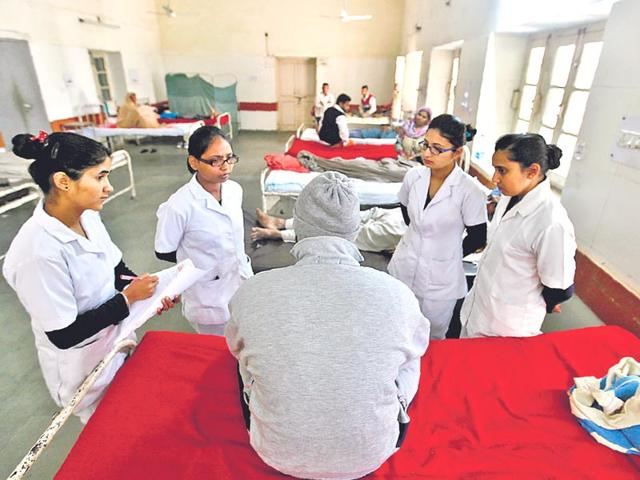
Researchers at AIIM’s National Drug Dependence Treatment Centre have claimed that Indian drug policy has continued to be inordinately influenced by the supply-side control/enforcement measures, and demand and harm reduction aspects of the policies have remained significantly deprioritized (sic), Indian Journal of Psychiatry (2021).
Prison statistics are recording over 28,000 persons arrested for possession only under the NDPS Act: these were predominantly poor individuals, in light of the stringent bail requirements for cases with however small amounts of drug possession, something Section 64A sought to fix and get users redirected towards therapy rather than a jail term.
What Portugal Shows
What’s going on in Portugal stands in useful contrast. Struggling with a heroin/HIV epidemic in the 90s, Portugal decriminalized drug possession in 2001, diverting resources from enforcement to treatment services, needle-exchange, and opioid-substitution programs. Their death rate from drug overdoses has since decreased by nearly 80%, while overall use remained relatively level.
India’s Vision Document does begin to sketch out a similar shift – listing demand and harm reduction as one of its pillars and framing law enforcement through a “detect, disrupt and destroy” focus on busting smuggling networks rather than individual drug mules. This strategy could free up resources from the low-level, sometimes forced individuals who often make up current enforcement figures, if sustained. It’s still up to the extent to which demand-reduction and harm-reduction services are budgeted for and implemented.
Clear Cut Education, Research Desk
New Delhi, UPDATED: August 19, 2026 16:45 IST
Written By: Yatharth Pathak