

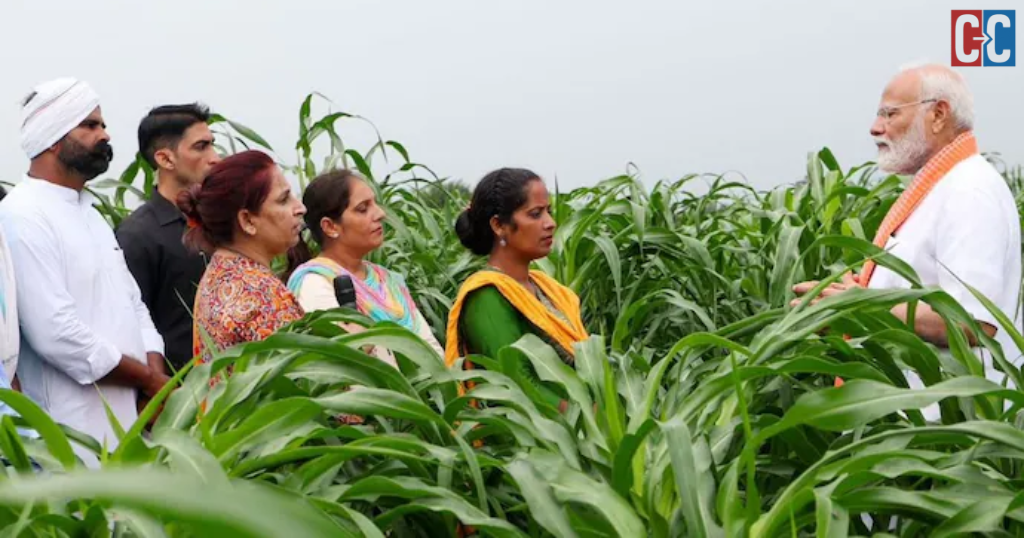
A fresh National Biodiversity Authority disbursement follows India’s Access and Benefit-Sharing law to the letter — and shows, in its own fine print, why that law keeps missing the people it exists to protect.
The National Biodiversity Authority (NBA) has released 2.82 crore from India’s ABS mechanism, according to a press information bureau release on August 22, 2006. Of the total release, Rs. 2.80 crore has been made available to 27 State biodiversity Boards (SBBs) and three Union Territory biodiversity councils (UTBCs), and Rs. 2.01 Lakh has been allocated to ICAR-IIHR, Karnataka.
The money originates from Advanta Enterprises Ltd. (formerly UPL Limited), which paid the NBA ₹2.94 crore for the rights to the genetic material underlying eight cauliflower, five hot pepper, five okra, and six tomato hybrids. Gujarat (₹44.59 lakh), West Bengal (₹41.24 lakh), and Madhya Pradesh (₹32.73 lakh) received the largest shares — an allocation based not on where the underlying plant genetics originally came from, but on where the four crops are cultivated today.
Top recipients of the ₹2.80-crore ABS disbursement to State Biodiversity Boards and UT Biodiversity Councils, August 2026
| S.No. | State | Amount Released (₹ in lakh) |
| 1 | Gujarat | 44.59 |
| 2 | West Bengal | 41.24 |
| 3 | Madhya Pradesh | 32.73 |
| 4 | Odisha | 32.57 |
| 5 | Bihar | 30.86 |
| 6 | Chhattisgarh | 16.54 |
| 7 | Uttar Pradesh | 12.66 |
| 8 | Andhra Pradesh | 10.51 |
| 9 | Tamil Nadu | 10.49 |
| 10 | Maharashtra | 7.07 |
| 11 | Others (20 SBBs/UTBCs) | 40.55 |
Source: National Biodiversity Authority, via Press Information Bureau, August 22, 2026.
That distinction carries real weight. Because Advanta acquired the relevant seed business rather than sourcing the material directly, the NBA could not trace it to individual farmers, specific communities, or a single identifiable region — the generations of cultivators whose selection arguably built the genetic diversity now sold as hybrid seed. An Expert Committee recommended, and the Authority approved, distributing the funds by cultivation footprint instead. It is a defensible and legal workaround. It’s also, in the release’s own words, an admission: When biological resources change hands due to a corporate takeover and the company that has fostered that diversity disappears into an acquisition, the whole chain of benefit sharing can continue even though that specific company falls out of existence.
Other benefits, merely in the same release, highlight the distinct narrative of traceability. Another payment of 7.15 lakh, the benefit from two strains of microbes for use in agriculture, was directly tracked to the ICAR-IIHR’s stock – thus, the origin of the centre from which the benefits emit got 30% share of the earnings directly, without needing a state board’s intermediary. This gives a peek into the effective operation of the act, where traceability is direct.
But this isn’t a unique void. In India’s first national report, submitted to the Convention on Biological Diversity (CBD) on its Nagoya Protocol implementation in February 2026, a total of 12,000+ ABS permits were found, together with ₹268 crore in funding obtained as well as ₹139 crore disbursed since its inception, in addition to 2.76 lakh Biodiversity Management Committees, which were created to obtain community permission.
Yet the same report told the CBICAR-IIHR has no Indigenous Peoples and Local Communities at all. Legal researchers Alphonsa Jojan and Shyama Kuriakose, writing in Mongabay India, described that response as a consequential negation: it excuses the government from documenting how it secures the free, prior, and informed consent that farmers, pastoralists, fisherfolk, and Adivasi communities are entitled to under the Nagoya Protocol — even as close to 45% of India’s workforce depends on agriculture.
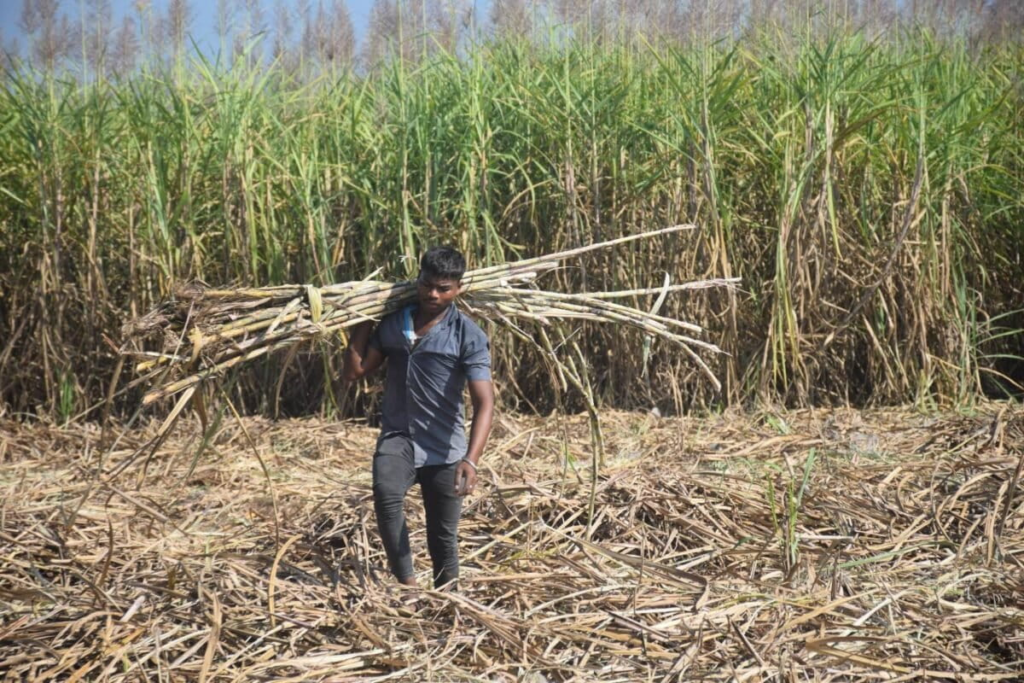
Brazil, another megadiverse country bound by the same protocol, routes its equivalent funds differently. Under its 2015 Biodiversity Law, companies profiting from genetic resources pay 1% of net product revenue into a National Benefit-Sharing Fund whose governing committee, per a CISDL assessment by ABS specialists Henry Novion and Jorge Cabrera Medaglia, reserves as many seats for representatives of indigenous peoples, traditional communities, and traditional farmers as for public administration — a structural safeguard India’s board-routed model does not attempt. Yet a comparative study presented at a CBD side event on Brazilian law, reported by the IISD Earth Negotiations Bulletin, found that Brazil’s traditional communities had little say in drafting the law that now governs their own benefit-sharing rights. Formal representation at the payout stage, in other words, has not resolved the older problem of consultation at the policy-making stage — a caution relevant to India too, where 2025’s revised ABS India ‘sions have drawn similar criticism for treating community involvement as consultation rather than consent.
Both states are accountable to the same instruments: the CBD, the Nagoya Protocol, and the Kunming-Montreal Global Biodiversity Framework, in fact, Target 13, of which the NBA’s own press release explicitly cites “fair and equitable benefit-sharing.” India’s total ABS disbursements are already as much as 185 crores since last February, proof that the mechanism has gained momentum. However, whether this momentum translates into equity, not just account balancing, hinges less on how quickly the NBA disburses payments to the various state boards and more on how effectively it might ever locate and identify the community to which the seed belongs.
Clear Cut Research Desk
New Delhi, UPDATED: August 26, 2026 14:30 IST
Written By: Yatharth Pathak