
Experts argued that technology must solve real classroom problems, be designed for scale with governments, and not widen the divide between children with devices and those without
NEW DELHI: Artificial intelligence should strengthen teachers rather than replace them, and it must not widen the gap between children who have technology and those who do not, panellists remarks at the Clear-Cut Education Summit 2026, “Technology, AI and the Future of Learning”, on 30 September. The session was focused around moving from digital access to learning impact, using technology and AI responsibly and equitably.
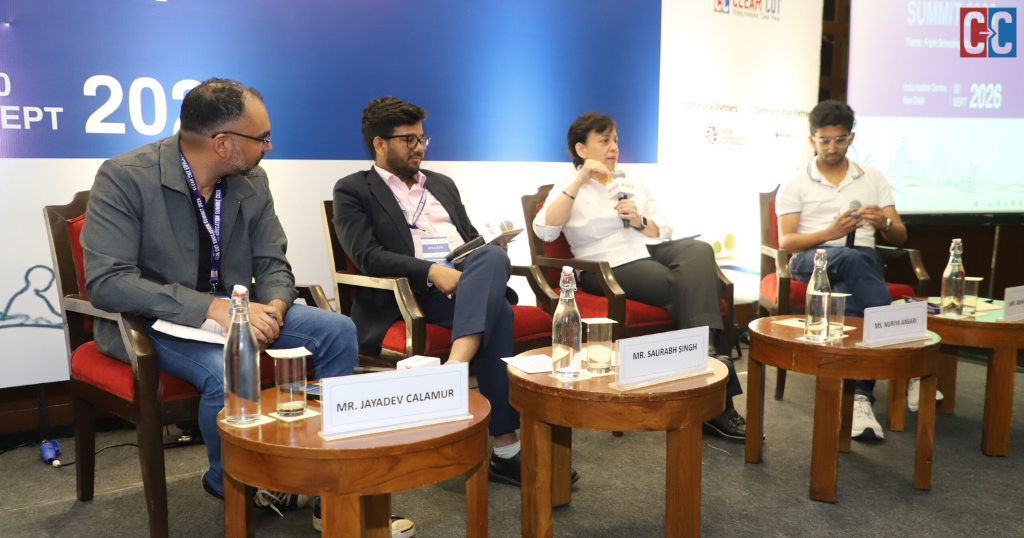
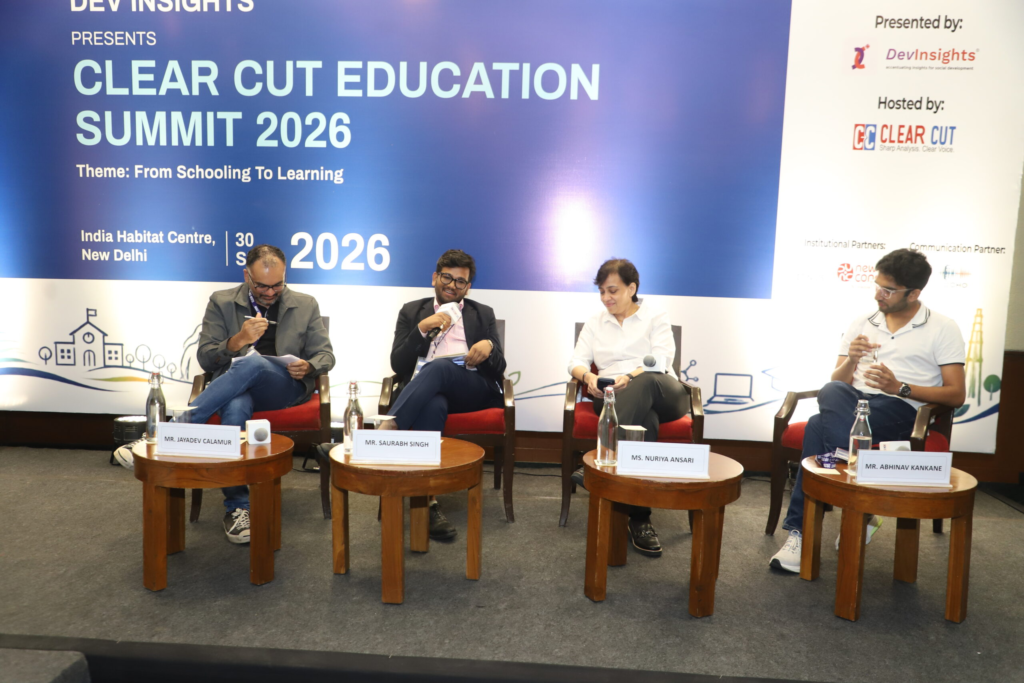
Moderated by Jayadev Calamur, Head of Corporate Communications and Executive Editor at the Retailers Association of India, the panel brought together Nuriya Ansari, Chief Executive Officer of Bharti Airtel Foundation; Saurabh Singh, Director (State Program) at Mantra4Change; and Abhinav Kankane, co-founder of Eduro.
For Ansari, the line between assistance and replacement is clear. AI can take over time-intensive tasks such as assessments, the panel noted, but the teacher’s role as mentor and role model is irreplaceable. “The teacher is the universe through which the student sees society and that cannot be replaced,” she said.
Evidence from elsewhere suggests that guidance is what makes the difference. In a six-week after-school pilot in Edo State, Nigeria, teacher-guided use of a generative AI tutor produced learning gains of about 0.3 standard deviations, which the World Bank equates to between 1.5 and 2 years of typical learning, among students many of whom had never used a computer. The pilot was small and short, but it points to the model the panel favoured: technology working through teachers, not around them.
That begins, Singh said, with knowing what the problem is. The panel urged technology designed around the real challenges of teachers, students and systems, including teacher shortages, workload pressure and the need for more meaningful assessment. “We have to use tech to understand the problem they have and come together to come up with solutions,” he said. It also means working with government and engaging both the supply and demand sides of the system. “Whatever we design, we need to design at scale.”
Ansari raised a harder question about readiness. “Of course, LLMs can teach children – but are our children ready to do deep work with a tool which can make it easy to learn?” she asked. AI could expand access to learning, the panel said, but answers that arrive instantly may not build the patience that deep learning demands.
The panel also warned that technology could deepen inequality. National data show why the concern is real, though not always in the way assumed. Around 85.5 percent of Indian households had at least one smartphone in the 2025 telecom survey, and 86.3 percent had internet access within their premises. Computers are another matter. An earlier government survey found that only 9.9 percent of households owned a computer, 4.2 percent in rural areas against 21.6 percent in urban areas, and just 26.8 percent of 15-to-24-year-olds could carry out more complex tasks such as searching for information or sending emails. The divide may lie less in owning a phone than in what that phone can be used for.
Equity, the panel suggested, also means how children take part in learning. “I want everyone to participate and children are co-designers of the learning and not just consumers,” Singh said. The classroom remains the space where that happens. “Classrooms are those spaces and no technology can take away that space,” a panellist said, adding that technology should complement collective learning rather than displace it.
The panel closed on collaboration. AI may change how problems are understood and addressed, but the fundamental challenges of education still need organisations, governments, teachers and communities to act together. “We are divided by problems and united by solutions,” Singh said. For the children with the most to gain from technology, and the most to lose if it does not reach them, that unity may decide whether AI becomes a bridge or another barrier.
Clear Cut Education Desk
New Delhi, UPDATED: October 09, 2026 22:44 IST
Written By: Yatharth Pathak