
- Rohini Nilekani has donated ₹763 crore over five years, supporting initiatives focused on water, sanitation, education, independent media and social development.
- Through Arghyam, EkStep and other philanthropic efforts, she promotes community-led, sustainable solutions rather than short-term charity.
- Her approach focuses on strengthening institutions and addressing “white spaces” where government and private investment often fall short.
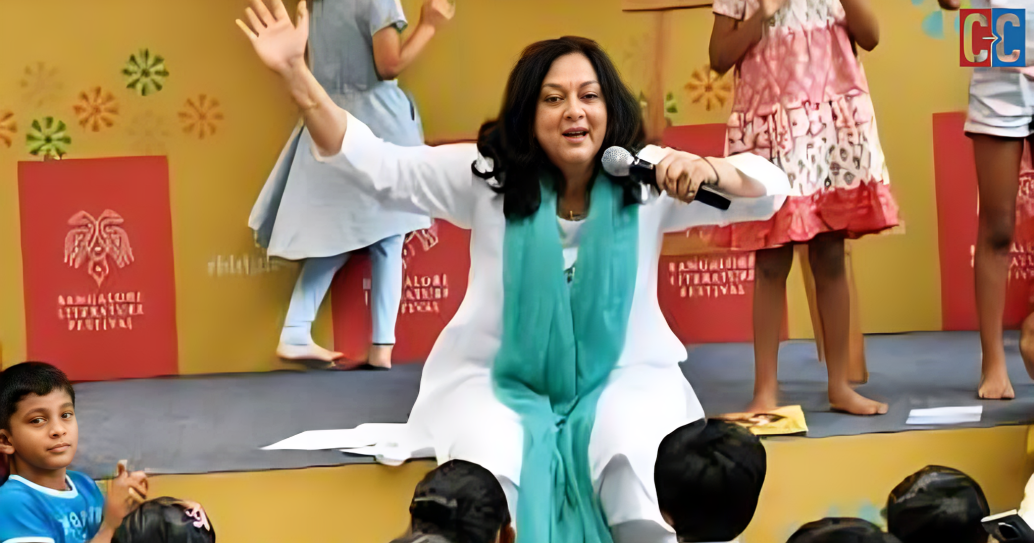
₹763 crore over 5 years. That is the number next to Rohini Nilekani’s name on the EdelGive Hurun India Philanthropy List 2025. She is also known as India’s Most Generous Woman, a title earned by donating ₹204 crore in a single financial year. The number is large enough to stop a conversation. However, Nilekani has spent most of her public life arguing that the amount is less important than the architecture of the giving.
Arghyam: When water became a cause in 2001
One obvious starting point of Nilekani’s philanthropic work is Arghyam. This foundation, established with her donation of INR 150 crore in 2001, works for safe and sustainable water and sanitation use throughout India. It is rooted in a principle that is quite distinct from other corporate water-CSR programs; instead of building infrastructure prescribed by donors and mandated by donors in communities, it supports solutions at the community level. The justification behind this is that most infrastructure, such as wells and water pumps provided by an external entity without plans for maintenance by the community owners, generally becomes non-functional after 3-5 years of the donation. In two decades, Arghyam has supported groundwater recharge schemes, projects focused on access to sanitation, and advocacy with government and policymakers.
EkStep and the early learning architecture
EkStep is a digital learning platform co-founded by Rohini and Nandan Nilekani. It was designed on the principle of infrastructure over charity. They built a shared digital public good that any educator, state government, or NGO can use and build upon. The platform has powered learning programmes at scale, with the government’s Diksha platform, built on EkStep’s open-source architecture. Nilekani also supports Pratham Books, which expands access to early reading in Indian languages.
What she calls ‘White Spaces’
Nilekani’s Philanthropies has crafted a specific lens through which she channels this capital. She refers to these as ‘white spaces‘: sites of extreme public need, underspent by government and unprofitable for the private sector (including Independent Media, Access to Justice, Active Citizenship Infrastructure, Gender Equity, and Climate Resilience for marginalised communities). Her 2019 book Samaaj, Sarkaar, Bazaar explains the argument she puts forth.
Nilekani feels that a society where these three components-state, society, and bazaar-all function well is dependent on a healthy third sector keeping the other two in check.
The bulk of Nilekani’s capital is channelled toward building the institutional capacity of the third sector rather than its operating budgets.
The giving pledge and a public commitment
In 2017, Rohini and Nandan Nilekani signed the Giving Pledge, committing to donate more than half of their wealth to public causes. Bill Gates quoted them as a rare testament to generosity.’ Since then, she hasn’t donated less than 150 crores in any reported year, and, according to EdlegGive Hurun, she ranks overall in India as a woman for donations from disclosed funds. In 2025, she was recognised as the second most generous woman in India, a rank she held for several years.
The government’s way forward
763 crores are also actual cash that has been paid for things: recharging groundwater; developing good early childhood reading programs; allowing journalists to report without fear of a corporation or other interested stakeholder pulling its funding; allowing women lawyers (for the first time) into courtrooms on behalf of themselves and their fellow women. But Rohini Nilekani’s bigger contribution will have been making an argument for what philanthropy owes society; for an accounting of what is funded and what purpose it serves; for submission to the expert knowledge of the community rather than donor-dictated goals; for institutions built to last beyond any one grant check. This is an argument to be heard loudly throughout India’s philanthropy today; where, with growing social investment seeking not impact but visibility; too many philanthropists are unlikely to pick up Samaaj Sarkaar Bazaar while too many CSR boards will not ask Arghyam’s essential water project question before issuing a grant: in 10 years, will it still be up and running, and whom will it belong to then if our grant is not there?
Clear Cut CSR Desk
New Delhi, UPDATED: September 09, 2026 19:30 IST
Written By: Tanmay J. Urs