- India’s UPI ecosystem will introduce a 0.4% Merchant Discount Rate (MDR) on select merchant transactions above ₹2,000 from October 15, 2026, ending the six-year zero-MDR regime.
- The new fee raises concerns about higher costs for small merchants, possible consumer price increases, and a shift back to cash, potentially affecting UPI’s role in financial inclusion.
- The article examines who will ultimately bear the cost and what the change could mean for India’s digital payments ecosystem.
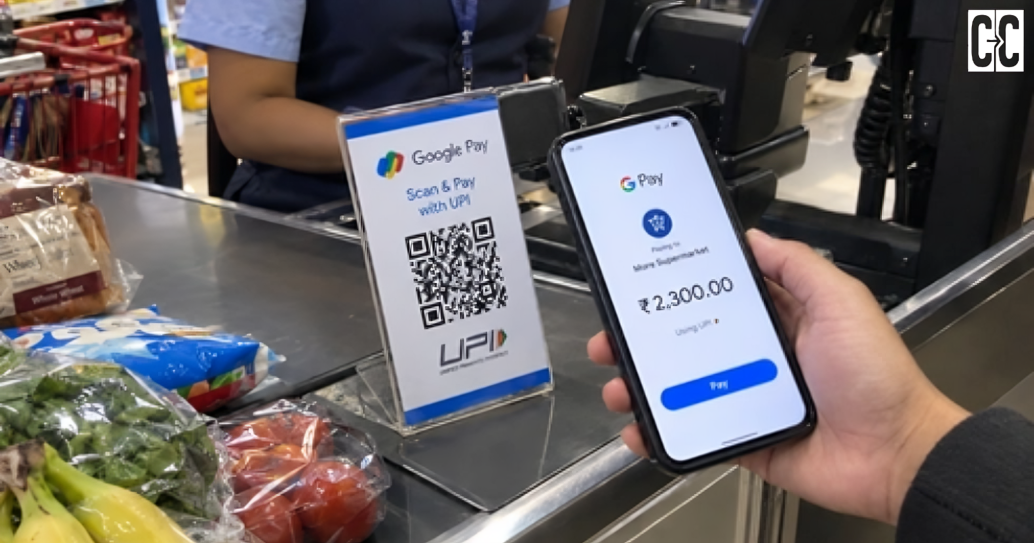
From October 15, 2026, India’s Unified Payments Interface which moved ₹314.2 lakh crore across 241.6 billion transactions last fiscal year alone will carry a price tag for the first time in six years. The National Payments Corporation of India has approved a Merchant Discount Rate (MDR) of 0.4 percent on select person-to-merchant UPI transactions above ₹2,000, capped at ₹300 per transaction, ending the zero-MDR regime that the government imposed through a gazette notification in January 2020.

Person-to-person transfers remain free for any amount, as do merchant payments up to ₹2,000, and small merchants processing under ₹1 lakh a month via UPI QR codes remain exempt regardless of transaction size. Railways, telecom, insurance, fuel, and agricultural input payments above ₹2,000 will incur a flat ₹5 charge, and mutual fund and brokerage transactions will incur a 0.02 per cent charge. Even so, the new charge remains well below the up-to-0.9-per-cent MDR that debit cards already carry under Reserve Bank of India (RBI) rules.
The reversal follows years of fiscal strain that the government had, until recently, downplayed in public. A Parliamentary Standing Committee on Finance report tabled in March found industry-estimated annual UPI operating costs of roughly ₹20,700 crore, dwarfing the government’s ₹2,000 crore subsidy for the ecosystem.
The Department of Financial Services told the panel bluntly that the absence of MDR makes the UPI ecosystem “financially unsustainable.” RBI Governor Sanjay Malhotra echoed the point months before the rollout, telling reporters in August that “the costs have to be paid by someone” — and that ordinary users already absorb such costs indirectly, elsewhere in the economy. Markets read the announcement as a win for the payments industry: shares of Paytm, Axis Bank and Yes Bank rose between two and eight percent the day after NPCI’s notification.
Officials have framed the fee as narrow. Government figures put roughly 96 percent of merchant transactions, by volume, under the ₹2,000 threshold and therefore untouched. But that count obscures what happens to household budgets: by value, well over half of all merchant money moves above the ₹2,000 line — the range that covers a doctor’s fee, a month’s kirana khaata, a school fee or rent.
Whether merchants absorb the charge, as NPCI’s guidance requires, is already in doubt. Shankar Thakkar, national secretary of the Confederation of All India Traders, said, “Retail is extremely sensitive to MDR and every basis point counts,” predicting that small sellers would split transactions, mark up unbranded goods, or steer customers toward plain bank transfers to dodge it. The All India Consumer Products Distributors Federation has separately written to Prime Minister Narendra Modi, warning the levy will disproportionately squeeze small retailers and distributors already working on thin margins.
The sharpest public pushback, though, has come from within fintech itself. BharatPe co-founder Ashneer Grover dismissed the charge as “just tax collection,” pointing to NPCI’s own reported ₹6,119 crore in cash reserves and a ₹1,900 crore pre-tax operating profit as evidence that the system needs no rescuing. PhonePe CEO Sameer Nigam countered that 95–96 percent of merchant transactions fall below the new threshold, while insisting that “UPI is and will remain free for all Indian consumers.”
Less discussed is UPI’s quieter role as an informal-economy credit record.
The finance ministry has told Parliament that UPI’s transaction trail provides lenders with alternative data to assess borrowers who have no collateral or credit score — the basis on which NBFCs and FinTech’s increasingly lend to street vendors and gig workers. A drift back to cash, driven more by fear of charges than the charges themselves, would put precisely that inclusion at risk. India’s cash-to-GDP ratio, at 12.1 percent as of March, sits barely below its level before the 2016 demonetisation — a reminder that cash never really left.
India’s approach also diverges from those of the world’s other major real-time payment systems. Brazil’s Pix, launched in 2020, left merchant pricing to competing banks and fintechs from the start rather than mandating zero fees and reversing course years later, according to CGAP, the World Bank-housed research group that has tracked both systems.
With roughly 55 crore UPI users — close to 38 percent of India’s population, the coming weeks will test whether NPCI’s fee stays confined to large transactions, as designed, or quietly reaches the register anyway.
Clear Cut Research Desk
New Delhi, UPDATED: September 22, 2026 09:30 IST
Written By: Yatharth Pathak