- Nasscom Foundation and IBM have partnered to equip 87,000 underserved youth with digital, domain and employability skills through IBM SkillsBuild.
- The initiative aims to bridge India’s digital inclusion gap by connecting skills training with employment opportunities.
- Nasscom Foundation’s wider programmes also support digital literacy and women entrepreneurs in underserved communities.
In November 2025, Nasscom Foundation and IBM announced a partnership to equip 87,000 young people from underserved communities across India with digital, domain, and employability skills aligned to the country’s technology sector. The announcement was specific in a way that most digital-skills partnership announcements are not: 87,000 is not a round number selected for its PR appeal, it is a targeted cohort drawn from India’s fastest-growing technology-adjacent job markets, matched against the specific skills that IBM’s SkillsBuild platform has been built to deliver. It is also, in the context of India’s digital workforce challenge, a small fraction of what is needed.

SkillsBuild: What the platform actually delivers
IBM’s SkillsBuild programme provides learning pathways in digital literacy, cybersecurity, data science, cloud computing, and professional skills, all designed for learners who are entering the digital economy without formal technology credentials. The Nasscom Foundation partnership aims to expand access to these pathways specifically for youth from low-income and underserved communities, who are statistically among the last to benefit from India’s technology growth and the first to be displaced by automation in traditional employment sectors. The programme is designed with job-market alignment at its centre: skills taught correspond directly to roles where employers have documented hiring needs, not to generic digital literacy metrics.
A foundation with a million-lakh track record
Nasscom Foundation has been working on technology-for-good programmes since its founding as the CSR arm of India’s IT industry body. Its digital literacy programme has reached over 7.5 lakh people, its Big Tech programme over 5 lakh, and its Women Entrepreneurship Programme, which helped over one lakh women leverage platforms like WhatsApp Business, YouTube, and Instagram to market their products and access government schemes, has become one of its most cited outcomes. In 2021, it impacted over 5 million lives. Since November 2025, the Foundation has been targeting 100 million lives by 2026 across all its programmes.
Women entrepreneurs and the last-mile digital divide
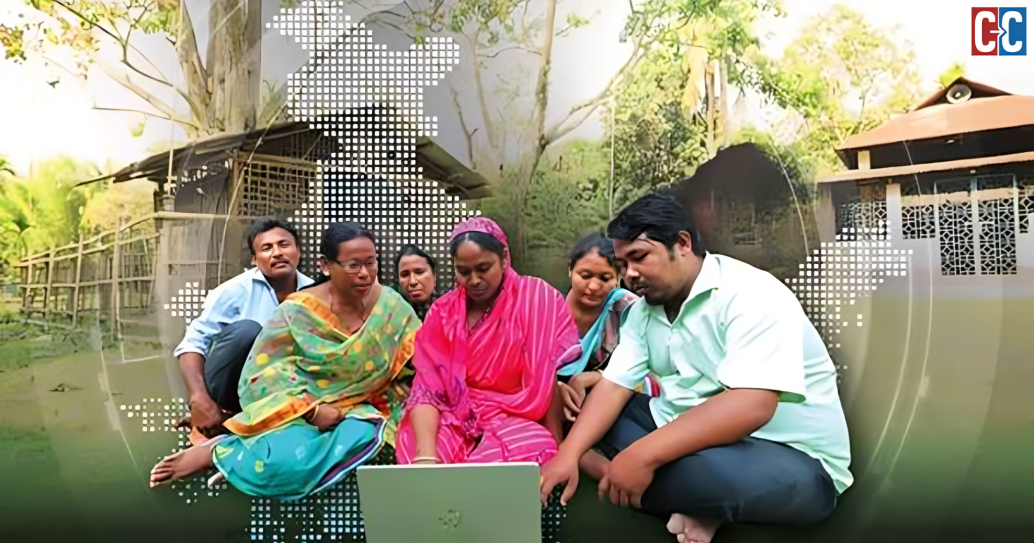
One of Nasscom Foundation’s most impactful programmes has been specifically targeted at rural and semi-urban women entrepreneurs who have businesses like weaving, handloom, crafts, food products. However, they have no digital presence and no knowledge of how to build one. The Women Entrepreneurship Programme has trained women not just in how to set up an Instagram page but in how to use it to access new markets, communicate with customers, and navigate government scheme portals that have moved online. Participants report being able to reach buyers in cities and other states for the first time, effectively expanding the geography of their business without expanding its physical infrastructure.
The gap between digital India and digital inclusion
India’s digital economy is growing at a pace that official statistics cannot track fast enough. UPI transactions, app-based commerce, online government services. But access to that infrastructure, and the skills needed to participate in it as something more than a passive consumer, remains sharply unequal. A young person from a low-income family in a tier-3 city or rural district who does not have a reliable internet connection, a device of their own, or a social network that models digital career pathways is not simply behind. They are being actively sorted out of the economy that India’s IT sector keeps celebrating. The Nasscom Foundation–IBM partnership is a direct, specific attempt to push that sorting boundary outward.
Future perspectives
87,000 young people is a real number representing real people who will move from the margins of India’s digital economy toward its centre as a result of one partnership. The policy challenge is to make that move available to the 87 million, not just the 87,000. The Ministry of Electronics and Information Technology’s digital skilling programmes and the Skill India Mission both have the reach to do this, but they have historically underinvested in the quality assurance and employer-linkage mechanisms that make digital skills translate into actual jobs rather than certificates. The Nasscom Foundation-IBM model should be studied and replicated at national scale, with SEBI’s BRSR framework requiring every large IT company in India to disclose what percentage of its CSR digital-skilling expenditure it can connect to a documented employment outcome.
Clear Cut Livelihood, Education, CSR Desk
New Delhi, UPDATED: September 19, 2026 22:00 IST
Written By: Tanmay J. Urs