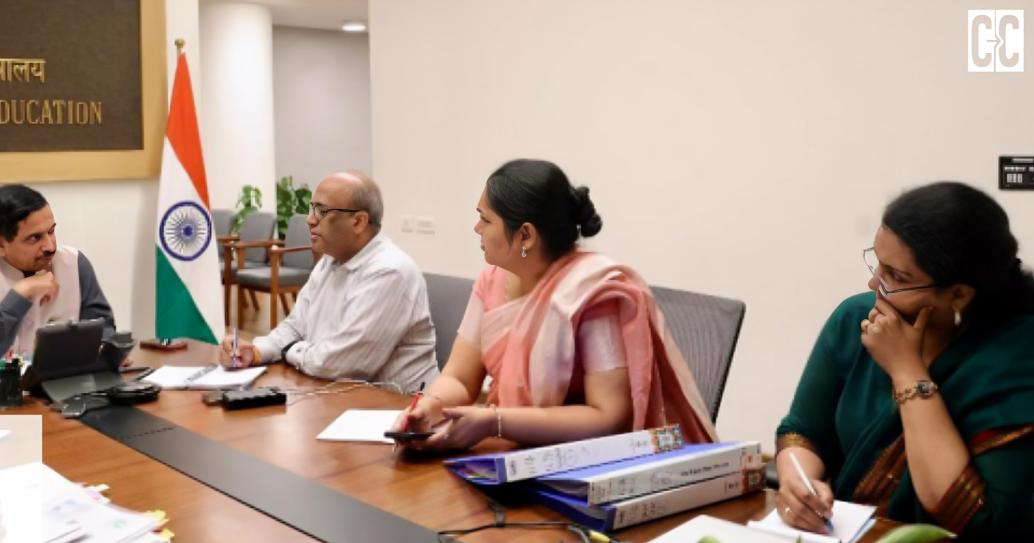


- ASER 2024, led by Pratham, highlights how India’s education system is progressing beyond school enrolment by measuring actual learning outcomes in India.
- The Annual Status of Education Report tracks foundational literacy and numeracy, revealing improvements as well as persistent learning gaps in India.
- Through Teaching at the Right Level, Pratham is using evidence-based approaches to strengthen foundational learning and improve children’s reading and arithmetic skills.
Every January, thousands of volunteers walk into villages across India carrying nothing more than a clipboard and a set of flashcards. They are not government inspectors. They knock on doors and ask children to read a paragraph or solve a subtraction sum, whether or not the child is enrolled in school. This is the Annual Status of Education Report, or ASER, which quietly changed how India talks about education for two decades.

A different kind of report card
Pratham was founded in 1995 in the slums of Mumbai to get underprivileged children into school. Within a decade, its founders realised that enrolment was not the same as learning. So, in 2005, Pratham built a simple, low-cost oral test that any trained volunteer could administer in a home, and used it to survey rural households nationwide. The exercise was formalised in 2008 as the ASER Centre, an independent research and assessment unit within the Pratham network.
What the numbers reveal
The scale of the exercise is remarkable in itself. The 2024 edition of ASER reached 649,491 children across 17,997 villages in 605 rural districts, making it one of the largest citizen-led household surveys in the world. Enrolment among children aged 6 to 14 has stayed above 90% for years. But enrolment has never been the hard part. In government schools, the proportion of Standard 3 students who could read a Standard 2-level text stood at 20.9% in 2008; by 2024, that figure had climbed to 23.4%, the highest recorded since ASER began tracking, according to Pratham’s own survey release. Pre-primary enrolment also rose sharply: among three-year-olds, participation in some form of pre-school rose from 68.1% in 2018 to 77.4% in 2024, and among five-year-olds from 58.5% to 71.4% over the same period.
From data to classrooms
Numbers alone do not teach a child to read. Pratham’s response was Teaching at the Right Level (TaRL). This method groups children by demonstrated ability rather than age or grade, and drills foundational reading and arithmetic before returning to the curriculum. The approach earned CEO Rukmini Banerji the 2021 Yidan Prize for Education Development, with the award citing TaRL’s reach of millions of children annually and its spread beyond India. Corporate CSR partners, including PI Foundation, have since funded TaRL-based interventions in partnership with Pratham, treating foundational literacy as a measurable, fundable outcome rather than a vague aspiration.
Progress and its limits
The picture ASER paints is not uniformly rosy. Even with the 2024 gains, a majority of Standard 5 students in many states still cannot read a Standard 2-level text fluently, and learning gaps widen further by Standard 8 in weaker-performing states such as Bihar and Uttar Pradesh, even as those same states posted some of the sharpest year-on-year improvement. States such as Gujarat, Uttar Pradesh, Tamil Nadu and Sikkim recorded gains of 10% points or more in basic skills between 2022 and 2024, according to the survey, while learning levels in a handful of states actually declined. ASER 2024 also broke new ground by measuring digital literacy for the first time, finding that nearly 90% of teenagers aged 14 to 16 now have access to smartphones at home. However, a notable gender gap in ownership persists.
Why it matters beyond the classroom
What if numbers could spark a revolution in education? ASER’s real strength isn’t in the numbers alone, but in the conversations, they inspire. What Indian policymakers had before ASER was a way-too-high enrollment estimate and a broad-brush assessment of the learning crisis that glossed over poor learning levels.
ASER’s role was to bring that learning crisis out of the shadows, to make it visible and comparable over time and across states. Pratham had created a powerful evidence base to make foundational literacy and numeracy critical issues on the national policy agenda and shape the discussions around India’s National Education Policy. As the Teaching at the Right Level (TaRL) model is adopted in African nations, Pratham’s lasting impact may well be a new discipline for measuring what children actually know and can do, rather than how many shows up to school.
Clear Cut Education Desk
New Delhi, UPDATED: September 23, 2026 18:30 IST
Written By: Tanmay J. Urs