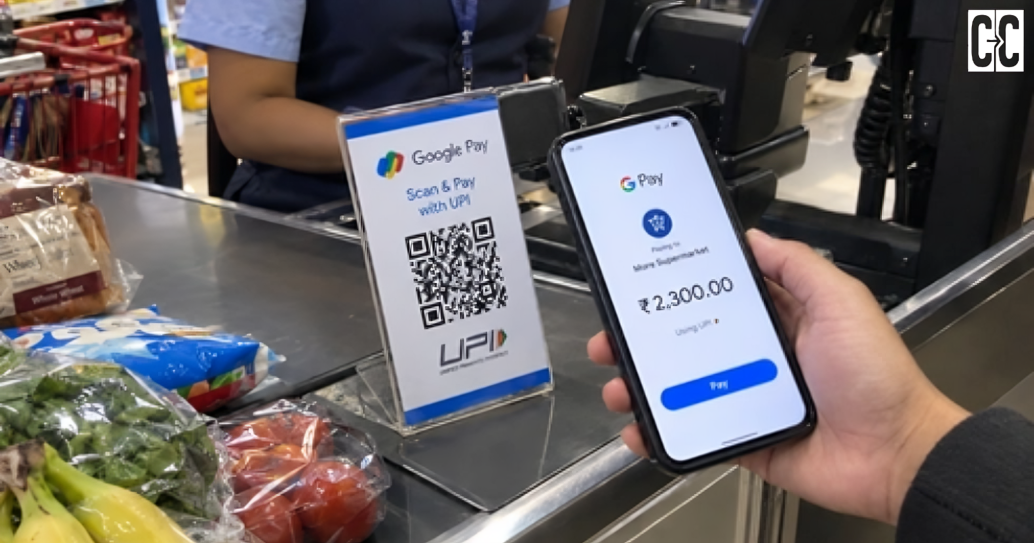
Over the last decade, Digital India moved from a policy slogan to an everyday reality for hundreds of millions. What began as infrastructure and identity projects has threaded itself into the routines of shopping, schooling, health, work and governance – often in ways that feel invisible until you stop to add them up. Below are expanded ten areas where the last ten years of digitalization have changed India focusing on how technology translated into lived change: what got built, who it touched, and the friction that remains.
Governance and Public Services (e-governance)
India’s digital identity and service ecosystem has transformed public service access at an unprecedented
scale. Aadhaar is now the backbone of identity verification in welfare delivery, bank KYC, telecom onboarding, and subsidy schemes. As of 2024, the UIDAI dashboard reports 1.33 billion Aadhaar enrollments and over 2.3 billion authentication transactions every month, totalling more than 100 billion cumulative authentications since inception, dramatically reducing the time, paperwork, and travel
once required for basic services. DigiLocker has become India’s trusted digital document vault, with over 250 million users and more than 6.3 billion issued and stored digital documents, eliminating the need for physical certificates for education, transport, health, and property-related services. Meanwhile, the UMANG platform, India’s multilingual single-window governance app, now hosts 2,500+ central, state, and municipal services, supports 13 Indian languages, and has crossed 5 billion cumulative service
transactions as of early 2025.
These systems have significantly reduced opportunities for petty corruption formerly mediated by brokers and middlemen. Aadhaar-enabled Direct Benefit Transfer (DBT) systems have routed ₹34 lakh crore in welfare schemes directly into beneficiary bank accounts, lowering leakages and increasing transparency.

Aadhaar e-KYC, costing less than ₹0.10 per verification, has enabled rapid, paperless onboarding across banks, telecoms, insurance platforms, and fintech services used by hundreds of millions.
However, the shift also surfaced new systemic challenges: authentication failure rates of 1–6% for vulnerable groups, gaps in digital literacy, device access issues for those without smartphones, and ongoing privacy concerns surrounding large linked identity.
databases. As a result, governments continue to expand assisted-service modes such as Common Service Centres (CSCs), strengthen data-protection safeguards, and refine grievance-redressal mechanisms to ensure digital identity remains inclusive rather than exclusionary. Together, Aadhaar, DigiLocker, UMANG, and state-level e-governance portals represent one of the world’s most ambitious digital public nfrastructure ecosystems – transformative in reach, but requiring continuous improvement to
ensure digital progress leaves no one behind.
Healthcare Digitization
Although the pandemic dramatically accelerated the use of digital health ervices, the trajectory was already well underway, driven by initiatives such as health IDs, telemedicine, and interoperable digital health records. Under the Ayushman Bharat Digital Mission (ABDM), the Ayushman Bharat Health Account (ABHA) system allows citizens to link and port their records across health-service providers. By July 28,
2025, 79.71 crore ABHA accounts had been created, and 65.09 crore health. records were digitally linked to them.
On the national insurance front, PM-JAY (Ayushman Bharat – Pradhan Mantri Jan Arogya Yojana) has digitized critical processes like empanelment, pre-authorisation, and claims adjudication, making
care more accessible for low-income families. The digital claims system also supports anti-fraud mechanisms: for example, in FY 2024–25, Optical Character Recognition (OCR) and Natural
Language Processing (NLP) technologies flagged thousands of suspicious claims under PM-JAY, helping identify over . 31 crore worth of fraudulent payments (Ministry of Health and Family Welfare).
At the point of care, innovations like the Scan & Share QR-code-based OPD registration have cut waiting times significantly. More than 300 hospitals now use this service, where patients scan a QR code (via the ABHA app or other ABDM-enabled apps), share their demographic profile, and are issued tokens directly. What used to take 50 minutes in queue has been reduced to 4–5 minutes on average.
Over one crore OPD tokens have been generated via this system across 2,600+ health facilities in 419 districts (33 states/UTs). These practical digital interventions do more than eliminate paperwork: they
improve efficiency, reduce waiting times, and strengthen continuity of care by linking a patient’s history across providers. At the same time, they raise urgent and complex issues, around data governance,
consent, equity, and the digital divide, especially in under-resourced rural areas. The promise is powerful: a patient’s full medical history following them seamlessly across facilities, shortening diagnosis cycles and enhancing care, if the system can safeguard privacy and operational gaps.
Education and e-learning
Digital tools have fundamentally changed how Indian children learn and how teachers design lessons, and the scale of change is backed by striking data. Under government platforms like DIKSHA (Digital Infrastructure for Knowledge Sharing), which supports 36 Indian languages, more than 15 crore course
enrolments have been recorded across students, teachers, parents, and other stakeholders (Press Information Bureau).

Since April 2020, DIKSHA has logged over 3,813 crore page hits and 5,749+ crore minutes of learning time (Press Information Bureau). Among teachers, more than 47 lakh have completed NISHTHA rofessional-development courses via DIKSHA. In April–June 2020 alone, 60 lakh teachers enrolled for
training and 43 lakh completed courses (Education Ministry of India).
On the private side, India’s edtech market has exploded: there are over 4,450 startups active today, serving nearly 300 million school-age students (GlobeNewswire). The sector’s valuation is to hit US$
10.4 billion by 2025 (India Briefing). As of December 2024, there were 17,000+ edtech companies in India, including 7 unicorns (Storyboard18). According to India Brand Equity Foundation (IBEF), the market has grown rapidly with a compound annual growth rate (CAGR) of around 25.8%, and is expected to reach
US$ 29 billion by 2030 .
These digital tools offered continuity when schools shut during the pandemic: recorded lessons, interactive apps, broadcasts, and televised classes reached students across income levels, even in
remote areas. On the supply side, teachers leveraged digital lesson plans, assessment dashboards, and professional-development modules; on the demand side, families accessed personalized coaching,
test-prep, and microlearning – options that earlier often required in-person tutors or access in major cities. The overall result has been dramatically greater access and choice. But it hasn’t come without challenges. Inequities remain: students without reliable internet
or a quiet, safe place to study are still at risk of falling behind, and the commercialization of exam-oriented coaching raises concerns about fairness in higher-education access. To build on the gains of the last decade, India must continue to bridge infrastructure gaps, train teachers in blended learning, and
ensure that free, high-quality curricular content remains available to every child regardless of geography or income.
Rural Connectivity and Inclusion
The rollout of physical internet infrastructure in rural India, notably through the BharatNet project, has significantly improved access to the digital economy. As of March 2025, around 2.18 lakh Gram Panchayats have been made service-ready under BharatNet. About 6.92 lakh km of optical fiber cable has
been laid, covering 42.13 lakh route km, and 12.21 lakh FTTH (fiber-to-the-home) connections have been commissioned alongside 1.04 lakh Wi-Fi hotspots (ETGovernment.com). Thanks to this backbone, Common Service Centres (CSCs) and village kiosks now provide critical services like digital payments,
telemedicine, e-governance, and more, at the grassroots level.
Meanwhile, broadband adoption has surged nationally. According to TRAI, by June 2025, India’s total internet subscriber base crossed 1,002.85 million (≈ 100 crore), a quarterly growth of 3.48%. Of these, 979.71 million are broadband subscribers, up 3.77% in that period (Telecom Regulatory Authority of India). A vast majority (~95.8 crore) are wireless users, with around 4.5 crore using wired services. However, infrastructure alone has not ensured a uniformly transformational digital experience. In many rural areas, challenges persist in terms of service quality, the cost of last-mile delivery, and digital literacy among users.
These gaps limit the potential impact of connectivity. As a policy imperative, then, merely connecting villages isn’t enough, we also need localized digital hubs, content in local dialects, targeted digital education, and affordable devices to make broadband truly inclusive.
| Metric | Value | Source |
|---|---|---|
| Gram Panchayats Service-ready | 2.18 lakh | BharatNet (ETGovernment.com) |
| Optical Fiber Cable Laid | 6.92 lakh km | BharatNet (ETGovernment.com) |
| Total OFC Route Length | 42.13 lakh km | BharatNet (ETGovernment.com) |
| FTTH Connec..ons Commissioned | 12.21 lakh | BharatNet (NewKerala.com) |
| Rural Wi-Fi Hotspots | 1.04 lakh | BharatNet (ETGovernment.com) |
| Total Internet Subscribers | 1,002.85 million | TRAI (Tele.net) |
| Broadband Subscribers | 979.71 million | TRAI (Telecom Regulatory Authority of India) |
Agriculture and Agri-Tech
Digital tools have reshaped how Indian farmers access markets and information and the scale of that change is increasingly measurable. For instance, e-NAM (Electronic National Agriculture Market)
As of February 2024, over 1.77 crore farmers and 2.53 lakh traders are registered on the e-NAM platform. As of December 2023, the platform has recorded trade of 8.96 crore metric tonnes and 30.99 crore numbers of various produce, worth approximately . 3.19 lakh crore. In addition, 3,510 Farmer Producer Organisations (FPOs) have been onboarded (CliQ INDIA).
On the precision-agriculture side, more than 1,300 agritech startups in India are now leveraging AI, drones, IoT sensors, and analytics to deliver weather alerts, pest-management advice, and yield prediction to smallholders (indiastartupreview.com). According to market research, thousands of Indian farms use
real-time IoT soil and crop-health sensors; the precision-agriculture market is growing fast as such connected farming solutions optimize inputs and boost productivity (kenresearch.com).
These digital interventions from e-NAM’s transparent price discovery and national reach, to agritech-driven advisory and remote sensing have significantly reduced information asymmetry. Farmers now have stronger bargaining power, better market access, and lower dependence on local middle-men. Yet challenges remain: India’s agricultural fragmentation, low digital literacy, and the high cost of advanced agritech solutions limit their reach. To scale impact, policy must support more FPO aggregation, infrastructure for remote sensing, and financially sustainable digital delivery models for smallholders.
Startups and Digital Entrepreneurship
The policy push from Startup India, together with easy online company registration, digital GST filing, and accelerator networks, has supercharged India’s entrepreneurship boom. As of 2025, there are 159,157 DPIIT-recognized startups in India. In the same period, India’s unicorn club has grown to 73 companies,
according to the Hurun India report. These unicorns are now valued at a combined US$ 385 billion.
On the funding front, the ecosystem raised US$ 4.8 billion in H12025, even though this represents a ~25% drop from H1 2024, and India moved up to the 3rd globally in startup funding. Among the sectors attracting most investment: transportation & logistics tech saw a 104% jump, retail tech raised $1.2B, and
enterprise applications secured $1.1B .
In terms of exits and liquidity, 12 startups went public in H1 2025, while 73 acquisition deals were recorded – a 35% year-on-year increase, signaling growing maturity and consolidation.
However, risk remains: the drop in funding, combined with concentrated investments in a few sectors and geographies, underscores that regulatory frameworks and funding diversity still lag. At the same time, the rise of deep-tech and AI startups is notable, even as founders navigate profitability and long-term sustainability.
Transportation and Mobility
Digitalization has dramatically reshaped how people move and how logistics operate in India. Ride- sharing apps are now deeply embedded in daily urban life: for example, Rapido, originally a bike-taxi service, recorded around 50 million monthly active users (Android) by mid-2024, surpassing Uber’s ~30
million (The Times of India). At the same time, Namma Yatri, an ONDC-powered ride-hailing app, has crossed 1 crore registered users and completed 7.49 crore trips, generating .1,206 crore in driver
earnings (Outlook Business).
Public transport is also becoming more digital: many metro systems (e.g., Nagpur Metro) report that approximately 60% of riders now use cashless ticketing methods like UPI, QR or smart cards (The Times
of India). On national highways, FASTag, the RFID-based toll-collection system, has reached ~97–98% penetration across toll plazas (National Highways Authority of India). As of early 2024, there were
8.81 crore FASTags issued, and cumulative toll collection via FASTag exceeded ₹5,938.86 crore (Business Standard). Using FASTag has significantly reduced waiting times and made toll payments more efficient.
In logistics and freight, digital platforms are now optimizing route assignment and automating proof-of-delivery systems, helping last-mile deliveries become cheaper and more predictable. While there are fewer publicly available nationwide numbers for predictive-logistics specifically, the overall shared-mobility sector (which overlaps with logistics) is growing strongly: according to a report, over 2 million shared-mobility vehicles are operating in India, and the sector is growing at a projected CAGR of 9.7%,
with significant environmental benefits if ride-sharing scales up.
These transformations benefit rural producers and small businesses: improved supply chains and more reliable access to urban markets are enabled by digital logistics. But challenges remain. Platform-driven worker protections are still weak, congestion and environmental impacts are pressing, and a few large players dominate the mobility ecosystem. Ultimately, the past decade of innovation in payments, GPS/mapping, vehicle telematics, and app-based services has converted what was once an “offline chore”, moving people and goods, into a digitally orchestrated process.
Cybersecurity and Digital Infrastructure
Over the past decade, India’s rapid digitization forced the country to reinforce its digital security framework at an unprecedented pace. National cybersecurity capacity expanded drastically: CERT-In handled 1.66 million cybersecurity incidents in 2022, up from just 53,081 incidents in 2017, marking a 30× increase in reported threats. Government systems also scaled up their protection layers programs for secure digital identity, end-to-end encryption, tokenisation of payment credentials, and dedicated
protections for India Stack grew in response to escalating cyber risks. The shift toward sovereign digital infrastructureaccelerated as well: MeitY’s MeghRaj (GI Cloud) and public-sector data centers now host over 10,000 virtualized resources, and Digital India policies mandate greater public-data retention
within India, reducing systemic risk and strengthening resilience during outages or targeted attacks.
At the same time, the attack surface widened dramatically. Phishing and fraud cases rose alongside digital adoption: according to the National Crime Records Bureau (NCRB), cybercrime complaints grew from 12,317 in 2016 to 65,893 in 2023, a fivefold increase, while UPI fraud cases crossed 1.4 lakh reports in 2023, reflecting the risk introduced by mass digital payments. Enterprises faced similar pressures.
Indian organizations experienced an average of 2,146 weekly cyber attacks in 2023, far above the global average of 1,158. To respond, India implemented mandatory breach-reporting requirements (2022), strengthened app-store governance rules, expanded data-localization mandates for financial and telecom
sectors, and rolled out nationwide cyber-awareness campaigns that reached over 60 million citizens through initiatives like Cyber Jaagrookta Diwas and the I4C platform.
Despite these improvements, the defensive capacity still lags behind the scale of digital expansion. The country’s cybersecurity workforce gap is estimated at over 40%, and small institutions remain exposed due to weak digital hygiene. As India enters the next phase of Digital India, cybersecurity – through infrastructure redundancy, zero-trust implementation, secure sovereign cloud expansion, and mass-scale user awareness, will be central. The gains of the past decade will remain vulnerable unless investment
keeps pace with the growth of digital systems and citizen adoption.
Digital Identity and Inclusion
India’s rapid expansion of digital identity has fundamentally reshaped how people access formal services. Aadhaar’s scale remains unprecedented globally, with 1.33 billion enrollments and an ecosystem that now performs over 2.3 billion authentication transactions every month (UIDAI, 2024). This massive reach
dramatically lowered the cost of verifying identity. Aadhaar authentication costs less than .0.10 per transaction, making it feasible for banks, telecom companies, and welfare departments to operate with
almost no onboarding friction.
The impact is visible across sectors: over 510 million bank accounts have been opened using Aadhaar-enabled e-KYC, digital welfare transfers under DBT now exceed ₹34 lakh crore cumulatively, and telecom
onboarding shifted almost entirely to Aadhaar-linked e-KYC before regulatory revisions. In education and governance, DigiLocker has become a core identitylinked service, with 250 million users and over 6.3 billion digital documents issued or stored as of 2024, enabling paperless scholarships, university admissions, and certificate verification at scale.
For millions, especially in previously unserved or remote areas, this identity-led access translated into concrete inclusion. A person could open a bank account from a mobile phone, receive pensions or subsidies directly into their account without intermediaries, or apply for government schemes without traveling long distances or paying middlemen. Aadhaar-enabled Payment Systems (AePS) further b rought financial access to the last mile. Rural residents conducted more than 2 billion biometric transactions annually through micro-ATMs.
Yet, the expansion of digital identity also introduced new risks. Exclusionary failures, such as biometric mismatches, connectivity gaps, or authentication
“The real challenge is not just to implement more digital projects but to focus on deeper systems work.”
errors, still affect a small but critical population relying on welfare. Reports have noted authentication failure rates ranging from 1–6% depending on the scheme and region, highlighting the need
for responsive grievance redressal. Broader concerns around consent, privacy, and data governance remain central as digital identity becomes ubiquitous. Without strong offline-assisted processes and robust oversight, the digital divide could widen, particularly for elderly, disabled, or remote populations.
Data from Aadhaar and DigiLocker dashboards, combined with government digital service reports, illustrate how identity systems have powered India’s digital transformation, but also why the next phase must balance scale with safeguards.
A Decade of Digital India
Ten years of Digital India have changed how a large, diverse country accesses services, makes payments, learns, heals, farms, and starts businesses. The metrics, billions of authentications, tens of billions of instant payments, crores of digital health and education accounts, and lakhs of connected panchayats, are impressive because they reflect real changes in everyday life. A vendor who now accepts digital payments, a rural student who can take online classes, a patient whose records are portable, and a farmer who can sell beyond their village.
However, this decade also showed the limits of technology without necessary investments in human capacity, last-mile reliability, privacy protections, and inclusive design. Looking ahead, the real challenge is not just to implement more digital projects but to focus on deeper systems work. We need to ensure that
infrastructure is reliable, platforms are secure, services are available in regional languages, and that everyone is included in respectful and supportive digital experiences. If the last ten years focused on building the framework, the next decade must focus on ensuring that services reach every platform that needs them.
Clear Cut Research Desk
New Delhi, UPDATED: Jan 22, 2026 09:00 IST
Written By: Antara Mrinal