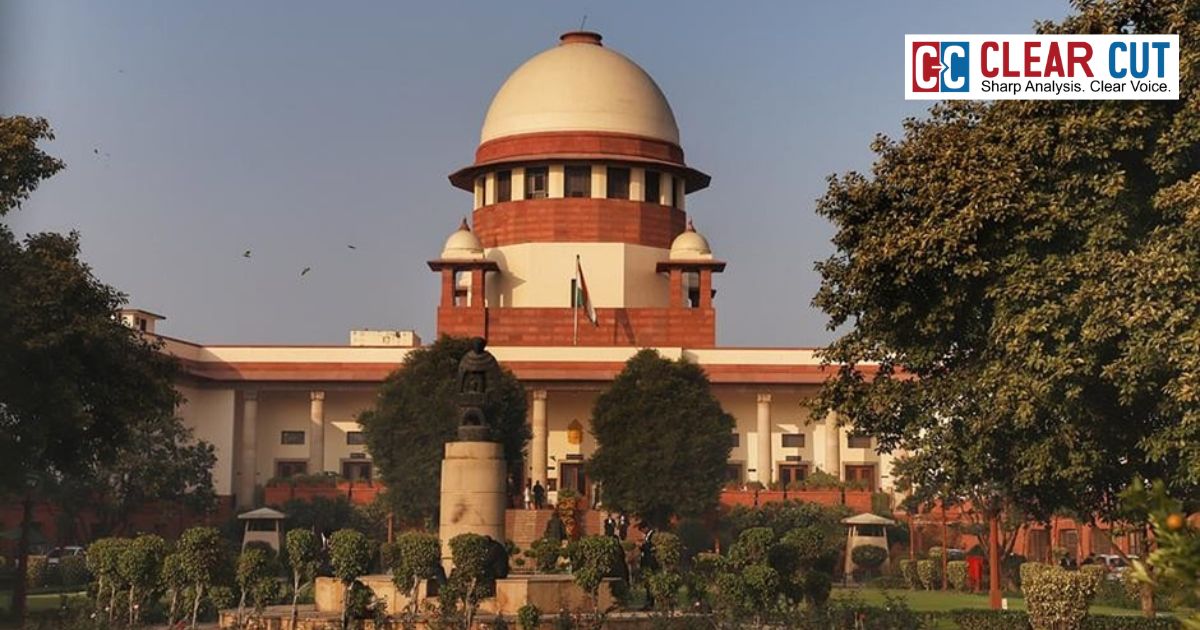
India’s highest court has stepped in to address a growing crisis in student well-being. The Supreme Court of India has directed a National Task Force (NTF) to strengthen measures related to student safety, mental health support, and institutional accountability. The intervention comes amid rising concerns over student suicides, stress, harassment, and the lack of structured mental health systems in educational institutions.
The court has made it clear that student welfare cannot remain a fragmented responsibility. It has asked the task force to work closely with expert bodies and existing committees to frame effective, enforceable solutions.
What Prompted the Court’s Intervention
The Supreme Court’s directions follow repeated reports of mental distress among students, especially in schools, colleges, coaching centres, and professional institutions. Academic pressure, fear of failure, bullying, isolation, and lack of counselling support have pushed many students into severe psychological distress.
A bench led by D Y Chandrachud emphasised that student safety goes beyond physical security. The court noted that mental health support must form a core part of institutional responsibility, not an optional service.
Role of the National Task Force
The National Task Force was constituted earlier to study issues related to student suicides and campus safety. Following the latest directions, the Supreme Court has asked the NTF to engage with expert panels, mental health professionals, and education regulators to strengthen its recommendations.
The task force will now examine:
- Standard Operating Procedures (SOPs) for mental health support
- Early warning systems for identifying distress
- Crisis response mechanisms
- Accountability of institutions that fail to act
Officials associated with the NTF have indicated that the focus will be on practical, implementable measures rather than broad guidelines.
Developing SOPs for Mental Health Aid
One key area under review is the creation of clear SOPs for mental health assistance in educational spaces. The court observed that many institutions lack trained counsellors, referral systems, or crisis protocols.
Mental health experts engaged by the task force have stressed the need for:
- Mandatory counselling units in institutions
- Confidential reporting mechanisms
- Clear escalation procedures in high-risk cases
- Coordination with local mental health services
The aim is to ensure that when a student shows signs of distress, the response is immediate, professional, and compassionate.
Coordination With Regulatory Bodies
The Supreme Court has asked the NTF to work with statutory and regulatory bodies overseeing education. These include university regulators, school boards, and professional councils.
Officials familiar with the proceedings said the court wants mental health frameworks to become part of institutional compliance, similar to safety and infrastructure norms. Institutions may be required to submit regular reports on counselling services, staff training, and student outreach initiatives.
This approach signals a shift from advisory guidelines to enforceable standards.
Addressing Harassment, Bullying, and Academic Pressure
The task force will also examine how harassment, bullying, and extreme academic pressure affect student mental health. The court noted that hostile learning environments often go unaddressed until irreversible harm occurs.
Panels working with the NTF are expected to recommend:
- Anti-bullying enforcement mechanisms
- Grievance redress systems independent of faculty pressure
- Training for teachers and administrators to recognise mental distress
Educational psychologists have repeatedly told the court that prevention works best when institutions act early rather than react after crises.
Social Dimensions of the Crisis
Student mental health challenges do not exist in isolation. Socio-economic stress, family expectations, migration for education, and lack of social support amplify vulnerability. Students from marginalised backgrounds often face added pressure due to language barriers, discrimination, or financial insecurity.
The Supreme Court acknowledged these social factors and stressed that any mental health framework must remain inclusive and accessible. Experts advising the task force have highlighted the need for multilingual counselling services and outreach beyond elite institutions.
Institutional Accountability and Responsibility
A significant aspect of the court’s direction involves accountability. The bench has made it clear that institutions cannot distance themselves from student well-being.
Legal experts point out that future frameworks may hold institutions responsible for:
- Ignoring warning signs
- Failing to provide basic counselling infrastructure
- Suppressing complaints related to harassment or mental distress
This emphasis reflects a broader shift in judicial thinking, where mental health is treated as a rights-based issue rather than a personal failing.
Highlights of the Supreme Court’s Directions
- The Supreme Court has asked the National Task Force to strengthen student safety and mental health support.
- The task force will engage with expert panels and regulators.
- SOPs for mental health aid are a key focus area.
- Institutions may face stricter accountability norms.
- Social and economic factors affecting student well-being are under consideration.
What This Means for Students and Institutions
For students, the court’s intervention offers recognition that mental health struggles are real, systemic, and deserving of serious institutional response. For schools, colleges, and coaching centres, it signals a shift toward structured responsibility.
Education administrators may need to invest in trained counsellors, build safer reporting systems, and change campus cultures that normalise extreme pressure.
A Step Toward Safer Learning Spaces
The Supreme Court’s push marks an important moment in India’s approach to education and youth well-being. By placing mental health at the centre of student safety, the court has reinforced the idea that learning environments must protect not only academic outcomes but also human dignity.
As the National Task Force works on its expanded mandate, its recommendations could shape a nationwide framework that finally treats student mental health as a collective responsibility rather than an individual burden.
Clear Cut Education Desk
New Delhi, UPDATED: Jan 29, 2026 01:00 IST
Written By: Samiksha Shambharkar