- India is using AI for TB detection, telemedicine, and nutrition monitoring in public healthcare.
- AI tools are helping ASHA workers provide better healthcare support in rural areas.
- Government reports show improved disease screening and faster healthcare services through AI.
- Poor infrastructure and limited digital access still restrict AI healthcare reach in many districts.
The IAS Officer Who Noticed The Children Were Thin
An IAS officer who had been deputed to Etapalli district, Gadchiroli, the tribal area of Maharashtra, visited the Todsa Ashram School in 2023. The records at the school indicated one thing, but what the officer witnessed contradicted those records. The students were being fed meals funded by the government. There was no gap in the record books of their meals. But 27 percent of the students suffered from malnutrition. The contradiction between the record book and reality could be explained by the lack of proper nutrition composition of the meals being served.
Based on a February 2026 white paper published by the PIB on public services provided by AI systems, the administration of the district went ahead and implemented an AI-based meal analysis system, which included image recognition technology to determine whether the meals provided complied with the required nutritional criteria. As per the report, more than 2,100 parameters were used to evaluate each meal for its quality. These parameters included factors such as quantity, temperature, and even the appearance of food. Although further peer-reviewed evaluations of the initiative are still not available, the case study has been highlighted by government organizations as an example of operational AI implementation.
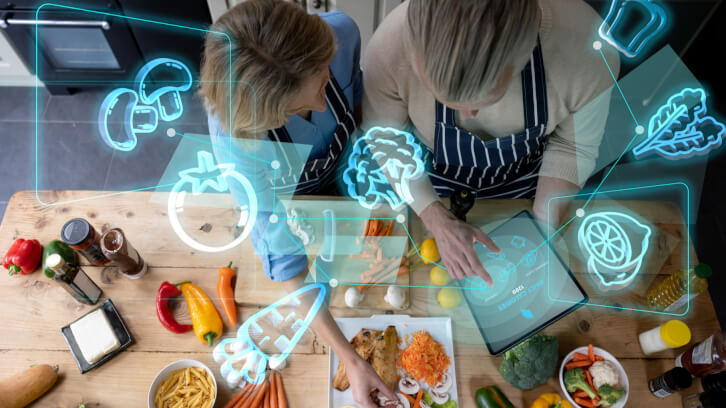
In this case, the AI has not replaced either the cook or the administrator from the school. Instead, it filled in the missing link between the intent behind the policy and its implementation that was difficult for either of them to do by themselves. What’s more, this example of the use of AI technology in the country is just one of many similar projects described in official communications issued by the Indian Government. It is thus false to say that AI technology is nothing but wishful thinking in India. It is being utilized in select cases.
The Numbers Are Extraordinary
282 million e-Sanjeevani telemedicine consultations, April 2023–November 2025. 27% reduction in adverse TB outcomes. Over 4,500 outbreak alerts. 12 million patients received AI-recommended diagnoses.
PIB White Paper, February 2026
The PIB’s comprehensive health AI white paper, published ahead of the India AI Impact Summit 2026, presents a portfolio of outcomes that would be remarkable for any health system, let alone one serving 1.4 billion people at the scale and geographic diversity of India. The e-Sanjeevani telemedicine platform has supported 282 million consultations between April 2023 and November 2025, with AI-assisted differential diagnosis helping 12 million patients. The National TB Elimination Programme’s AI-enabled tools have resulted in a 27% decline in adverse TB outcomes and over 4,500 outbreak alerts, enabling frontline workers without specialist training to perform high-quality screening.
The National Diabetic Retinopathy Screening Programme uses AI to enable non-ophthalmologist healthcare workers to detect diabetic eye disease. This is a condition that causes preventable blindness in millions of Indians with Type 2 diabetes, the majority of whom do not have regular access to an ophthalmologist. The Media Disease Surveillance System uses AI to monitor outbreak signals across digital and media sources, triggering early alerts that public health teams can investigate before a cluster becomes an epidemic.
Asha, The Algorithm and The Last Mile
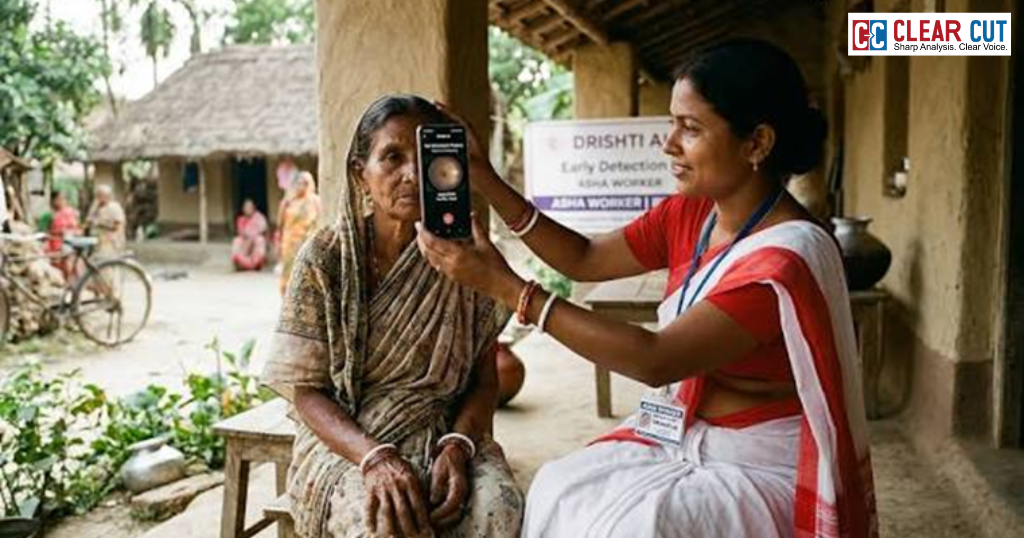
By far the most important use case is the enabling of front-line health workers. India has more than one million Accredited Social Health Activists (ASHA) health workers, acting as the first point of contact between citizens and health services in rural and peri-urban India. They are mostly female, mostly from their respective communities, and mostly untrained clinically apart from that offered by government schemes.
AI solutions tailored to the abilities of ASHA workers, including image recognition solutions for skin diseases, diagnostic questions in regional languages, and automatic referral solutions if screening scores surpass certain thresholds, can help detect diseases at a specialist level even in remote communities where specialists may never visit physically. In India, BHASHINI, an AI solution capable of processing more than 36 languages in text form and more than 22 languages through speech, becomes crucial for making sure that such solutions work not only in Hindi and English but also in regional languages spoken by ASHA workers and their patients. Another example would be Kisan e-Mitra, a voice-based AI chatbot that assists farmers in answering questions in various regional languages and processes over 20,000 questions per day.
However, the effectiveness of artificial intelligence-supported healthcare on the frontlines would also be dependent upon the actual functioning of the ASHAs. There have been multiple studies, including by the Government, which highlight how ASHAs are currently burdened with the task of ensuring maternal care, conducting vaccination campaigns, conducting surveillance for diseases, recording information digitally, and motivating communities towards good practices, all with minimal payments and infrequent bonuses. Moreover, the level of digital literacy among ASHAs varies significantly depending on state and age group. Many ASHAs find it difficult to use technology such as mobile phones and online applications without constant guidance.
This implies that AI solutions developed for use in frontline healthcare delivery cannot take for granted the technical abilities of its operators or the seamless digital infrastructure required to make them work. In case of poor implementation, such technologies could become yet another level of reportage from a group of individuals who are already overburdened with their duties. However, when executed properly, such solutions could help alleviate some of the burdens on the workers by helping them automate their record-keeping, streamline their decision-making processes, and dedicate more time to interacting with patients.
The 3 Conditions That Separate Success from Spectacle
The existing deployments are impressive. They are also unevenly distributed. AI healthcare tools are more available in states with stronger digital infrastructure, better PHC staffing, and more functional cold-chain and connectivity systems. The aspirational districts that NITI Aayog has identified as India’s most development-lagged are often the same districts where AI health tool deployment is thinnest. This is the familiar geography problem: technology flows where infrastructure allows.
Three conditions must be met to convert India’s existing AI health deployments into a nationally fair health system transformation. First, every AI tool deployed in a government health programme must have a published performance report updated annually with accuracy rates, coverage by district, reported errors, and corrective actions taken. The 27% reduction in adverse TB outcomes is a headline. The districts where that reduction has not happened deserve their own headline too.
Second, AI tools must be formally integrated into the contractual obligations of government health programmes rather than remaining pilot projects with uncertain continuation. A tool that saves lives during a pilot and is then discontinued when the funding cycle ends is not a health system innovation. It is an experiment that left people behind.
Third, ASHA workers, auxiliary nurse midwives, and other frontline health workers who use AI tools must be trained, supported, and compensated for their role as the interface between algorithmic intelligence and human care. They are not users of a product. They are co-providers of a service. Their feedback on tool performance, their reports of errors, and their identification of clinical patterns the algorithm misses are as valuable as any dataset. They must be resourced accordingly.
Conclusion
The child in Todsa Ashram School is eating better meals. The TB patient’s outbreak was caught four weeks earlier than the previous year’s protocol would have allowed. The farmer in a remote village got an answer to his crop disease question in Marathi, from a government chatbot, at 11 p.m. on a Tuesday. These are not small things. In a health system serving a billion and a half people with historical under-investment in clinical infrastructure, they are extraordinary.
But Anita, the paddy farmer from Nalanda who waited a week for a radiologist who comes on Tuesdays, has not yet been reached by this revolution. Her district is aspirational. Her PHC is understaffed. Her ASHA worker does not yet have the AI retinal screening tool. The gap between what India’s AI health system has achieved and what it has promised is not a technology gap. It is a deployment gap, a governance gap, and a political will gap.
Close those gaps. Mandate performance reporting. Integrate AI tools into national programme procurement. Resource the ASHA workers. Publish the data by district. The revolution is real. Make it universal. The lives depending on it are not waiting for the next summit or the next MoU. They are walking into health centres right now.
Clear Cut Health, Research Desk
New Delhi, UPDATED: May 13, 2026 01:00 IST
Written By: Tanmay J Urs