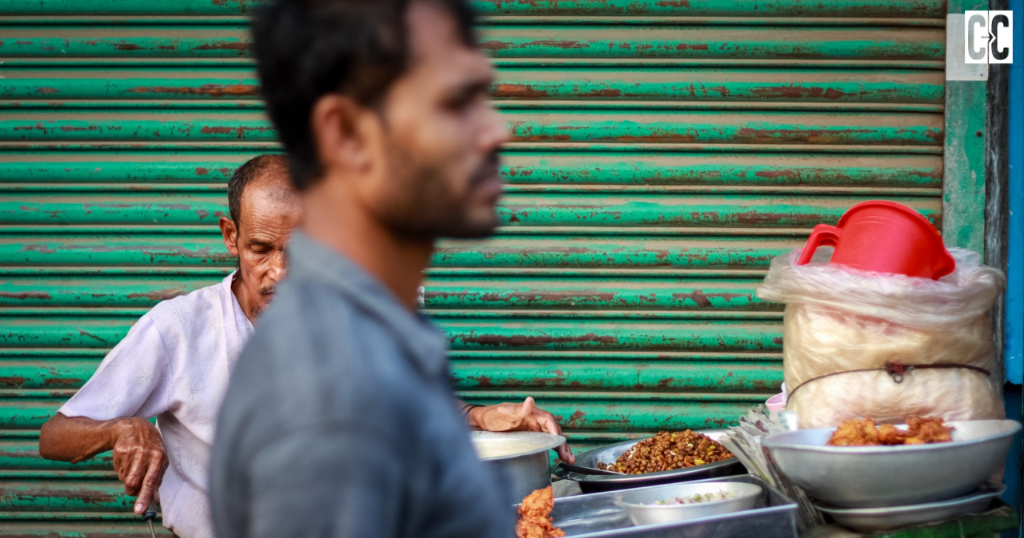

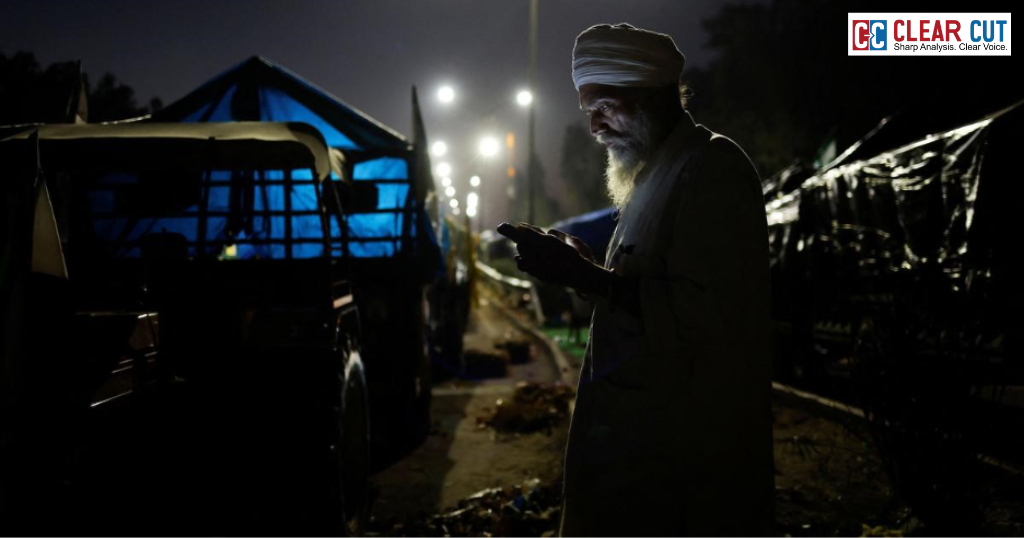
Social media activism in India has transformed civic awareness by amplifying marginalized voices, documenting injustices, and connecting local movements to national conversations. However, its impact is limited by misinformation, online harassment, and unequal digital access, making digital rights and literacy essential for meaningful social change.
The Video That Made a Village Visible
In January 2021, a four-minute video posted by a resident of a small farming village in Haryana showed elderly women sitting in the bitter cold on a roadside, many of them having walked hours from their homes to join the farmers’ protest at Delhi’s borders. The video was shared 80,000 times in the first twelve hours. By the following morning, national television crews were on site. International media published the footage. The women who had been invisible to national discourse for weeks were suddenly its subject. Their presence became undeniable. The protest they had joined, which had struggled to break through political noise, had a new, visually compelling narrative.
This is what social media does, when it works: it makes visible what power has chosen not to see. It compresses geography, a village in Haryana to a newsroom in Delhi in 12 hours. It compresses hierarchy, a resident with a smartphone to the same informational platform as a national broadcaster. It compresses time, an event becomes national conversation before governments can manage the narrative. None of this is revolutionary in isolation. But in a country of 1.4 billion people with a stratified media landscape and a long history of marginalised communities being spoken about rather than heard, it is consequential.
The Number Behind The Platform
India’s social media ecosystem is staggering in scale. With 535 million WhatsApp users and 467 million on YouTube. The country’s information environment is more distributed than at any point in its history. The 2014 general election was the first in which approximately 1/3rd of voters had access to social media. By 2024, that fraction had expanded dramatically, with 911 million broadband connections enabling direct political communication at a scale India had never experienced.
Social awareness campaigns have leveraged this infrastructure with measurable effect. India’s #MeToo moment in 2018 reached not just urban professional circles but created documented ripple effects in smaller cities and non-English language communities through regional language reposting on WhatsApp. Environmental campaigns such as river pollution documentation in Kerala and Maharashtra, mangrove destruction coverage in coastal Tamil Nadu have been started and amplified by citizen journalists with smartphones before they reached traditional media. Disability rights advocates, LGBTQ+ communities, and Dalit rights organisations have used Instagram and Twitter to build national audiences that their pre-digital reach could never have achieved.
Where Advocacy Translates to Awareness
The most effective social media advocacy in India shares three features. First, it is rooted in documented reality like videos, photographs, first-person accounts that are hard to dismiss or misrepresent. Second, it is connected to an offline movement or institution that gives the digital energy somewhere to go. Third, it is multilingual, campaigns that travel only in English or Hindi remain partial, missing the enormous vernacular-language user base that constitutes the majority of India’s internet growth.

The India Civic Summit’s recognition of citizen initiatives working on urban governance is itself a product of social media visibility. Groups like Paani Haq Samithi in Mumbai, working on water rights for informal settlements, and Poovulagin Nanbargal in Tamil Nadu, working on environmental justice, have used digital platforms to build credibility, document violations, and connect with national and international networks. The documentation function of social media is particularly powerful for communities whose experience has historically been erased from official records.
The Honest Limits
Social media advocacy in India operates within real constraints. The same platforms that amplify marginalised voices amplify disinformation, hate speech, and coordinated harassment campaigns. The 2024 election documented the use of WhatsApp and YouTube for political disinformation at scale. Women journalists and activists routinely face coordinated online harassment when they speak publicly on politically sensitive issues. A silencing mechanism that disproportionately affects the most marginalised advocates. Meta’s own internal documents acknowledged selective enforcement of hate speech rules in India that had real-world consequences.
The digital divide also constrains who can participate in social media advocacy as a speaker rather than a passive recipient. The communities most in need of advocacy are tribal communities in remote districts, migrant workers without smartphones, women in households.
Conclusion
Social media has already changed India’s awareness landscape. It has given voice to protests that would have been ignored, visibility to injustices that would have gone undocumented, and community to people who were isolated. These are not small things in a democracy of 1.4 billion people.
The challenge for advocacy organisations, digital rights groups, and policymakers is to protect and expand what works while constraining what harms. A Digital Rights Act for India must protect online expression for marginalised communities, mandate platform accountability for coordinated harassment, and ensure that content moderation decisions are transparent, appeals-based, and non-discriminatory. Simultaneously, digital literacy investment must reach the communities whose advocacy is most needed, but whose access is most limited. Social media as a tool for social change is only as powerful as the community holding it. Put it in more hands. Protect the ones already holding it.
Clear Cut Research Desk
New Delhi, UPDATED: May 11, 2026 03:00 IST
Written By: JAY