
IndiaAI and ICMR’s new partnership aims to use AI-powered diagnostics and public health tools to address India’s rural healthcare gaps, especially in diseases like tuberculosis and maternal complications. The initiative could transform healthcare access in underserved regions, but its success will depend on transparent implementation, accountability, and real deployment beyond major cities.
The Test She Never Got
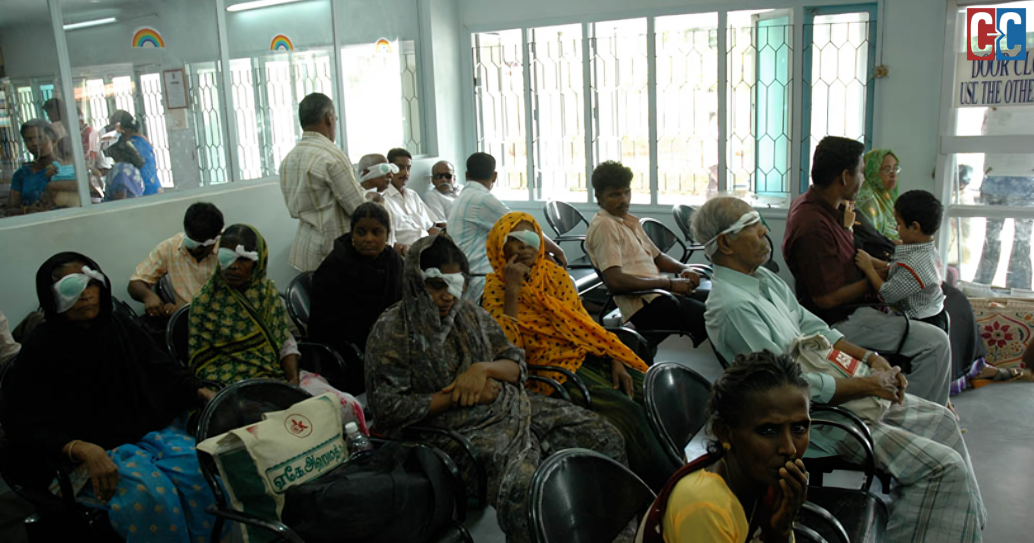
A 34-year-old paddy farmer named Anita from Nalanda of Bihar, had been coughing for 7 weeks before she reached a government health facility. By then, the TB had been active for months. The nearest facility with a chest X-ray machine was 40 kilometres from her village. The radiologist who could read the scan came only on Tuesdays. She arrived on a Wednesday. She waited until the following week. In that interval, she continued working in the fields. She continued living in a single room with her husband and two children.
Anita’s story is not a system failure in the sense of anything breaking. It is a system functioning exactly as designed, for a population that no longer reflects India’s healthcare burden actually is. It is also precisely the gap that the IndiaAI–ICMR Memorandum of Understanding, signed on May 7, 2026, is designed to begin closing.
IndiaAI, the Government of India’s flagship AI initiative under MeitY, signed the MoU with the Indian Council of Medical Research (ICMR), in a formal ceremony in New Delhi, attended by senior officials from both institutions. This included ICMR’s Additional Director General Dr. Sanghamitra Pati and IndiaAI COO Smt. Kavita Bhatia.
What The Partnership Actually Does
IndiaAI–ICMR MoU, May 7, 2026: ICMR’s MIDAS datasets on AIKosh. GPU computing for biomedical research. Co-development of AI tools for priority public health challenges. India recognised as Pioneer Country under HealthAI Global Regulatory Network.
PIB / IANS, May 2026
The MoU is organized into three operational pillars. Under the first pillar, the Indian Council of Medical Research (ICMR) will provide IndiaAI with datasets, artificial intelligence algorithms, and toolkits that have been anonymized and ethically cleared within the context of the ICMR’s Medical Information Data for Artificial Intelligence Solutions (MIDAS) initiative.
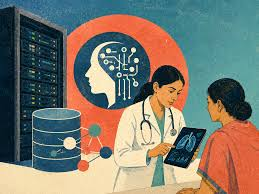
Secondly, IndiaAI will give the Indian Council of Medical Research access to GPU-enabled and high-performance computing facilities at discounted rates according to service level agreements. It is a solution to a structural problem that has prevented AI development in India’s medical institutions since most government hospitals and research centers have not had the necessary computing capacity to develop and validate large-scale AI models. While India’s overall doctor-to-population ratio has shown improvement in theory, there are still critical shortages of specialists in rural areas. According to data from the Indian government published in 2024, Community Health Centers all over India still suffer from shortages of specialist doctors.
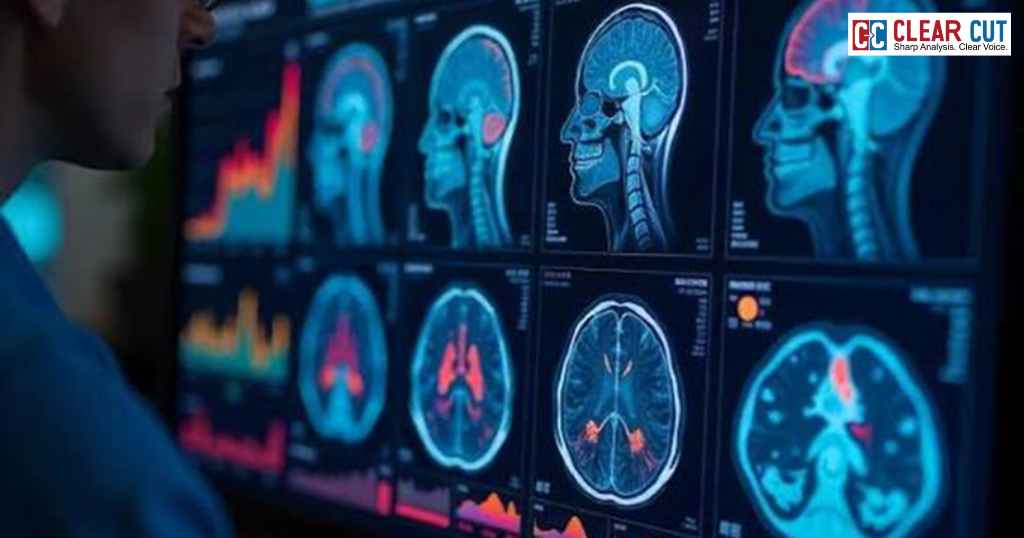
Thirdly, and importantly from a patient perspective such as Anita, both organizations will collaborate to develop artificial intelligence-based interventions that address specific diseases in India such as tuberculosis, diabetes-related retinopathy, malnutrition, and maternal complications. By collaborating using the epidemiology information provided by ICMR, the tools developed will be contextually appropriate for use in India rather than adaptations from overseas. The gravity of the situation is immense, as India still reports the highest tuberculosis burden globally, with more than 26 lakh TB patients registered under the National TB Elimination Program by 2024. Various studies published in 2024 reported that there is significant delay in diagnosing TB patients, with the mean period of delay going beyond a month. The problem persists in rural and underdeveloped areas where there is scarcity of radiologists, ophthalmologists, and experts in maternal care. Hence, AI-based triage and screening may help fill this gap.
The Governance Architecture Behind It
The MoU builds on a foundation of international positioning. In September 2025, IndiaAI and ICMR’s National Institute for Research in Digital Health and Data Sciences (NIRDHDS) were recognised as Pioneer Countries under the HealthAI Global Regulatory Network It is a multi-lateral organization set up together by the United Kingdom and Singapore, with the objective of ensuring responsible regulation of AI within the field of health care. The tripartite MoU signed by IndiaAI, NIRDHDS, and HealthAI ensured India’s commitment to share safety guidelines, monitor AI’s performance within clinical scenarios, and contribute to global standards of using AI within health care systems.
It is not only a matter of credibility but also of impact. Once ICMR validates India’s use of artificial intelligence technology in public health programs and HealthAI establishes an internationally acceptable regulatory structure for ensuring multilateral safety, the international legitimacy of such innovations will make them ready for export and replication, as well as allow India to become an exemplary nation and source of public health AI innovations in LMICs. Previous attempts of implementing healthcare AI solutions in India have shown their promise in this regard. For instance, in India, some AI-powered chest X-rays used as part of the National Tuberculosis Program have already enabled rapid triaging in districts facing the shortage of radiologists. Furthermore, AI-powered diabetic retinopathy screening projects carried out in the states of Tamil Nadu and Telangana have helped identify high-risk individuals at the primary care level before referring them to specialist clinics.
In other LMICs beyond India, digital health solutions supported by AI have been employed in order to solve the problem of shortage of medical professionals and improve early detection capabilities. For instance, in sub-Saharan African countries, machine learning technologies have been applied in predicting the risks for mothers and newborns in healthcare organizations, whereas pilot projects for pathology and radiology assisted with AI have also proven themselves as promising when it comes to improving diagnosis capabilities in conditions of extremely scarce numbers of specialists. The above-mentioned cases indicate that AI technology can be viewed as an important tool rather than a substitute for clinicians in a situation of overloaded healthcare system. Therefore, India is different from other similar initiatives when it institutionalizes AI governance along with implementing AI-based technologies into the health system.
The Accountability Gap that must not repeat
IndiaAI-ICMR collaboration represents a real institutional breakthrough. However, there is ample evidence that memorandums of understanding signed by various governmental institutions tend to herald lofty ambitions and put off practical implementations. In the case of IndiaAI-ICMR agreement, there are several questions that need asking. First, how many AI applications are to be rolled out in public health care facilities? Second, which outcome indicators should be applied to measure their performance? Third, who would possess the right to pull back an AI application due to poor performance results? And fourth, what complaint procedure should be followed in the event of a patient being incorrectly diagnosed via AI?
The importance of these queries grows when one considers that India has begun to establish a governance framework for digital health, although its application is patchy. The National Digital Health Mission (currently known as the Ayushman Bharat Digital Mission) has outlined the structure of interoperable electronic health records and data exchange protocols. In addition, the Digital Personal Data Protection Act, 2023 establishes a regulatory framework for the processing of sensitive personal data on the basis of informed consent. Likewise, the Indian Council of Medical Research has issued ethical principles for the use of artificial intelligence in biomedicine and healthcare, highlighting such issues as transparency, accountability, safety, and human involvement in clinical decision-making. However, there is still no regulatory process for the ongoing monitoring of AI applications after their deployment in the public health sector.
The concept of MIDAS and the AIKosh software is indeed an exemplary example of public good for the Indian research community. These would certainly contribute to the growth of science. Yet science must at some point reach the village of Anita on Tuesdays, Wednesdays, and all other days of the week.
Conclusion
India has 1.4 billion people roughly and a physician density of approximately 0.74 per 1,000. The number is far below the WHO-recommended 1 per 1,000. AI in healthcare is not a luxury technology for India. It is infrastructure. It is the mechanism through which a country with too few specialists and too wide a geography can begin to close the gap between where diagnostic expertise lives and where patients actually are. The IndiaAI-ICMR MoU is the right structure. Now it needs targets that are time-bound, geographically specific, and publicly tracked. Every AI tool developed under this partnership must be evaluated against its deployment reach in aspirational districts, tribal health facilities, and primary health centres and not just in teaching hospitals in Tier-1 cities. If the intelligence stays in the capital, Anita will still wait until Tuesday. Give her the diagnosis she deserves, wherever she lives, whenever she walks through the door.
Clear Cut Health Research Desk
New Delhi, UPDATED: May 12, 2026 04:00 IST
Written By: Tanmay J Urs