
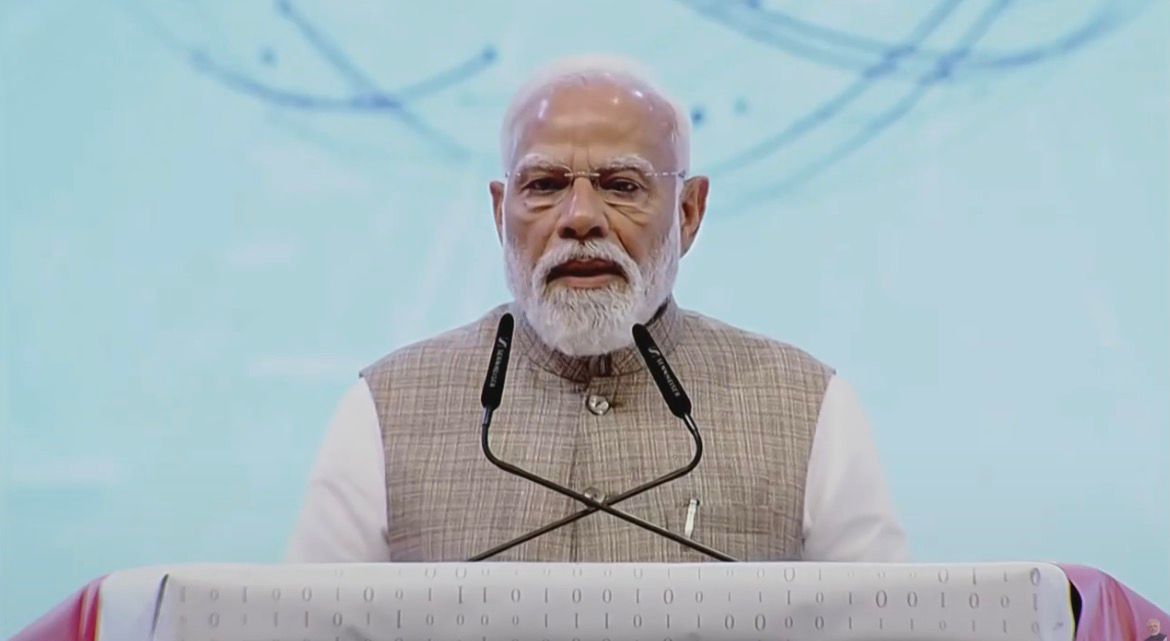
NEW DELHI: Addressing the high-profile NXT Summit 2026 on Thursday, Prime Minister Narendra Modi sent a dual message to the world and his domestic critics: India’s rise is “transformative,” and his government will spare no effort to insulate its citizens from the fallout of the Iran-West Asia conflict.
While global energy markets tremble under the weight of supply chain disruptions, the Prime Minister used the summit to highlight a robust domestic narrative—one where digital prowess and social cushions are keeping the Indian economy steady while others falter.
Digital Rails and Social Safety Nets
The Prime Minister drew a sharp contrast between “incremental” progress of the past and the “transformative” leap India has taken. He pointed to India’s undisputed leadership in real-time digital payments (UPI) as a primary tool for social equity. This digital backbone, he suggested, is what allows the government to deliver relief directly to the doorsteps of 140 crore Indians without leakage.
However, the most tangible evidence of this “shield” policy was seen in the agricultural sector. In a striking disclosure, the PM noted that despite the global price of urea hitting ₹3,000, the government continues to provide it to Indian farmers at just ₹300. This 90% subsidy is not just an economic figure; it is a social contract designed to keep food inflation in check and protect rural livelihoods from geopolitical tremors.
The Energy Crises: Relief and Resilience
Acknowledging the “LPG crisis” that has dominated recent headlines, the PM hit back at opposition parties, accusing them of “fear-mongering” to push political agendas at the cost of national interest.
To combat the crunch, the government has rolled out several emergency measures:
- LPG Relief for Eateries: Commercial establishments can now access 20% of their average monthly consumption.
- Alternative Fuels: In a pragmatic move to ease gas demand, the government has temporarily allowed the use of kerosene, coal, and biomass for the hospitality sector.
- Strategic Reserves: India’s petroleum storage capacity has reached a record 50 lakh tonnes, up from negligible levels a decade ago.
A Green Horizon: The 250 GW Milestone
The Prime Minister also looked beyond the immediate crisis, announcing that India’s renewable energy capacity has officially crossed the 250 GW mark. This shift toward self-reliance is being framed as the ultimate solution to the volatility of the Strait of Hormuz.
“If you want to be part of the future, you have to be in India,” the PM remarked, comparing the nation’s economic ascent to the citizens’ abiding passion for cricket—where everyone is now keen to know the “latest score” of India’s progress.
The Takeaway
For the digital-savvy citizen, the message from the NXT Summit is clear: while the world is “untouched” by the current global crisis, India is leaning on its digital infrastructure and massive social subsidies to ensure the “Viksit Bharat” journey remains on track. The government’s stance is firm—growth is non-negotiable, and the protection of the common man is the priority.
Clear Cut Awards & Events Desk
New Delhi, UPDATED: March 13, 2026 11:00 IST
Written By: Clear Cut Correspondent