
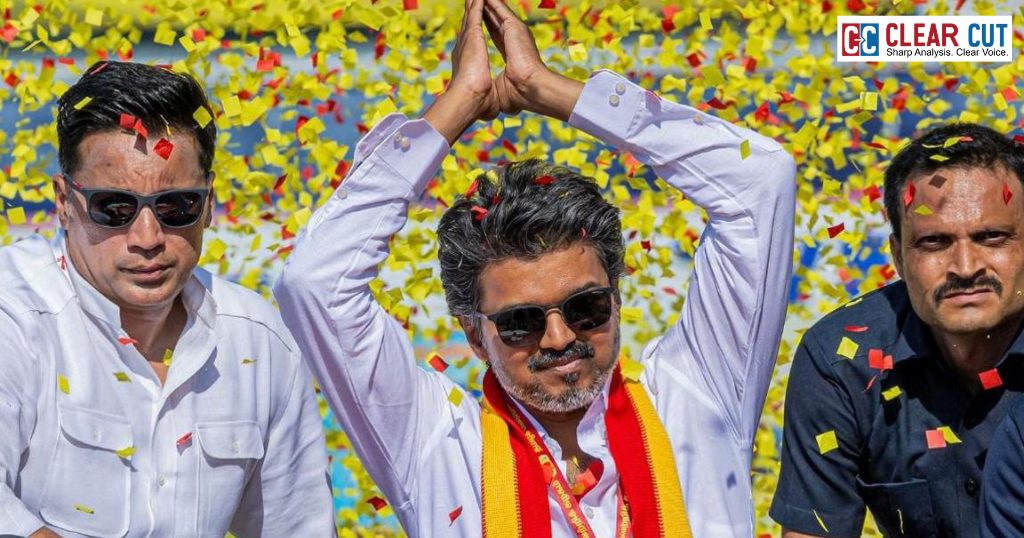
- Tamilaga Vettri Kazhagam (TVK), led by C. Joseph Vijay, ended 59 years of Dravidian dominance by emerging as the largest party in the 2026 Tamil Nadu Assembly elections.
- With Congress support, TVK formed the government after a hung assembly, marking a historic political shift in Tamil Nadu.
Actor turned politician c. joseph vijay(tvk) celebrates after historic victory in the 2026 assembly elections
THE SEAT STALIN WON THREE TIMES AND LOST THE FOURTH
M.K. Stalin had won the Kolathur constituency three consecutive times. On May 4, 2026, when the Election Commission of India (ECI) declared Tamil Nadu Legislative Assembly election results. The election saw record 85.1% voter turnout, the highest in the state’s history in the very election which Stalin lost. The sitting Chief Minister of Tamil Nadu was unseated from his own assembly constituency. It was an outcome with a symbolic weight that, in many democracies, would be the headline on its own. In Tamil Nadu in 2026, it was barely the second-most significant story of election night.
The actual headline was structural: Tamilaga Vettri Kazhagam, a party founded by Tamil film star C. Joseph Vijay and contesting its first-ever election, ended a 59-year unbroken streak of Dravidian party dominance in Tamil Nadu. It was a perpetual duopoly between the DMK and AIADMK that had defined the state’s politics since 1967, surviving Emergency rule, economic liberalisation, and the deaths of towering figures like M. Karunanidhi and J. Jayalalithaa.
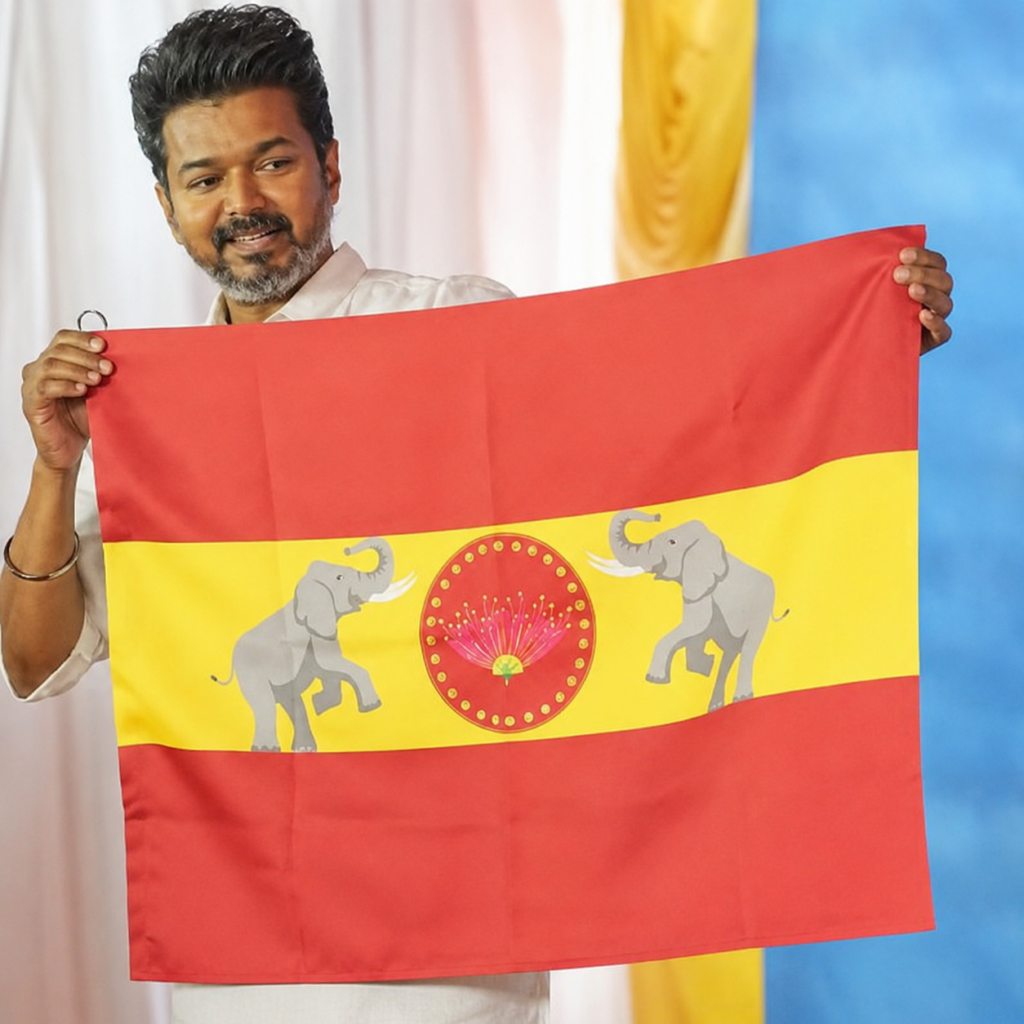
| 85.1% Voter Turnout (Record) | 108 TVK Seats Won (Largest Party) | 118 Seats Needed for Majority | 59 Years of Dravidian Dominance Ended |
A HUNG ASSEMBLY AND A FRANTIC NEGOTIATION
TVK, contesting alone across 233 constituencies, emerged as the single largest party with 108 seats short of the 118 needed for an outright majority. Vijay’s TVK designation as a chief ministership was thrown into uncertainty when the state withdrew his official convoy and security protocols pending government formation, and his repeated meetings with Tamil Nadu Governor Rajendra Arlekar generated visible political tension over the following days.
The decisive move came from an unlikely direction: the The Congress (INC) chose to abandon DMK alliance and back Vijay’s TVK government instead explicitly invoking the legacy of former Tamil Nadu Chief Minister K. Kamaraj, the social justice philosophy of Periyar E.V. Ramasamy, and the constitutional principles of B.R. Ambedkar as the ideological basis for the switch. The DMK publicly called the move ‘myopic’; Congress framed it as necessary to keep BJP-aligned parties away from power in the state.
WHERE TVK’S VICTORY ACTUALLY CAME FROM
TVK’s electoral coalition reveals a meaningful demographic shift rather than a purely celebrity-driven anomaly. The party won 24 of the state’s 46 assembly seats reserved for SC communities — the first debutant party in Tamil Nadu’s history to secure more than half of all reserved seats, and making significant inroads into the Dalit vote base that both DMK and the Dalit-rights party VCK had long considered their own territory. TVK also dominated northern Tamil Nadu and made substantial gains in the AIADMK’s traditional Western Kongu and southern strongholds.
The AIADMK-BJP alliance, meanwhile, suffered from what analysts identified as weak vote transfer between the two parties, a loss of the BJP’s independent momentum following its April 2025 realignment with AIADMK, and the political sidelining of the BJP’s former state president — factors that, combined, cost the alliance ground particularly among urban and younger voters drawn instead to TVK’s outsider positioning.
THE GOVERNING TEST AHEAD
By June 2026, six assembly seats had already turned vacant — Vijay resigning one of his two won seats, and five AIADMK MLAs resigning to formally join TVK — with by-elections still to be scheduled, an early signal of the institutional churn that typically follows a historic, hung-assembly transition of this scale. Vijay now governs with a coalition built from defections, outside support, and a Congress alliance forged more from anti-BJP strategic calculation than long-term ideological alignment — a coalition architecture that history suggests can be genuinely fragile under sustained political pressure. What Tamil Nadu’s voters delivered was a clear, record-turnout rejection of a fifty-nine-year political duopoly. What they have not yet received is evidence that the alternative can govern as competently as it campaigned. Vijay’s TVK-led government owes the state’s voters, especially the Dalit and first-time voters who broke six decades of pattern to back it, a transparent, deliverable governing agenda.
Clear Cut Award & Events Desk
New Delhi, UPDATED: July 02, 2026 13:10 IST
Written By: Tanmay J. Urs