


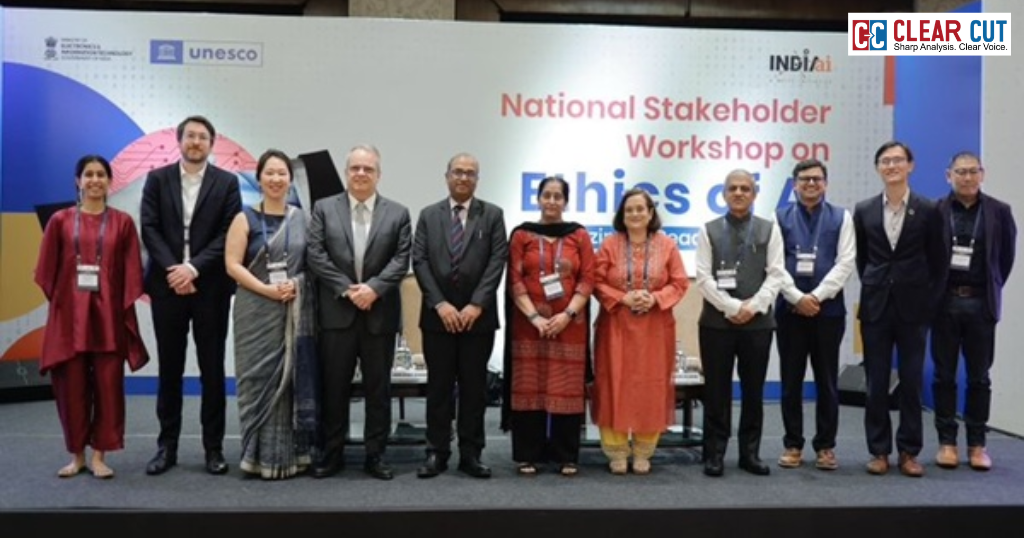
This article explores how the collaboration between UNESCO and the Ministry of Electronics and Information Technology aims to make AI more inclusive in India. It highlights the urgent need to address data bias and ensure rural and informal workers are represented in digital systems.
The Woman the Data Never Counted
There is a woman in Rajkot who heals people for a living. She is a home healthcare aide, one of India’s 490 million informal workers who rise before sunrise, carry their skills in their hands, and return home without a payslip, a pension, or a digital footprint. For decades, no training algorithm recognized her existence. No dataset accounted for her hours. No AI model was made with her voice in mind. That is precisely the injustice the newly proposed joint framework between UNESCO and India’s Ministry of Electronics and Information Technology (MeitY) aims to address, and it arrives at the right time.

Teaching the Machine to See Differently
The question this framework poses is simple: can artificial intelligence learn to notice the people it has long ignored? Under MeitY’s #AIforAll framework, AI is envisioned as a source for rural growth, better governance, and stronger human potential. This idea is hopeful, but it needs continuous attention. When training data mostly comes from cities, from English-speaking professionals and digitally connected citizens, the machine learns a limited view of India. It learns the India with Wi-Fi and formal IDs. It does not learn about Rajkot, the rice fields of Odisha, the weaving clusters of Varanasi, or the roadside repair shops of rural Tamil Nadu.
A Moral Reckoning Disguised as a Policy Document
Nearly 70% of India’s youth live in rural areas, yet many face barriers to jobs because they lack access to quality education, training, and digital tools. This is more than a technology gap; it is a matter of fairness. The UNESCO-MeitY framework enters this space as both a reflection and a guide, showing how bias quietly influences systems and offering a path that is more honest and inclusive. It clearly states what needs to change.
The Heart at the Centre of the Algorithm
What makes this collaboration unique is its focus on human values. The UNESCO Recommendation on the Ethics of AI, adopted by 193 countries, places human rights and dignity at the center of education systems. That word, heart, matters. The heart does not calculate; it feels. This framework aims to address the feeling of being left out, whether it’s when a platform doesn’t understand your dialect or when a job tool doesn’t recognize your skills.
Engineering in Service of Equity
MeitY’s India AI Governance Guidelines aim to ensure AI is safe, inclusive, and responsible across sectors. Within this, the joint work with UNESCO specifically targets data bias, which is the hidden force behind digital inequality. UNESCO’s 2025 toolkit provides open-source multilingual NLP tools and energy-efficient systems designed for areas with limited data, lower computing power, and diverse languages. This makes AI more accessible and affordable. It is not charity; it is thoughtful engineering aimed at fairness. When a platform communicates in Odia or Bhojpuri, or when a training module works on a basic smartphone without fast internet, the bridge becomes more than just an idea. It transforms into something people can actually use.
The Artisan’s Expertise Has Always Deserved a Stage
Sudha Murthy once wrote that a nation is judged not by its cities, but by how it treats its smallest lives: the village artisan weaving silk without internet access, the plumber who learned by watching rather than reading, the midwife whose knowledge has never been recorded. For them, ethical AI in education is not an abstract concept; it is an opportunity to be seen. A report by NITI Aayog poses a powerful question: how can advanced technologies reach those who have been overlooked, so they can participate in the country’s growth? The answer requires more than infrastructure. It needs imagination and a commitment to act.
Building the Bridge While Standing On It
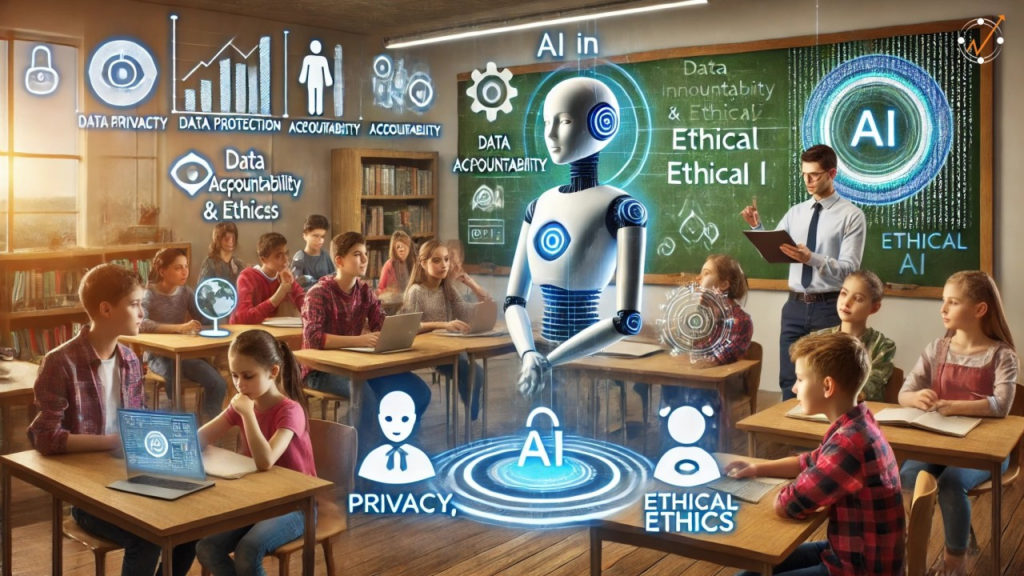
UNESCO notes that one in three people worldwide is still offline. The digital bridge is not fully constructed yet. It exists as a plan, waiting to be realized. Building it will need courage from policymakers, humility from technologists, and a willingness to collect data from hard-to-reach and often ignored places. UNESCO’s AI Competency Framework for teachers emphasizes the importance of inclusion, human agency, fairness, and respect for language and culture. Every teacher trained with these values contributes to the solution. Every classroom that embraces them represents another step across the divide.
The Most Urgent Classroom Has No Walls
At its best, the algorithm is still learning. What we teach it about whose lives matter will influence what it gives back to society. Today, the most important classroom in India is not a physical building. It is the space where engineers, policymakers, and storytellers come together and stay until every data point reflects a real person, a real voice, a real life. The woman in Rajkot is still waiting. The framework has finally noticed her. Now comes the more challenging and brighter task of ensuring the technology does too.
References
UNESCO Recommendation on the Ethics of AI (2021)
UNESCO AI Competency Framework for Teachers (2024)
UNESCO Digital Learning Week Report (2025)
MeitY India AI Governance Guidelines (2025)
NITI Aayog, AI for Inclusive Societal Development (October 2025)
Clear Cut Education Desk
New Delhi, UPDATED: March 20, 2026 05:00 IST
Written By: Tanmay J Urs

Hi there, I want to subscribe for this website to take newest updates, therefore
where can i do it please help.
There is a subscribe button at the top. Press it, then click on ‘Subscribe Now.’ Once you complete the payment, you will start receiving notifications.