

Kota’s coaching industry highlights a paradox where massive academic aspirations fuel a billion-rupee economy, but also create intense pressure and mental health risks for students. The system prioritizes rank and competition, often overlooking student wellbeing and alternative career paths.
On the billboards that line Kota’s coaching strip, toppers smile like movie stars. As ceiling fans silently stir like the rocket launchers employed for students at the stream of Kota’s coaching, somewhere in the middle lies India’s greatest visibility paradox: a multibillion-rupee industry profiting from aspiration, and a generation traversing the stress of turning aspiration into rank, score, and seat.
The Commerce of Aspiration
For two decades, Kota has been the finish line India runs to, when the race is JEE or NEET. In a normal year, 2 – 2.5 lakh students make their way, in 2024, this sank to only 85,000 – 1,00,000 due to new rules and bad PR, but the city still spun out ₹3,500 crore in annual revenue, down from ₹6,500 – 7,000 crore previously, reported by industry stakeholders. To zoom out and view the machine is an even grander sight. India’s coaching market is estimated to be worth US$ 6.5 billion (2024) according to at least one industry estimation, a portion of the broader private tutoring valuation in the Asia-Pacific (APAC) region.
At the family level, this comes at a price. A year in Kota means tuition, hostel, meals, tests is usually closer to ₹1.5 – 3 lakh+ (this range is typical reporting for the sector; fee card receipts from institutes included routine classroom proposals for a single year at around or above ₹85,000 – ₹1,70,000 plus taxes, excluding test series and housing options).“Rank is the currency. Time is the tax.”
Pressure: At Home, At Class, On the Clock!
The pressure, however, does not start at Kota; it is first built up at home and school. An NCERT survey of approx. 3.8 lakh students (2022), found that 81% of students experienced anxiety caused by studies, exams, and results, which is a stark and nationwide baseline that happened before the coaching “finish line.”

Across many more recent nationwide checks, alarms are still ringing: the 2025 Student Well -Being Pulse (IC3 Institute & CISCE) reported that about 1 in 5 high-schoolers feel “rarely” calm or motivated, and about 40% do not have answers for where to find help with school, both of which are visible signs of ongoing distress tied to academic and career anxiety.
To drive the point home, let’s look at it through some numbers :
- JEE Advanced 2024: 1,80,200 students took both papers; 48,248 students qualified.
- IIT seats (Joint Seat Allocation Authority, 2024): 17,740 seats across 23 IITs. Even if every seat was filled by a first-time qualifier, these numbers still equate to 1 seat for 10 students who sat the Advanced, and so only a small fraction of the larger pool who began the journey with the JEE Main.
This funnel is wide at the top, needle-thin at the bottom, producing the expected outcome: a large number gave a sincere effort; most did not “convert.” Most of the people, who did not convert into something, should never have been on that track anyways, and often missed similar trajectories they would have excelled in. This is what counselors refer to as “opportunity cost disguised as preparation.”
When the Dream Hurts
Suicide remains the most piercing public-health indicator. The National Crime Records Bureau’s (NCRB) Accidental Deaths and Suicides in India (ADSI) data looks at suicide rates for 2022, the latest available data nationally. It shows the suicide rate rising to 12.4 per lakh. Suicides by students are 7.6% of all suicides down marginally from 2021. Independent syntheses look at student suicides, over 13,000 a year. Kota has swung, in added multitude, in horror and reform. The district mandated spring-loaded “anti-suicide” fans in 2023 after 26 young people committed suicide, and then announced a raft of measures; they discontinued the 2024 statistics at lower(17) and as of early of May 2025 (14) – very, very fragile improvements, not a solved crisis.
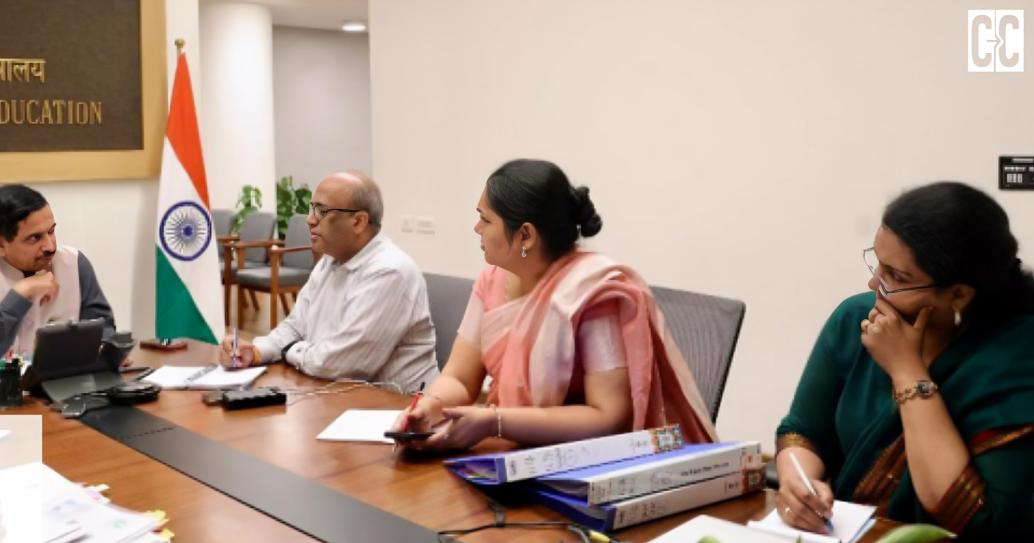
On a regulatory basis, Rajasthan issued guidelines in 2023 to help manage stressors on young people there: prohibiting glorification of toppers (top achieving students) from their profile or graduation, requiring educational institutes keep company routine test results confidential, recommending using alphabetical sections over rank-segregated or best to worse categorical sections, make it easy for students to leave and require refunding fees, students should only go to coaching classes after Class IX age minimum; the Education Ministry also issued guidelines to regulate coaching centres at a national level.
Hostels, one of their hidden settings, are being put at centre frame. The Kota administration issued their city decorum list of regulations regarding security-fee and standards for hostels. It remains to be seen how they manage enforcement.
Hope in Number: Commercialization Meets Culture
A Netflix series illustrated a truth that those in the system already understood: coaching is an industry, and industries optimize for growth. The product is “rank probability.” Marketing emphasizes the “toppers”; and parents do what parents do; teenagers self-select into a high-stakes, high-variance gamble. What else does a high-performing, high-achieving fifteen-year-old do? The Return on Investment (ROI) for the 17,740 who get seats at IIT every year is remarkable; the 1,826,895 and 89% of our future generation who do not receive funding for IIT or notional IIT are not so fortunate in their mathematical endeavour (even if they were likely better off in school).
Meanwhile, fees creep upward, there are more opportunities for mock tests, and student sleep declines. In this environment, parental pressure (often well-meaning) and institutional incentives can combine in a
pressure-cooker that excludes other possibilities, nurturing the arts, or not solely living at the vocational level, state universities with decent placements, or palliating other possibilities like gap years with counselling support. “Not getting into IIT is not failure. Getting trapped in a path you shouldn’t be on, that’s the real loss.”
Opportunities Lost That Aren’t Advertised in Public
Late specialization: Less-than-strong fundamentals result in students struggling through ultra-advanced
syllabi, while they are wasting years building weekend employable skills in diploma/degree programs better aligned with their aptitude. Single-exam myopia: JEE/NEET prep engulfs students so completely that they may forget to check on state CETs, AP polytechnic courses, design/commerce entrance tests, and an apprenticeship in the same field which lets them earn job income in a shorter time frame.
Geographical ignorance: Tier 2 and Tier 3 public universities are steadily improving their labs and placement opportunities, but they often get overlooked. Many families from smaller regions end up paying high housing costs in metro cities just to enroll their children in brand-name private courses, even though the outcomes are often similar to what local institutions can now provide.
What Has Improved, and What Still Must
In Rajasthan, recent steps to remove public rank-shaming, ensure privacy for standard test results, and gain consensus for new safety legislation for hostels, are small, but significant steps toward relieving some of the pressure on students. Policymakers are also looking at a broader level to regulate coaching practices and the increasing demand for coaching institutions. Together, these reforms illustrate the desire for a better balance between academic ambition and student wellbeing.
There still remain several opportunities for reforming the pressures within India’s coaching system. To begin with, there could be an aptitude-first entry process that includes the use of diagnostics, screening tests, and family advisories by trained, registered counsellors.
This could search for evidence of why families may pay upwards of a year’s salary for a program that may not be appropriate for their child to enter, as Rajasthan is seeking to pilot. The same could also be said about setting statutory counseling ratios and family-friendly timetables, respecting sleep and weekends instead of endless cycles of assessments, and then standardising the terms of refunds along with dignified approaches to exiting students from programs also when it is now clear there is no future for them. Then there is proven need, beyond IITs and AIIMS, to regulate government-led community campaigns aimed at promoting longevity in aspiration, perhaps to pursue a polytechnic, an apprenticeship, nursing, allied health, state university honors in the future.
Finally, each month generally, parents would be able to pull up aggregate data in dashboard form that addresses their child’s wellbeing, including council use, hospitalisations, opps, transfers to other private or public institutions, linked to enforceable safety standards, for each situation and school would be weaningful for parents and policy makers. Consequently, all this would consider the future of the sector, without jeopardizing student well-being.
A Humane Reset
Education in India is more than the 17,740 IIT seats. It’s about the millions, for whom learning should unlock dignity, income and curiosity. The optimized version of the Kota model is brilliant at identifying; however, it’s also brilliant at sorting. If ‘Kota Factory’ gave us a mirror, the next chapter we write for ourselves needs to feel different; coaching that find the right fit, parents who value growth rather than rank, schools that embrace diverse measures of success, and an education system where help is visible, accessible and stigma-free. Because in a country as young as ours, hope shouldn’t come with a seat belt.
Clear Cut Education Desk
New Delhi, UPDATED: May 04, 2026 09:00 IST
Written By: Antara Mrinal