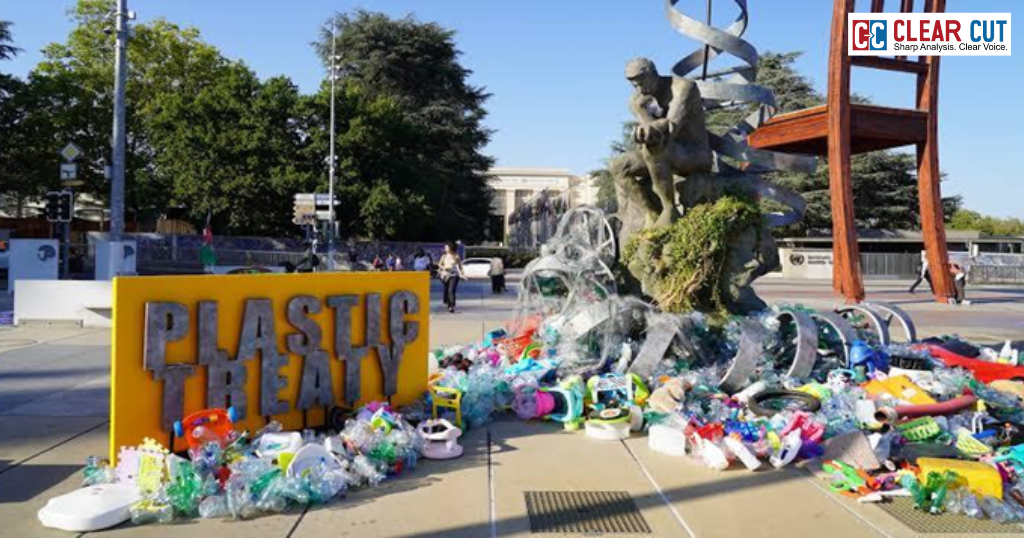
The global plastics treaty is at risk of becoming a waste management agreement that ignores the root cause: rising plastic production. Without binding caps, pollution will continue to grow despite improved recycling efforts.
What Was Promised and What Is Happening
In March 2022, the UN Environment Assembly in Nairobi agreed to negotiate a legally binding global instrument to end plastic pollution by the end of 2024. The ambition was the most significant multilateral environmental commitment since the Paris Agreement: a treaty covering the full lifecycle of plastics, from production through use to disposal, with legally binding obligations on member states. By the conclusion of the fifth session of the Intergovernmental Negotiating Committee in Busan, South Korea, in November 2024, no agreement had been reached. After INC5.2, a the fifth session is now being planned for 2026, with no confirmed date, no agreed scope, and a negotiating text that has grown longer and more bracketed with unresolved text since the first session in Punta del Este in 2022.
The core dispute is not technical. It is political and economic. A group of countries led by Norway, Rwanda, and the EU, known as the High Ambition Coalition, advocates for a treaty that caps plastic production volumes at the upstream level, meaning the amount of plastic manufactured each year would be reduced under binding targets. A group of oil-producing states and major plastic manufacturing economies, including Saudi Arabia, Russia, Iran, and others, opposes any upstream cap, arguing the treaty should focus exclusively on waste management: improving collection, increasing recycling rates, and reducing littering. The petrochemical and fossil fuel industry, for which plastic represents a critical growth market as fuel demand declines with the energy transition, has been present at negotiations in record numbers. The Center for International Environmental Law documented over 220 fossil fuel and chemical industry lobbyists registered at INC-4 in Ottawa, outnumbering the delegations of many small island states most affected by plastic pollution.
Why Downstream-Only Fails
The mathematics of a downstream-only treaty are not complex. Global plastic production reached approximately 430 million tonnes in 2023, according to OECD data. Recycling rates globally are around 9 percent, a figure that has not moved significantly in a decade despite extensive industry investment in recycling infrastructure and communication. The Pew Charitable Trusts and SYSTEMIQ projected in 2020 that without production caps, plastic pollution in the ocean will nearly triple by 2040 even with maximum feasible improvement in waste management systems. An uncapped production treaty is structurally incapable of solving a plastic pollution problem whose primary driver is the volume of plastic being produced. Recycling better while producing more plastic faster does not reduce ocean plastic. It reduces the rate of increase. That is not the same goal.
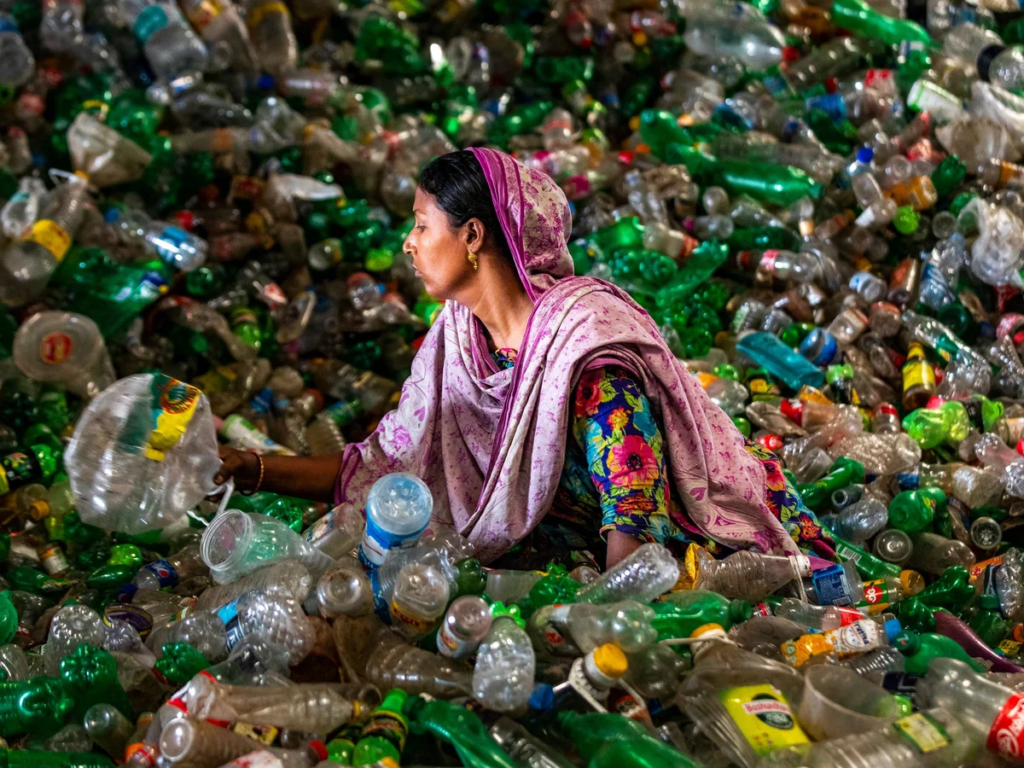
The communities most affected by plastic pollution are not the communities producing it. The informal waste pickers who sort plastic in Dhaka, Lagos, and Jakarta, the fisherfolk in Pacific island communities whose nets come up with more plastic than fish, the coastal communities in India whose beaches and waterways accumulate the packaging of global consumption chains: these communities bear the environmental and health costs of a production model they did not choose and a treaty process they cannot adequately represent. GAIA, the global alliance for incinerator alternatives, has documented that incineration-based waste management solutions being advanced as treaty-compatible in some national positions would disproportionately concentrate air pollution in low-income communities near incinerator sites. The downstream-only approach, in other words, does not only fail to solve the production problem. It creates new environmental justice problems in its attempt to manage the waste the uncapped production generates.
Where the Corporate Sector Stands
The global consumer goods and retail sector has made extensive voluntary commitments on plastic: the Ellen MacArthur Foundation’s Global Commitment has over 1,000 signatories pledging to make packaging reusable, recyclable, or compostable by 2025. That deadline has passed. The Ellen MacArthur Foundation’s own progress reports documented that most targets were not met on schedule, with particular gaps in the elimination of unnecessary single-use plastic and the scaling of reuse models. The Extended Producer Responsibility frameworks that exist in various forms in India, the EU, and several other jurisdictions create obligations for producers to fund collection and recycling. None of them cap the amount of plastic that can be produced.
The Treaty, if it arrives in its current trajectory as a downstream waste management instrument, will give the corporate sector a multilateral framework within which to present existing EPR compliance as treaty compliance. It will not require any company to reduce the volume of plastic it puts into the market. The BRSR framework in India requires companies to disclose plastic waste generated and managed. It does not require disclosure of plastic production volumes or trajectories. The global treaty, if it mirrors this logic at international scale, will produce a comprehensive architecture for managing plastic waste without ever asking whether less plastic should be made.
Conclusion
The global plastics treaty is drifting toward being a waste management document with a legally binding header. That outcome would give the petrochemical industry what it has been present in record numbers to achieve: the appearance of a treaty without the substance of production limits. Communities bearing the cost of plastic pollution, the waste pickers, the fisherfolk, the coastal communities in the Global South, are not present in record numbers in the negotiating rooms. They are present in the waste streams that the treaty’s current trajectory would leave uncapped and growing. Whether a resumed fifth session in 2026 produces a different outcome depends on whether the High Ambition Coalition can hold its position against the political pressure of the oil-producing bloc and the lobbying infrastructure of an industry that has understood for years exactly what kind of treaty it needs to be.
Clear Cut Climate, Research Desk
New Delhi, UPDATED: May 07, 2026 09:00 IST
Written By: Jay