Shahjahan Begum was a fearless grassroots activist who transformed personal tragedy into a lifelong mission to fight violence against women and empower marginalized girls through education and collective action.
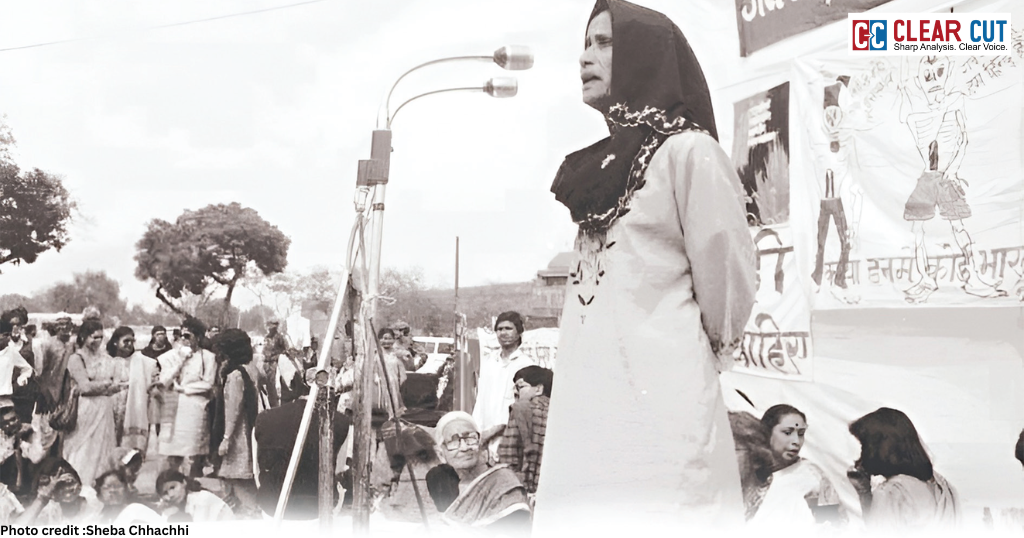
Shahjahan Begum (1942-2013) is a leading figure in the Indian women’s movement. From her working-class neighbourhood, she spoke up, calling out violence and abuse, rampant within families, society and the state. She was a grassroots leader, who joined forces with national and global feminists struggling to end patriarchy and its violence. She pioneered action on the ground, building institutions committed to supporting women and educating girls, so they are empowered to carry the torch forward.
Early Life
Born in Mathura, Shahjahan Begum lost her parents during 1947 violence. She was brought up by foster-parents, studied in an Urdu school, and married off at the age of 14. She felt trapped in an abusive marital family. She had four children, before she left, determined to stand on her own feet. Along with the children, she came to Delhi in 1972, where her sister lived. Using the sewing machine her sister’s mother-in-law lent her, she began stitching for a living. In 1975 she bought her own sewing machine, rented a room in Nangloi and moved there. She found work in a factory. Her husband had come to live with her, and in all, she gave birth to nine children: two daughters, seven sons. She was the family bread-winner.
Plunge into Activism
Shahjahan arranged the marriage of her elder daughter, Nur Jahan, within Nangloi. After a while, Nur Jahan told her mother that her in-laws were harassing her and demanding Rs. 7,000. Shahjahan took a loan to help her daughter. But the in-laws kept torturing, and raised a demand for Rs. 30,000. Nur Jahan did not convey this to her mother. One afternoon, her in-laws threw kerosene on her, and lit a match. Hearing her screams, a neighbour ran to inform Shahjahan. She ran to the in-laws’ house, but was unable to save her daughter. Her 12-year old son ran to the police station but the police refused to come. Shahjahan Begum later recalled, “I became crazy with grief. I brought my daughter’s lifeless body, and placed it in front of the police station. I didn’t know any women’s organisations. In my fury, I sat there, others sat with me. It was a gherao. Traffic stopped, everyone got to know. The police had to register a case. After that, we took her for burial.”
This was 1978, and Shahjahan Begum’s first encounter with the law. She fought the case, but Nur Jahan’s in-laws had bribed the police and there was no evidence. In court, one day she met a young lawyer, Nandita Haksar, who began helping her. Though it was not possible to win the case, Shahjahan learnt a lot. Others in the neighbourhood began approaching her for advice.
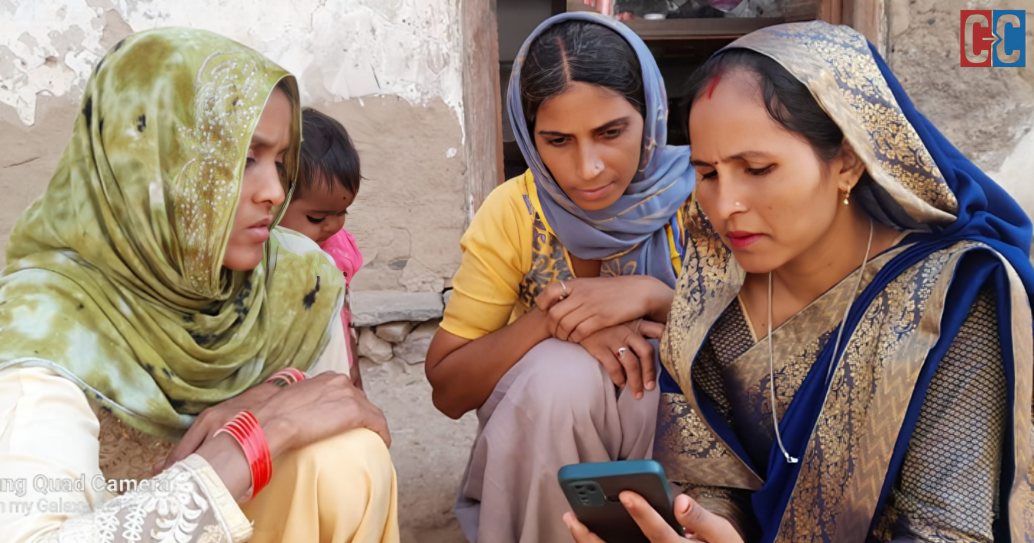
Shahjahan’s life changed. She plunged into activism – extending support to women in distress. She recalled: “I threw aside my burqa, stepped out, leaving my younger children with the older ones. My husband would shut me out of the house, but there was no way I could return to my old life.” People vilified her, calling her a loose woman who goes to court-kacheri, but she remained focused. The work kept expanding. She formed a group of local women to tackle the cases that poured in, from Nangloi and beyond – of abuse, rape, harassment, murder – and took up community issues as well. One summer day she led some 200-300 women to break their matkas outside the local MLA’s house. After that water started coming into their homes! She thought, “If we keep up this work, mind-sets will change…. When everybody around was a wolf, I grew from a lamb into a lion. I am a lioness and I work as such.”
Safe Shelter, Dignity and Justice
Through the 1980s, Shahjahan Begum became immersed in the women’s movement, which was very vibrant at the time. She joined protests and street plays against dowry-murders, rape, domestic violence, and actively participated in meetings and discussions where the new thinking that was taking shape. Groups such as Saheli, Sabla Sangh, Ankur, Action India realized that many women needed to walk out of violent family situations, but had nowhere to go to. Several activists got together and started a shelter home, Shaktishalini, in 1986, in a rented house in Jangpura. Shahjahan Aapa was involved since its inception, and joined full-time, as its manager. Her motivation was strong as steel, for “What happened to my daughter must not happen to anyone else!”
For the next twenty-five years, Shahjahan Aapa was the mainstay of the shelter, along with its co-manager, Satyarani Chaddha, whose daughter too had been murdered in her marital household. Shahjahan and Satyarani were from different class, caste, religious, cultural backgrounds, yet came together as a joint force, a force to reckon with. They clocked in daily, supporting women, and children, move from vulnerability, to dignity. The shelter home offered space to heal, seek justice, and prepare to live again in the wider world. Shahjahan Begum and others in Shaktishalini dealt with police, law, government, families and communities, even as they offered counselling, legal aid, education, vocational training, empathy and solidarity to the women who came to them. Shaktishalini opened another centre in Old Delhi, to house more women.
Shahjahan Aapa mused, “We did what we could, but cases continued for years. Women suffered so much. Even after fighting for ten years, she may get nothing. Police and court work for money, not for people like us. People must demand accountability!” Shahjahan Aapa held legal awareness workshops all over, and also spread awareness of how women can unite to tackle pressing problems be it around electricity, water, goondas or religious bigotry.
“Girls Will Grow Beyond Us” – Nav Srishti
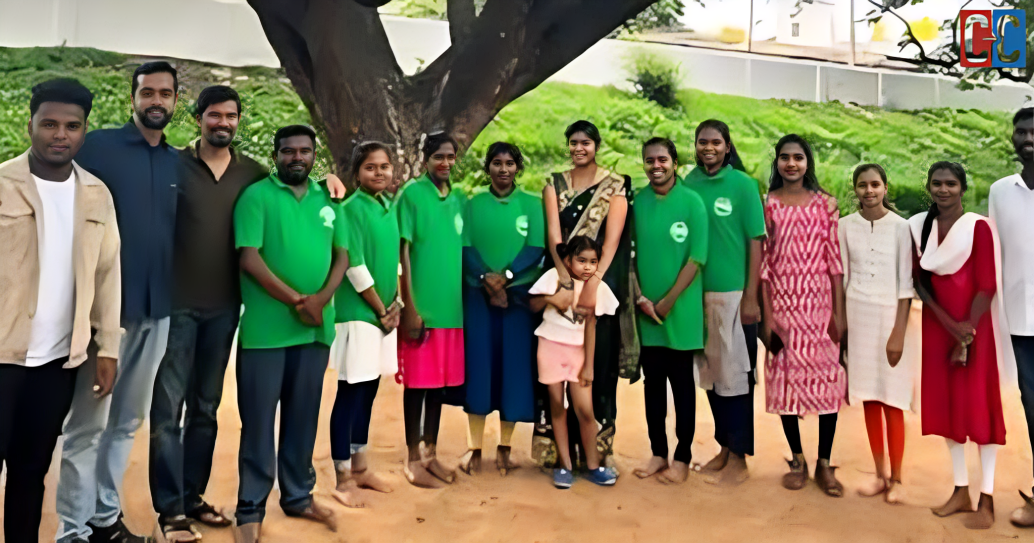
In Shahjahan Aapa’s lane, in Nangloi, girls were generally pulled out of school by Class 5. Feeling keenly the importance of education, she started non-formal classes in her tiny home: her daughters-in-law Shaheen and Shahida were the (unpaid) teachers, as well as Reena Banerjee, Shaktishalini’s part-time typist. The girls studied with a will, learning several skills. Parents were satisfied. There was increasing demand from lanes near-by. Shahjahan Aapa and Reena Banerjee secured a small grant, rented a room, and launched Nav Srishti, in the early 1990s. The first batch completed school, through NIOS (National Institute of Open Schooling). The organisation expanded organically, with Reena as Director. Within a decade, Nav Srishti was teaching a few hundred girls, in seven working-class localities across Delhi.
As they studied further, the girls grew increasingly confident, and articulate. Zeibun, Babita, Zeenat, Varsha and others performed street plays across the city, on issues of gender, education, health. When Zeibun’s brother forbade her, their mother, Khatoon Begum, supported Zeibun. Later, that same brother became extremely respectful of the girls – seeing them complete diplomas, degrees, take up jobs. Some joined Nav Srishti as teachers!
Shahjahan Aapa summed up: “I feel that girls will learn beyond what we have, they will do more and better than us. They will run families with equality and will teach others too…. But if we had not come out onto the streets and raised our voices, asked questions, these girls too would not have studied, nor come out into the world and become so capable.”
Precious Legacy: Lest We Forget
Shahjahan Aapa was deeply disturbed by the scourge of rising fundamentalism. She engaged with a grassroots forum discussing women’s experience of different religions. A prominent speaker at women’s movement gatherings, her ideas were well honed, language powerful. In 1995 she participated in the huge women’s conference at Beijing.
Feminist thought was critical to her life-journey. She was glad to be part of the women’s movement – which, she said, was for women and men – for ‘badlaav’, not ‘badla’. She added: “What I lost during childhood and youth, I found in older life. My soul is satisfied. Those who insulted me, now come to me…. If we work in the midst of people, with commitment, it makes a difference…. Our success is, that women today step out for their rights…. My sons and daughters-in-law help people, take them to the police station if needed…. In Nangloi today, if I call people, in one call they will all come.”
Shahjahan Aapa died tragically in 2013, while crossing railway tracks in Nangloi. Thousands crossed those tracks daily, with no option and no warning system. Paradoxically thus, it was the criminal negligence of civic authorities that killed her.
She was a stalwart, an inspiration, a true leader, whose legacy lives on — in the thousands of lives she touched, and the thousands that Nav Srishti and Shakti Shalini continue to impact.
About the Author: Dr Deepti Priya Mehrotra is a political scientist, teacher, and consultant with specialisation on gender, education and social issues. She is writes in English and Hindi, has authored several books including acclaimed biographies of Irom Sharmila, Gulab Bai, stories of single mothers, and a history of street theatre in India.
Clear Cut Gender Desk
New Delhi, UPDATED: March 26, 2026 5:40 IST
Written By: Dr Deepti Priya Mehrotra