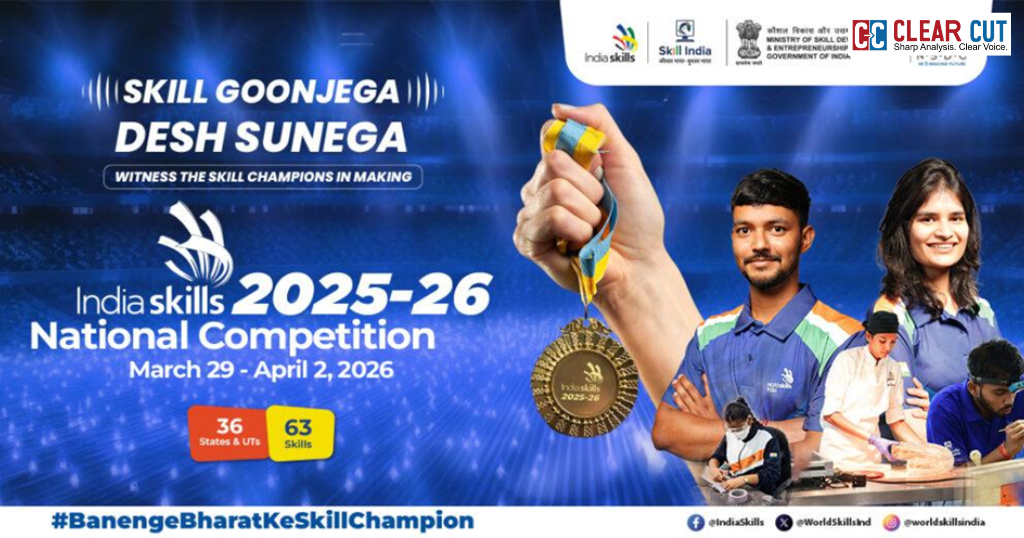
India Skills 2025–26 ended in Greater Noida with UP winning seven medals, but only two were women, exposing a clear gender gap in vocational training. The results highlight deeper structural inequality in Skill India, where women remain underrepresented in high-value technical trades.
India’s largest skill competition closed in Greater Noida on April 2. UP won seven medals. The gender breakdown of who competed and who won tells a story the ceremony didn’t.
The Ceremony, and What It Celebrated
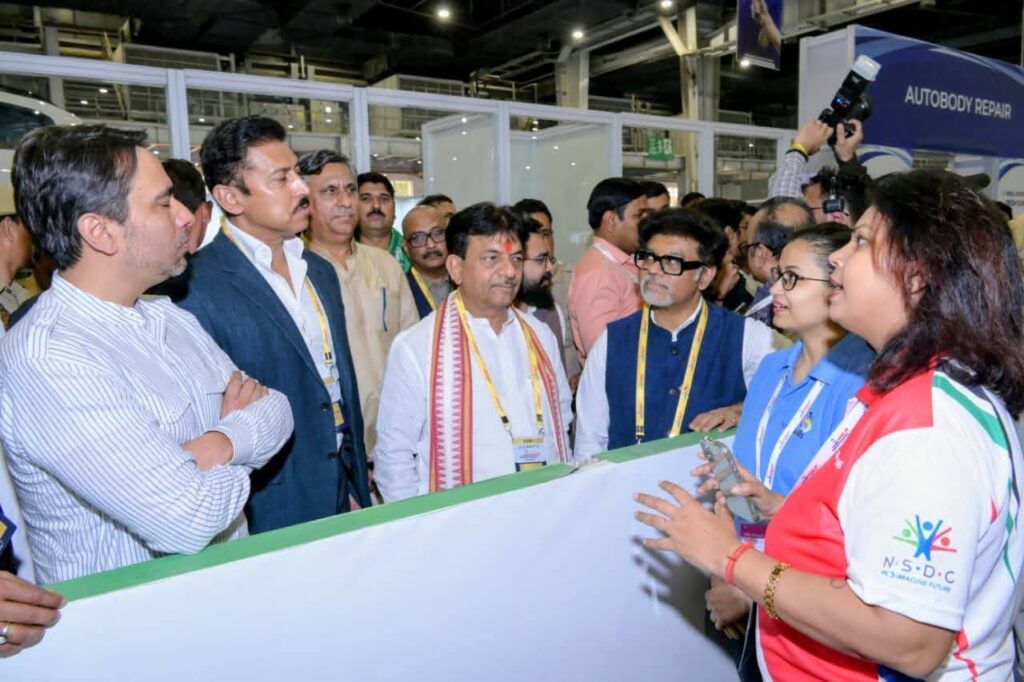
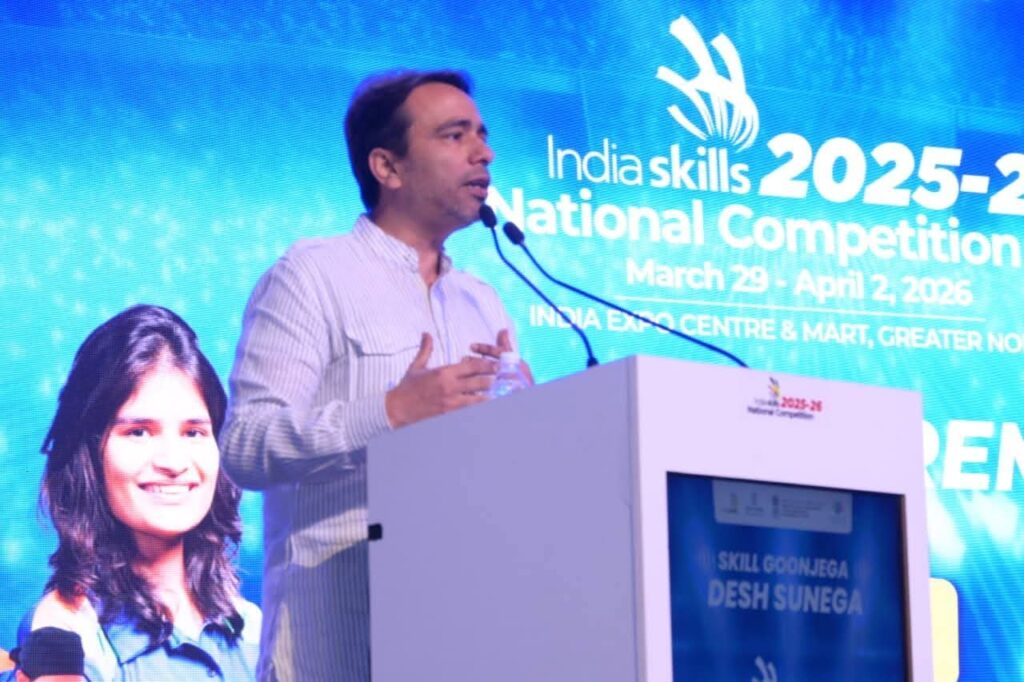
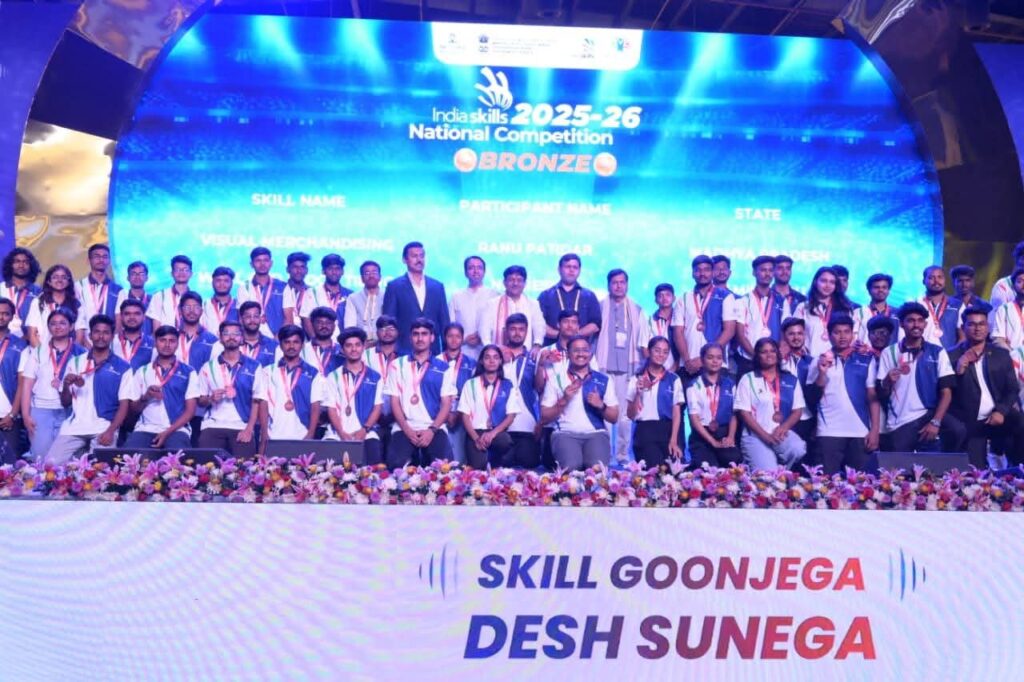
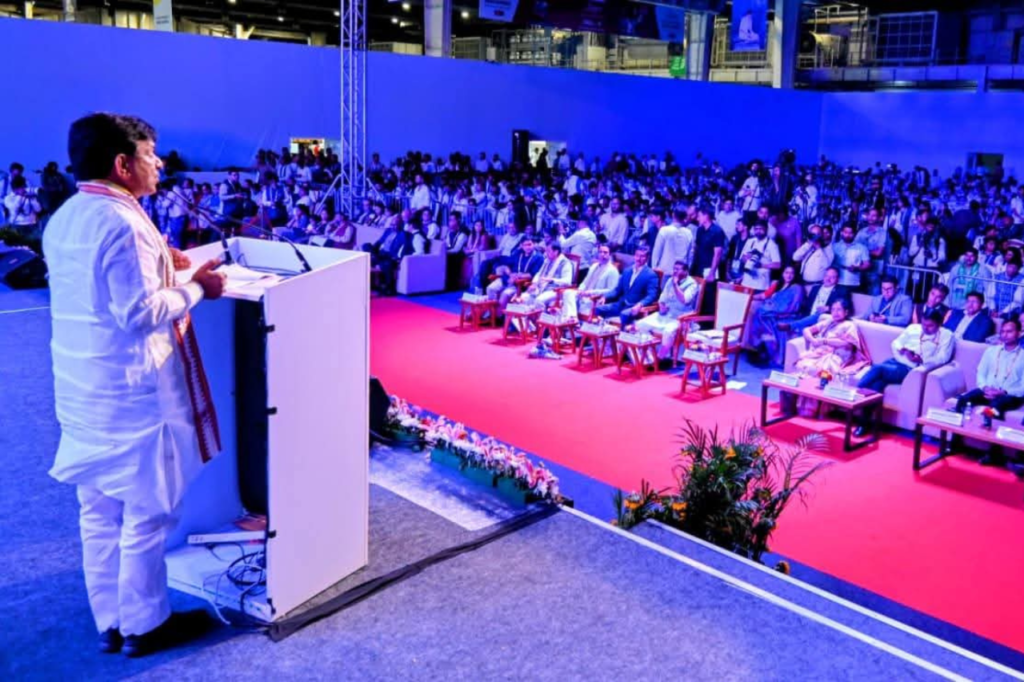
On April 2, 2026, the India Expo Centre and Mart in Greater Noida hosted the closing ceremony of India Skills National Competition 2025-26, the country’s largest vocational skills contest, organised by the Ministry of Skill Development and Entrepreneurship through the National Skill Development Corporation. Union Minister of State Jayant Chaudhary called Skill India “a jan andolan, not a government scheme.” NSDC CEO Arun Kumar Pillai described the competition as “a celebration of skill, dedication, and excellence.” Rajasthan’s Col. Rajyavardhan Rathore told participants they would carry India’s talent to the global stage. The winners would go on to represent India at the WorldSkills international competition.
Uttar Pradesh had a strong night. Seven medals: two gold, two silver, three bronze. Nitin Kumar from Prayagraj won gold in Wall and Floor Tiling. Suryansh Gupta from Agra won gold in Renewable Energy. Saatvik Goyal from Moradabad took silver in Industrial Design Technology. Junaid from Ghaziabad won silver in Carpentry. The bronze medallists were Gambhir Singh in Beauty Therapy from Farrukhabad, Lavanya Shukla in Graphic Design from Lucknow, and Sheetal Verma in Painting and Decorating from Kanpur.
Two of the seven were women. Neither keynote speaker mentioned this. The press note from the Gautam Buddha Nagar Information Department did not mention it either.
What the Category List Says
The trade categories at India Skills are not assigned by gender. Anyone can, in principle, enter any trade. But the distribution of who actually competes, and in what, is not random. Renewable Energy and Industrial Design Technology are male-dominated tracks nationally. Carpentry and Wall Tiling are overwhelmingly so. Beauty Therapy, in which Gambhir Singh, a man from Farrukhabad, won bronze, is one of the few trades in which female participation has historically been higher. Graphic Design and Painting and Decorating, where Lavanya Shukla and Sheetal Verma medalled, sit closer to the middle.
This distribution matters because India Skills is not merely a competition. It is a pipeline. The winners go to WorldSkills. Their trades become the showcase for what Indian vocational excellence looks like internationally. When Renewable Energy and Industrial Design are won by men and women cluster in design and decorating, the signal sent about which futures are open to whom is structural, not incidental. WorldSkills international data consistently shows that countries with deliberate gender-integration strategies in vocational training, including Germany, South Korea, and Australia, field more balanced squads and perform better across more trade categories.
The Skill India Gender Problem Nobody Is Naming
India’s skill development ecosystem has a documented gender crisis that exists well above the competition-results level. The Periodic Labour Force Survey 2024 finds that 60 percent of India’s working-age women remain outside the labour force. The World Bank, writing in March 2026, noted that lifting female participation to 50 percent could add one percentage point to India’s GDP growth annually, the difference between hitting and missing the 8 percent target India needs for Viksit Bharat 2047. Bain and Company calculates that India needs 400 million women in quality employment by 2047 and is currently on track for 110 million.
Vocational training is meant to be the bridge between those two numbers. ITIs enroll women at roughly 10 to 12 percent nationally, a figure that has moved marginally over a decade of Skill India programming. The trades women are routed into, chiefly beauty therapy, tailoring, and basic healthcare, are precisely the low-wage, informal, low-certification-value trades that perpetuate rather than disrupt occupational segregation. The Ministry has launched targeted interventions: the Pradhan Mantri Kaushal Vikas Yojana carries gender targets, and some Sector Skill Councils have women-specific outreach. But none of these appear to be working at the scale the GDP arithmetic demands.
Jayant Chaudhary’s characterisation of Skill India as a jan andolan is aspirational language with a gap embedded in it. A people’s movement that reaches 12 percent of women in ITI enrollment, and whose flagship competition produces seven UP medallists of whom two are women, is not yet a movement for all the people.
What CSR Has to Do With It
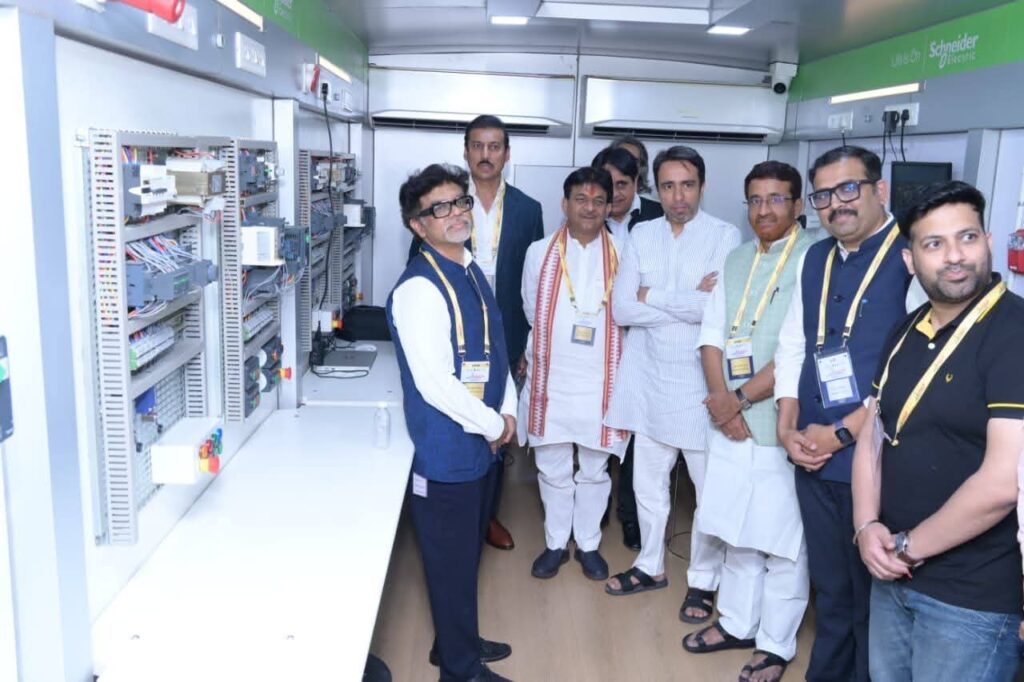
The India Skills closing ceremony featured, as it always does, substantial industry presence. Sector representatives from manufacturing, construction, technology, and energy attended. These are precisely the sectors whose CSR mandates under Section 135 of the Companies Act fund skill development programmes nationally. Education and skill development received the largest share of CSR spending in FY2024, at 18 percent of total expenditure, amounting to Rs 13,209 crore.
The question that the ceremony’s congratulatory format does not ask is this: how much of that Rs 13,209 crore in skills CSR is tracked for gender outcomes? How many companies funding ITIs and vocational training through CSR report what percentage of trainees are women, what trades they are trained in, and what placement rates they achieve compared to male counterparts? SEBI’s BRSR framework requires gender headcount and pay ratio disclosure. It does not require CSR skill programme data to be disaggregated by gender and trade category. The result is that corporate India can fund skilling generously, tick a CSR box, and produce outcomes that concentrate women in low-value trades, without any accountability mechanism surfacing that pattern.
Lavanya Shukla winning a national medal in Graphic Design from Lucknow and Sheetal Verma winning in Painting and Decorating from Kanpur are genuine achievements that deserved the recognition they received in Greater Noida. The point is not to diminish them. The point is that the system producing them, and simultaneously producing five male medallists in higher-wage technical trades, is not a system oriented toward gender equity in skilling. It is a system that has grafted a competition format onto an unchanged structural inequality and is celebrating the results as if the structure itself has shifted.
Conclusion
India Skills 2025-26 was, by any measure, a large and energetic national exercise. UP’s seven medals are a legitimate marker of the state’s improving vocational infrastructure. But the ministerial speeches at Greater Noida invoked Viksit Bharat 2047 repeatedly, and Viksit Bharat’s own arithmetic depends on women entering the formal economy at rates that require a fundamental shift in which trades they are trained for, funded into, and celebrated in. Two women out of seven UP medallists, concentrated in the lower-wage design and decorating categories, is not that shift. Calling Skill India a jan andolan and then not counting the gender breakdown of who the movement is reaching is not a communication failure. It is a policy failure dressed in ceremonial language.
References Sources:
1. Press Note, Information Department, Gautam Buddha Nagar (2026, April 2). India Skills National Competition 2025-26 Closing Ceremony, India Expo Centre, Greater Noida.
2. World Bank (2026, March 8). International Women’s Day 2026: Women Who Lead from the Front. https://www.worldbank.org/en/country/india/brief/international-women-s-day-advancing-towards-gender-equality-in-india
3. Bain and Company (2025). From Aspiration to Action: Building India’s 400 Million Women Workforce. https://www.bain.com/insights/from-aspiration-to-action-building-indias-400-million-women-workforce/
4. Ministry of Corporate Affairs / Crisil Foundation (2025). CSR Yearbook 2025, Sector-wise CSR Expenditure Data FY2024. https://www.mca.gov.in
5. https://www.pib.gov.in/PressReleasePage.aspx?PRID=2248634®=3&lang=2
Clear Cut Gender, Education Desk
New Delhi, UPDATED: April 04, 2026 09:00 IST
Written By: Jay