
- India’s renewed River Basin Management Scheme, backed by ₹2,183 crore for 2026–31, aims to manage entire river basins instead of treating rivers as isolated water bodies.
- The scheme focuses on flood control, groundwater recharge, inter-state coordination, and major projects like the Ken-Betwa river link to address India’s growing water crisis.
- Experts argue that stronger River Basin Authorities and real-time cooperation between states are essential for effective long-term water governance in India.
The River That Remembers Nothing
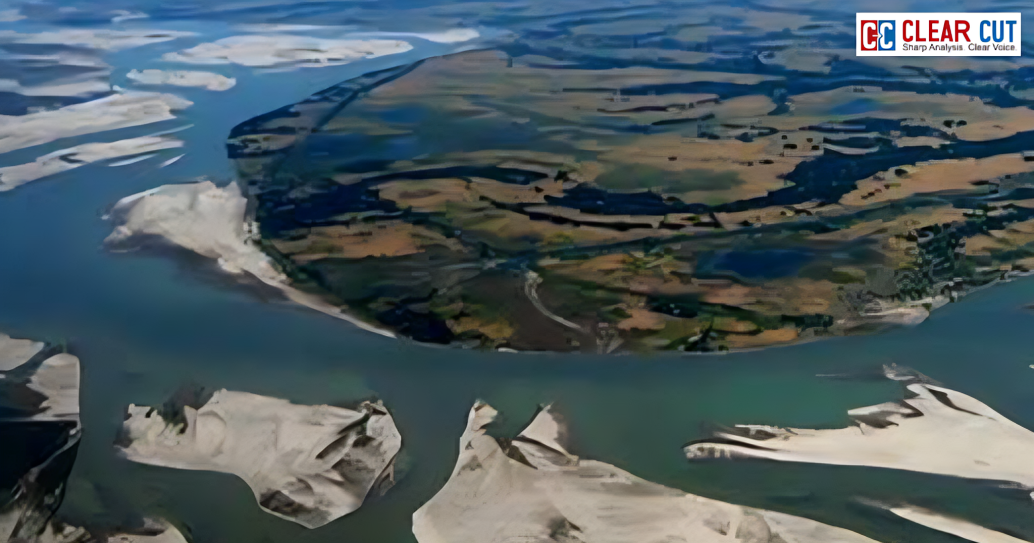
The Brahmaputra does not follow instructions. It shifts its course seasonally, erodes its banks annually, and has consumed Majuli by roughly 1/3rd of its original area over the past century. The communities on its banks have adapted as best they can, building on stilts, relocating seasonally, and accepting a negotiation with water that no single state government, district administration, or engineering project has been able to resolve. Because the Brahmaputra is not a district problem. It is a basin problem. And basin problems require basin-level governance.
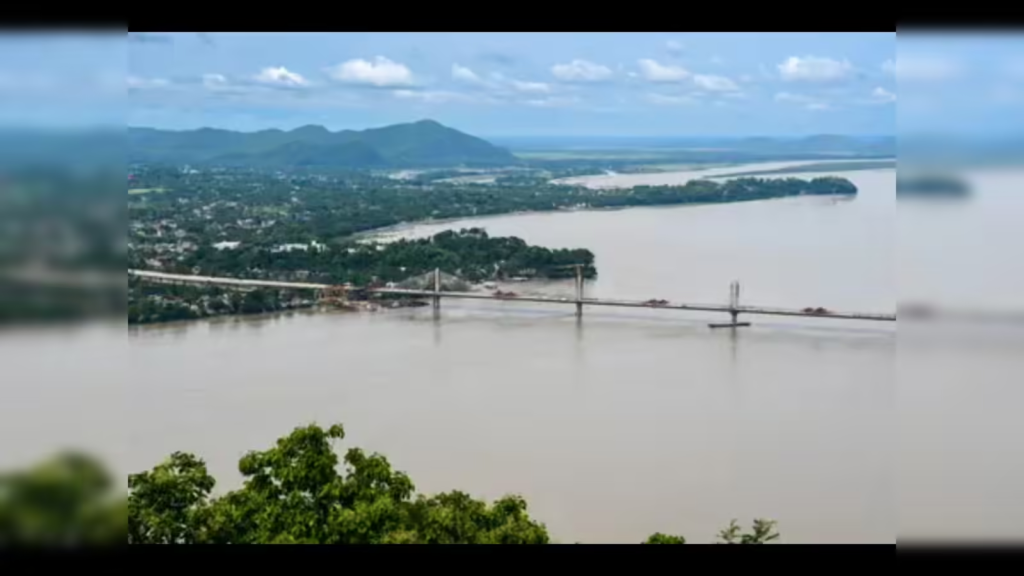
This is the foundational insight behind India’s River Basin Management (RBM) Scheme, a central sector initiative under the Ministry of Jal Shakti that is now entering its most ambitious phase yet.
The Scheme and Its Upgraded Mandate
The RBM Scheme has been renewed for 2026-27 to 2030-31 with an outlay of ₹2,183 crore. This is a 71% increase from the ₹1,276 crore given in the earlier 2021-26 cycle. [PIB / Ministry of Jal Shakti, April 2026]
Approved by the Government of India for the 16th Finance Commission period, the renewed scheme marks a significant scaling-up of India’s basin-level water governance infrastructure. Rather than treating rivers as isolated channels, the RBM framework addresses entire river systems as a single hydrological unit. Activities include preparation and periodic revision of river basin master plans, hydrological and topographical surveys, preparation of Detailed Project Reports for multipurpose water projects, anti-erosion works, drainage development, and community-based spring-shed management.
The scheme’s geographic focus is strategic. Priority basins include the Brahmaputra, Barak, Teesta, and Indus, chosen for their national water security significance, cross-border complexity, flood risk, and ecological importance. The National Water Development Agency has identified 30 inter-basin water transfer link projects; Feasibility Reports are complete for 26, and DPRs have been prepared for 15. The Ken-Betwa link project, which is India’s first inter-basin river link under the National Perspective Plan is the most advanced.
The Governance Gap This Must Close
India faces a paradox: it has abundant seasonal water in some regions and severe scarcity in others, often simultaneously. The Indo-Gangetic plain floods every monsoon while the Deccan plateau faces multi-year droughts. Meanwhile, groundwater, the source for 60% of all agricultural irrigation and 85% of rural drinking water, is being depleted faster than natural recharge in many aquifers. India is the world’s largest groundwater user globally. In states like Punjab, Rajasthan, Haryana, and Tamil Nadu, extraction already exceeds recharge significantly.
River basin management is not optional in this context. It is existential. The RBM scheme’s basin master plans must integrate groundwater recharge alongside surface water management. The Jal Shakti Abhiyan and Atal Bhujal Yojana are addressing groundwater at the village level. The RBM scheme must connect those micro-level efforts to the basin-scale systems they depend on.
The Demand: Basin Governance That Crosses State Lines
The RBM scheme’s biggest structural challenge is coordination across state governments with competing political interests over shared water. The Krishna and Kaveri disputes have lasted decades. The Brahmaputra’s management involves not only five Indian states but Bangladesh and China. Basin governance without effective inter-state and international coordination is engineering without diplomacy.
The Ministry of Jal Shakti must establish statutory River Basin Authorities with genuine adjudication powers for each of India’s major basins; not merely advisory committees. The ₹2,183 crore investment in the RBM scheme must be matched with an equal investment in the institutional architecture: joint data platforms accessible to all basin states, real-time flood forecasting shared across administrative boundaries, and basin-level ecological flow standards that are legally enforceable. The Brahmaputra will not wait for the next inter-ministerial committee meeting. Neither will the million residents of Majuli.
Conclusion: Govern the Whole River, Not Just Its Banks
In the coming time, India will face a water crisis of historic proportions if current trajectory continues unchecked. The RBM scheme’s renewed ₹2,183 crore commitment signals that the government understands this. Now it must act on the understanding at the scale the challenge demands. Build the inter-state basin authorities. Complete the DPRs. Implement the Ken-Betwa link. Build the monitoring infrastructure. And do it on the river’s timeline, not the planning commissions.
Clear Cut Climate, Research Desk
New Delhi, UPDATED: May 20, 2026 05:30 IST
Written By: Tanmay J Urs