
Minerva Academy’s historic 6–0 win over Liverpool highlights India’s grassroots football potential, but also exposes the lack of funding and systemic support for proven academies. Despite strong policies and rising budgets, real talent development still depends on individual effort rather than institutional backing.
A Goal for a Nation That did not Watch
A small group of 15-year-olds from Mohali, created history on the 3rd of April 2026, by walking onto a football pitch and beat Liverpool FC 6-0 in Costa Brava, Spain.
The score line indeed made headlines in India. Sports channels ran it as a moment of pride. Social media lit up from the feel-good moment. But what most people missed was a far harsher truth, that sat quietly behind the celebrations.
Three weeks prior to that match, Ranjit Bajaj, the owner, and founder of Minerva Academy FC, went public with a strong and desperate appeal. He had mortgaged his only movable property to finance his team’s trip to Spain. He was crowdfunding on Milaap, a platform used for medical emergencies and flood relief raise funds, so these boys could go represent India.
India’s best youth football academy was one visa rejection away from never reaching the tournament at all.

What Minerva Actually Is
Minerva Academy FC is unique from other sports clubs. It is a full boarding academy, a complete campus where boys eat, learn, train, grow up, and play together. Minerva Academy FC is an excellent school, built on the premise that football is a means of life.
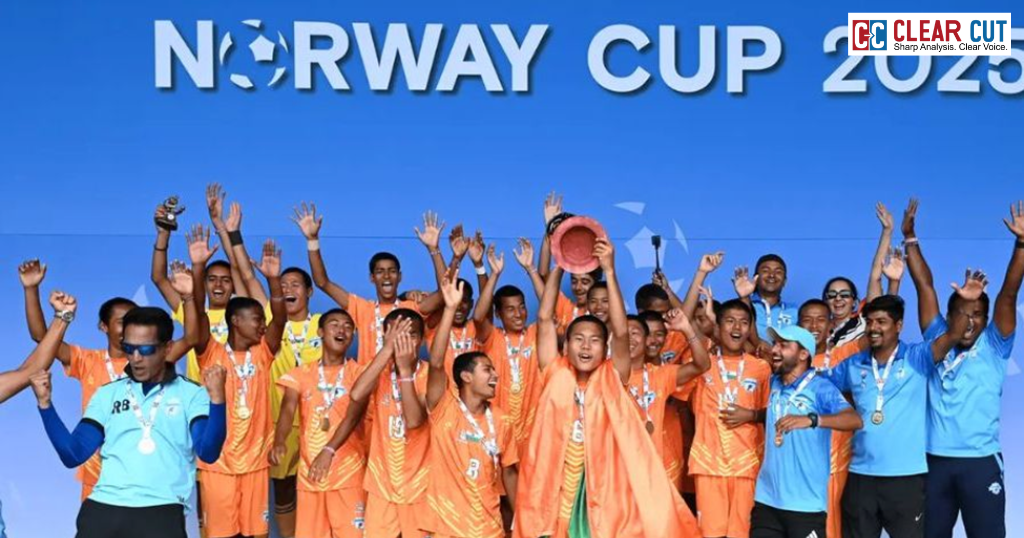
This can be showed by figures that cannot be disputed. Since its start in 2005, more than 240 players have been selected into various national teams in India. In 2017-18, Minerva Academy FC was the first Indian club, to win all 4 national championships of all age groups and I-league in a year. In 2025, the same team of boys, who were now playing in U-14, clinched the Gothia Cup, Dana Cup, and Norway Cup in Sweden, Denmark, and Norway, respectively. These wins brought them the European treble, won for the first time in the history of Indian football.
The club began its 2026 at the MIC Cup in Spain. This was the same tournament where Messi, Neymar, and Lamine Yamal played in their growing years. Minerva became the first Indian club ever to take part. They topped their group without losing a game, beat Liverpool 6-0 in the Round of 16, and fell narrowly 2-1 to a strong Spanish side, UE Figueres, in the quarterfinals. They finished 5th in the world, among 52 elite academies.
The Policy Promises a Lot. The Ground Tells a Different Story.
India has not been quiet about its sporting ambitions. In July 2025, the Union Cabinet approved the Khelo Bharat Niti 2025, as a landmark national sports policy replacing the old 2001 framework. Its vision was ‘From Grassroots to Glory.’ It explicitly called for CSR investment in sports infrastructure, and promised to build India into a global sporting powerhouse by 2036 Olympics.
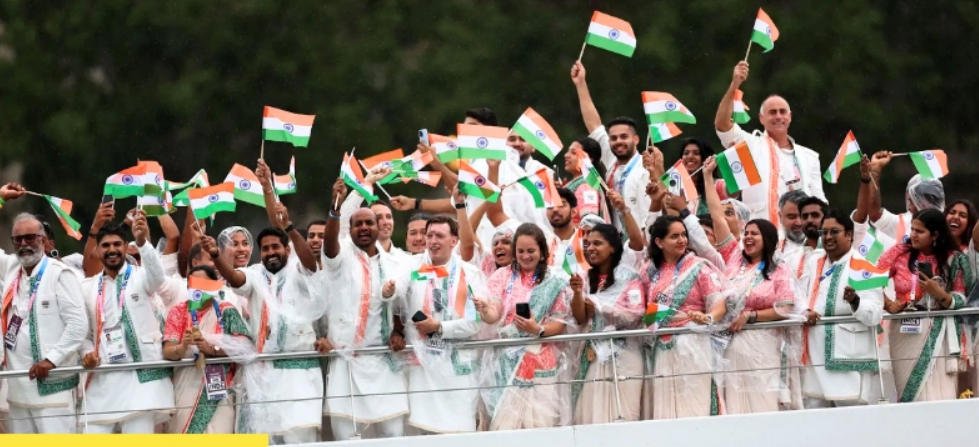
The Union Budget 2026-27 allocated ₹4,479.88 crore to the Ministry of Youth Affairs and Sports. This was the highest in five years, and a 34% jump from the previous year. Of this, ₹1,000 crore goes to the Khelo India Mission alone, which has supported by 1,045 district-level centres and 306 accredited academies across the country.
These are real numbers. The intent is real. Yet India’s most proven and internationally decorated clubs like Minerva Academy, is not among the supported. Bajaj has spoken openly about applying for recognition and funding through official channels, repeatedly, with unfortunate results. While the policy speaks of CSR partnerships and private investment, no major corporate sponsors have stepped in, when this academy needed ₹30 lakh to fly to Spain.
Sport as Social Development
Look at who plays for Minerva and the argument sharpens considerably. A significant share of its boys come from the Northeast states like Manipur, Mizoram, Nagaland. These are the regions where professional opportunity is thin and where football is genuinely a way out. The hat-trick hero at MIC Cup 2026 was Wahengbam Raj Singh from Manipur. Another key scorer was Mohammad Azam Khan.
These are not privileged children being given extra polish. These are children for whom, a residential football academy is the single most opportunity, life has ever offered. Minerva feeds them, schools them, coaches them, and sends them to compete against the best clubs in the world, and they win.
That is social development. It is a lived reality happening every day on a 10-acre campus in Mohali. The question is why that reality is being sustained on one man’s mortgaged property, rather than on a system that recognises and rewards it.
The CSR Gap Nobody Talks About
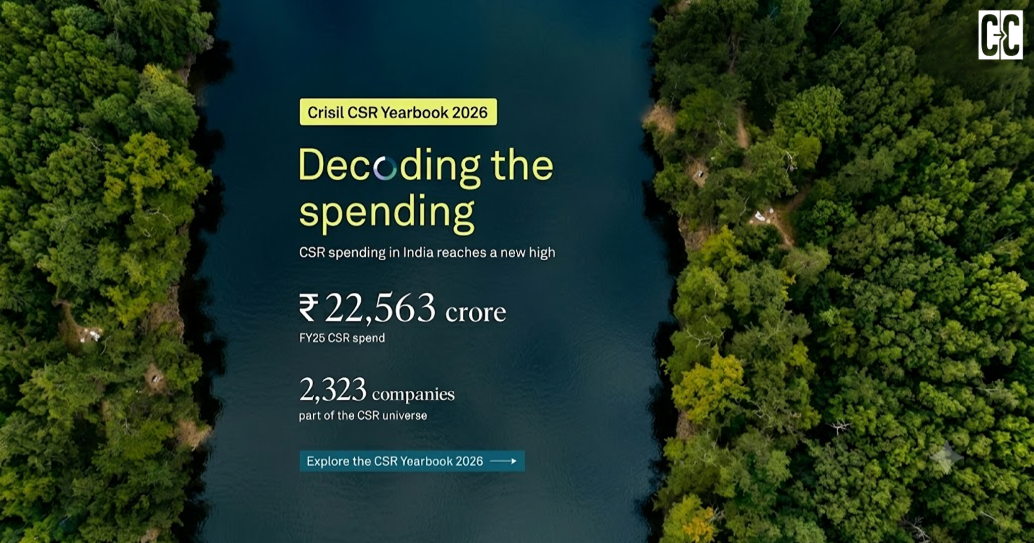
Under Section 135 of the Companies Act, 2013 in India, eligible corporations have to ensure that they invest 2 percent of their average annual net profits towards social initiatives. Among such initiatives are sports and youth empowerment. Corporate Social Responsibility expenditure in India for FY 2022-23 exceeded ₹26,000 crore, which is record high. And hardly, any of it goes into grass-root level football academies.
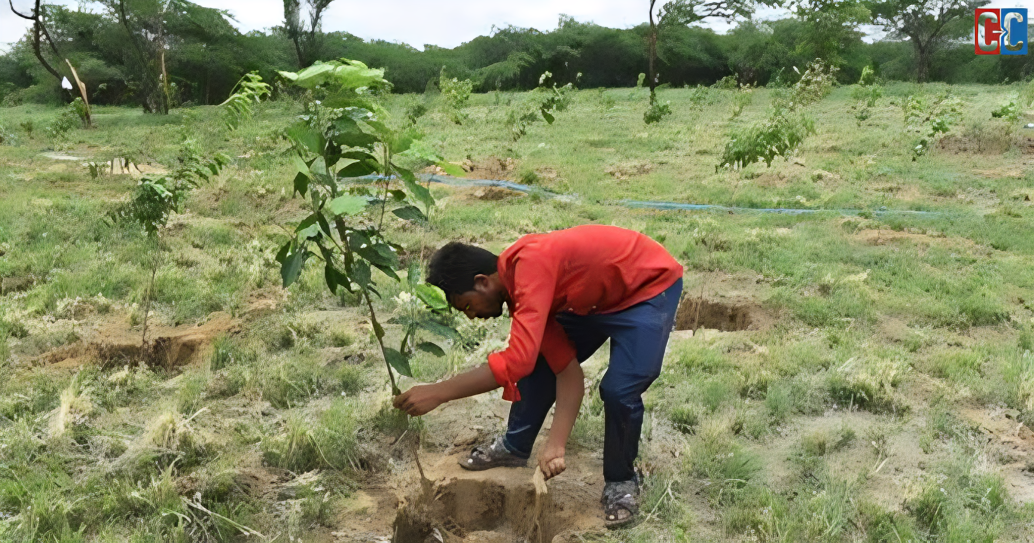
The nature of corporate CSR expenditure usually takes a more calculable shape: tree plantation drives, construction of school buildings, digital literacy drives. A boarding football academy producing some of the best players but has neither a PR team nor is listed on the Bombay Stock Exchange cannot find a way into the CSR spotlight of many organisations. Even the Khelo Bharat Niti 2025 policy encourages corporate investment in sports, yet the policy itself remains nothing more than encouragement.
What India Owes These Boys
The 15-year-old athletes from Mohali, on 3rd April, showed the world their greatness before European scouts, international coaches, and an observing world and boy did they put on a show. They unequivocally showed that Indian kids can go toe-to-toe with the best of the best, if only they are given proper training, coaching, nutrition, and confidence.
The least this nation should be able to do is ensure the next team does not need to crowdfund their travel. Hosting the Olympics in 2036 and becoming a global sporting power are legitimate goals and dreams. But dreaming while ignoring to fund the academies which develop and nurture the athletes that help in winning such games is nothing but a fancy press release.
What Minerva Academy needs from India’s government is not accolades or trophies or fame, but simply a system that does not ask its own founder to mortgage his house just to give India a chance to shine. That is a valid request. And we have all failed miserably in addressing it thus far.
References
- MSN News. (2026). India’s Minerva Academy dismantles Liverpool in Spain, seal historic 6–0 victory. MSN. https://www.msn.com/en-in/news/techandscience/indias-minerva-academy-dismantles-liverpool-in-spain-seal-historic-6-0-victory/ar-AA207ddN
- India Today. (2026, April 8). Minerva vs Liverpool U15: Visa problem, Ranjit Bajaj exclusive. India Today. https://www.indiatoday.in/sports/football/story/minerva-vs-liverpool-u15-visa-problem-ranjit-bajaj-exclusive-mic-cup-2893146-2026-04-08
- Government of India. (n.d.). Khelo India Scheme operational guidelines. https://kheloindia.gov.in/uploads/Khelo-India-Scheme-Operational-Guidelines.pdf
- Sunday Guardian. (2026). We beat Liverpool 6–0 but have no funds: Minerva owner’s appeal highlights Indian football crisis. Sunday Guardian. https://sundayguardianlive.com/sports/we-beat-liverpool-6-0-but-have-no-funds-minerva-owner-ranjit-bajajs-emotional-appeal-after-historic-win-highlights-indian-football-crisis-watch-181691/
- Milaap. (n.d.). Support Minerva Academy Football Club. https://milaap.org/fundraisers/support-minerva-academy-football-club
Clear Cut CSR Desk
New Delhi, UPDATED: April 11, 2026 09:00 IST
Written By: Tanmay J Urs