

- India Post achieved a record ₹15,373 crore revenue in FY 2025-26, driven by strong growth in parcel logistics, e-commerce deliveries, and citizen-centric services.
- With 157,000 post offices serving every pin code, India Post continues to play a vital role in rural connectivity, financial inclusion, and last-mile delivery across India.
- As the Department targets ₹17,500 crore revenue in FY 2026-27, the focus must shift toward modernizing infrastructure, digital services, and parcel tracking systems to improve service quality.
The Letter That Became a Parcel
Ramesh Prasad has run a small handicraft business in Jaisalmer for eighteen years. He used to ship his stone carvings through private courier companies. These companies were expensive, unreliable at his remote pin code, and occasionally catastrophic for fragile goods. In 2023, he switched to India Post’s e-commerce parcel service, attracted by the pricing and by the fact that India Post delivered to addresses that private logistics companies quietly refused. His delivery complaints fell. His return rate improved.
India Post’s revenue has surged to an all-time high of Rs. 15,373 crore for the financial year 2025-26, driven by a sharp increase in the parcel and logistics segment. The figure was announced by Minister of State for Communications Dr. Chandra Sekhar Pemmasani on May 25, 2026. On te same week the Department released performance reviews for each of its 23 circles and announced an ambitious target of Rs. 17,500 crore for FY 2026-27, a 30% step-up from the previous year.
The Transformation Behind the Number
India Post FY 2025-26 revenue: Rs. 15,373 crore. This is an all-time high. Up from Rs. 13,218 crore in FY 2024-25: 16% growth, strongest rate in several years. Three premium services launched March 2026: 24 Speed Post, 24 Speed Post Parcel, 48 Speed Post.
PIB / Ministry of Communications, May 25, 2026
The revenue acceleration is driven by three distinct engines. The parcel and logistics segment has expanded sharply as India Post increasingly serves as the backbone for e-commerce last-mile delivery in Tier-2, Tier-3, and rural markets where private players have limited presence. The citizen-centric services segment spanned postal savings, insurance, government payment facilitation, and KYC services for mutual funds. It had posted exceptional growth in metropolitan circles. Delhi alone achieved 240% of its citizen-centric services target in FY 2025-26.
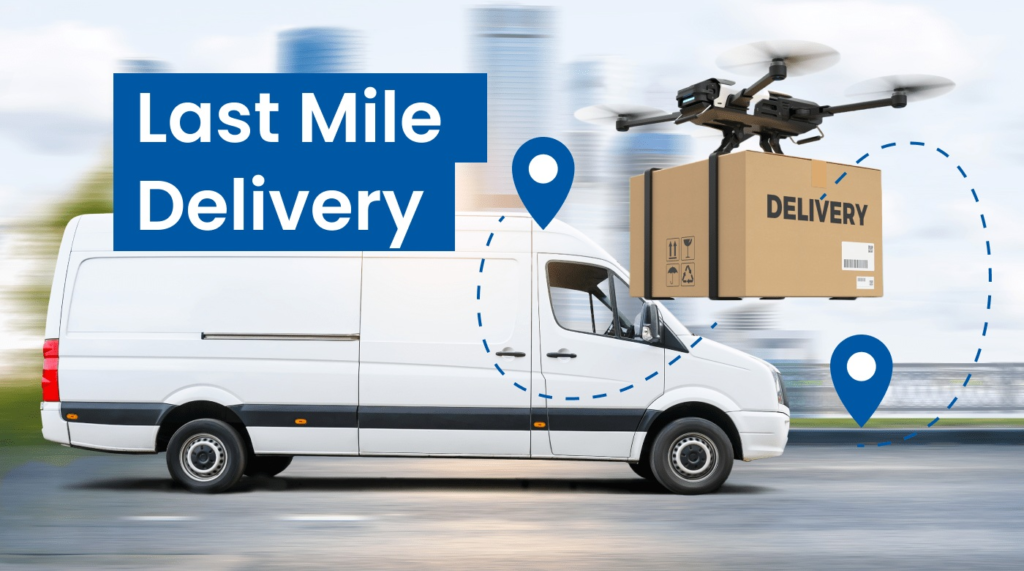
The 3 premium time-definite services launched in March 2026 included 24 Speed Post, 24 Speed Post Parcel, and 48 Speed Post. These represented a direct, competitive response to private express delivery companies. It also signalled that the India Post, is no longer content to cede the premium logistics segment to the private sector.
The Network That No Competitor Can Replicate
India Post operates through 157,000 post offices, serving every pin code in the country. It is, by geography, the world’s largest postal network. Its strength in underserved areas is structural, not incidental: it is legally required to maintain universal service obligations that commercial logistics companies are not bound by. This creates a public infrastructure of last-mile connectivity that serves, in practice, as the delivery backbone for government schemes, rural e-commerce, and financial inclusion programmes.
The Postal Life Insurance portfolio and the Post Office Savings Bank remain India Post’s largest revenue contributors. Karnataka achieved 112% of its POSB target in FY26. This gave an evidence that even in the financially sophisticated regions like South, the post office savings model retains deep community trust.
The Accountability Test: Records and Reliability
The Rs. 15,373 crore record deserves recognition. So does the governance challenge it represents. A 30% revenue target increase for FY 2026-27 is ambitious in the context of a department that must simultaneously modernise its technology infrastructure, retrain a workforce accustomed to older processes, manage the tension between its public service mandate and commercial imperatives, and compete with private logistics companies that are leaner, faster, and unburdened by universal service obligations.
The Ministry must invest the revenue gains directly in three areas: automated parcel processing infrastructure at major circles to match the speed of premium services, digital payment integration at rural post offices to reduce cash-handling friction, and a real-time tracking system that matches the standard that e-commerce customers now expect from any delivery partner. Record revenue without service modernisation will erode the trust that drove the revenue in the first place.
The People’s Logistics Network
India Post is not simply a government department. It is infrastructure for the country’s most spatially dispersed economic activities. Ramesh Prasad’s stone carvings from Jaisalmer reach Mumbai because India Post goes where profit does not. The Rs. 15,373 crore record is proof that this model is commercially viable as well as socially essential. The next challenge is not revenue growth. It is service quality growth. Make the 157,000 post offices as digitally capable as the people who depend on them deserve. The target of Rs. 17,500 crore is reachable. The standard of service that should come with it is what must not be left behind.
Clear Cut Livelihood Desk
New Delhi, UPDATED: May 30, 2026 01:00 IST
Written By: Tanmay J Urs