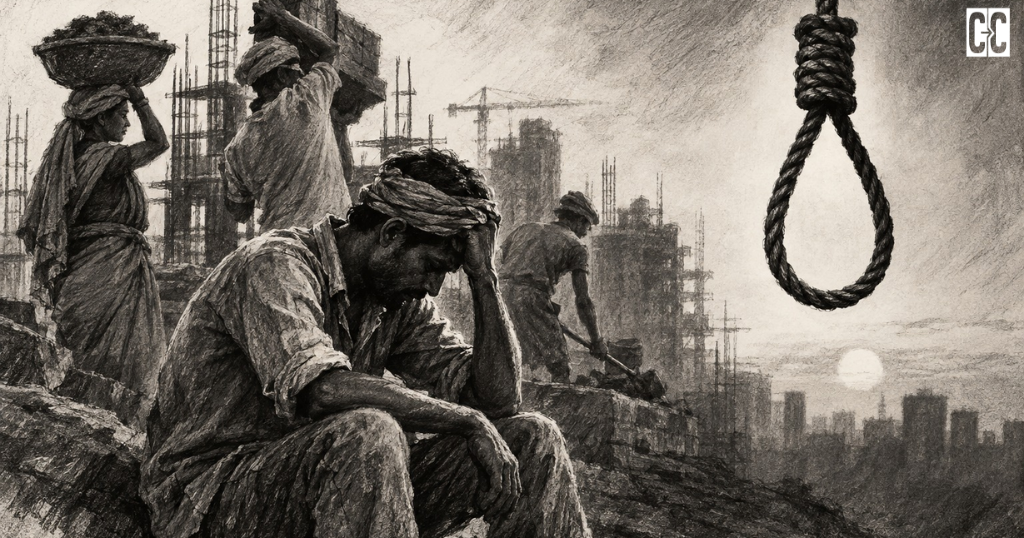

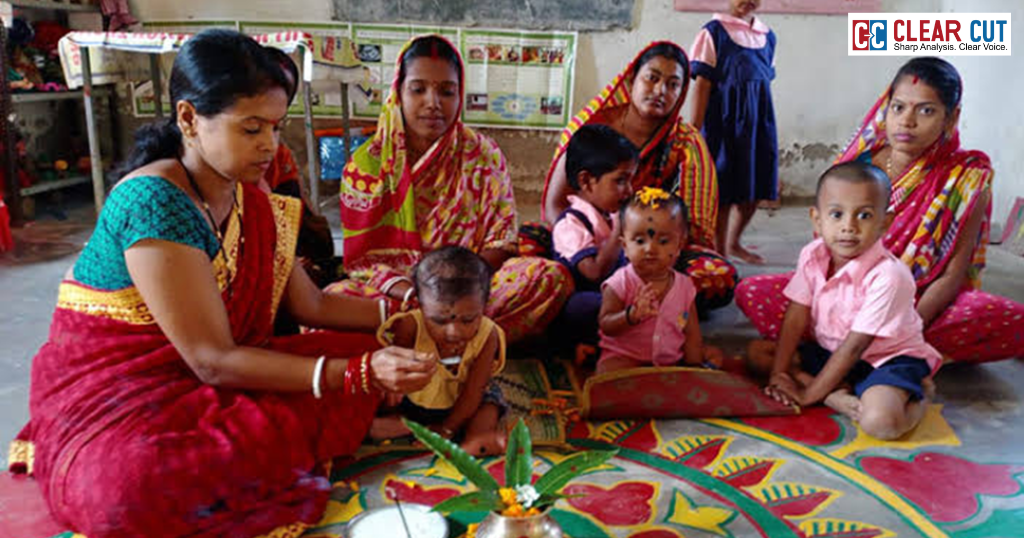
Poshan Pakhwada 2026 emphasizes early brain development, but the burden of delivering this vision falls on underpaid Anganwadi workers who remain unrecognized despite their critical role.
A Big Idea Launched on a Tight Budget
Today is the 9th of April 2026, and today, the Government of India inaugurated the 8th edition of the National Nutrition Campaign called ‘Poshan Pakhwada.’ It will run for two weeks, until the 23rd of April 2026. The theme chosen for this year’s Poshan Pakhwada is very apt, that is ‘Maximizing Brain Development During the First Six Years of Life.’
This is an important theme because there is solid science underlying this idea. According to medical research more than 85 percent brain development takes place by the time the child turns six years of age. The nourishment, stimulation, and care provided to a child during his or her first six years figure out his or her brain development. These form the critical years of brain development and set up the foundation for life.
The Indian Government understands this concept. During the inauguration ceremony in Vigyan Bhavan, New Delhi, by Union Minister for Women and Child Development, Annpurna Devi, the Prime Minister Modi announced that Poshan Abhiyaan, the flagship mission under which Pakhwada is conducted, is a people’s movement and not just a government initiative.
The Anganwadi Workers: India’s Most Important Informal Employee
Around 1.4 million Anganwadi workers exist in India. These workers are the key channel through which almost all the commitments made by the Indian government to the early childhood development framework would be fulfilled. They would give added nutrition to pregnant women as well as children below the age of six. Further, they would do tracking for their growth, identify malnutrition, organize pre-school educational activities, and finally under Poshan Pakhwada 2026, the Anganwadi workers would also conduct early stimulation programs, learning-through-play initiatives, and reduction of screen time amongst young children.
Thus, the government expects Anganwadi workers to perform as frontline workers for neurodevelopment. Even though the campaign material of the government uses neuroscience as its justification, its delivery is expected to be done through a woman from a village who gets anywhere between ₹4,500 and ₹8,000 per month based on the state in which she resides – but not categorized as a government worker.
That distinction is extremely important because it ensures that she has absolutely no access to any provident funds, no pension, no job security, no right against dismissal, and no career growth within the scheme.
What Poshan Pakhwada Asks of Them This Year
There are five focus areas for the 2026 Poshan Pakhwada campaign. These include maternal and child nutrition, stimulation for brain development during early years, play-based early learning, parental/community interventions to reduce screen time among children and improving support for Anganwadi centers in communities.
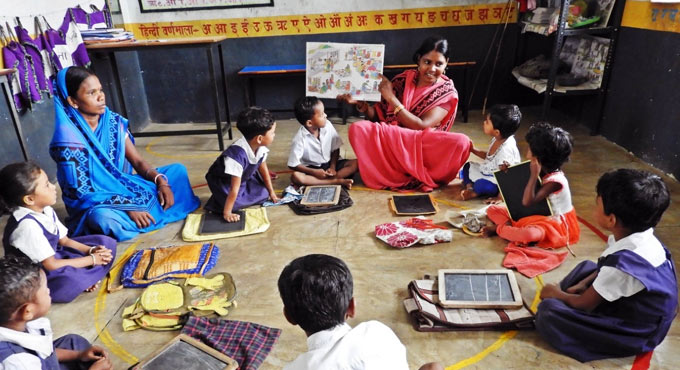
All these are perfectly valid and backed up by research. The emphasis on reducing screen time among children below the age of two corresponds with recommendations made worldwide by WHO. Play-based learning as an approach to cognitive development in young children has been advocated since the days of early developmental psychologists. The stimulation of early development during the first 1,000 days, starting from the conception of the child till his/her second birthday, is the most economical way for any society to invest in its own future.
However, implementing these approaches in real life means training, motivating, supporting, and empowering the workers who would do it. The Poshan Panchayats, community-based initiatives involving the workers, are the foundation of Poshan Pakhwada approach. This is a truly community-based initiative, but the question is still how seriously its initiators take it.
A Pattern India Has Seen Before
The issue of classification of Anganwadi workers is part of an even larger problem. Indian governments have traditionally used the cheap labor of underpaid, undervalued women as the foundation for delivering essential social services. ASHA workers, or Accredited Social Health Activists, are the linchpins of India’s primary healthcare delivery system. Yet, like Anganwadi workers, they are classified as volunteers, who work on performance-based incentive structures, which barely provide a livable salary.
Other such workers include those delivering midday meals, working as auxiliary nurses, community health workers, and more. This trend holds for all government programs wherein there is direct involvement with poor families. The government recruits women from the community to deliver a service for which they earn a minimal amount, do the job of a trained professional, and are prominently displayed as role models in promotional material.
It must be noted that this does not take away from the success of the programs being run by the government. In the case of Poshan Abhiyaan, launched in 2018, levels of child malnutrition have improved significantly. Stunted and wasted rates for children below five years old have improved.
The Opportunity Inside This Campaign
The shift of focus in Poshan Pakhwada 2026 towards brain development is, honestly speaking, an ambitious approach. While earlier the concern was about body health and growth including weight gain, height gain, and problems like anaemia, now the attention is on the mental aspects of development. The concept of 1,000 days, the focus on responsive caregiving and stimulation, and play-based education within Anganwadis are approaches that have long been advocated by research on development.
There exists a possibility here indeed. If there is genuine commitment by the government in terms of implementing this approach not just for 15 days but throughout the coming years, then there is an argument in favour of upskilling the workers and providing them with better recognition due to the change in the role and nature of the job. Furthermore, there is scope for Corporate Social Responsibility in the form of investments by private companies in the infrastructure and learning tools of Anganwadis in India when even last year, companies invested ₹26,000 crore in CSR activities.
Additionally, there is a possibility of reconsidering the employment status of Anganwadi workers and recognizing their work as that of a government job.
The Message India Needs to Hear
Poshan Pakhwada will last for fifteen days in India. Poshan Panchayats, awareness campaigns, community events, and even noble intentions are going to happen. Some of this will get through to families that require it. Some of these children will end up being better fed, more stimulated, and better prepared for school because of it. However, fortnight-long efforts cannot be a replacement for ongoing efforts throughout the year. And ongoing efforts cannot take place when people who do the job are paid less than the legal minimum wage for such skilled labor.
The annual theme is correct, as well as the science behind it. Anganwadi workers are here to implement it. The only thing still lacking is recognition of this worker’s importance to children she serves.
References
- Press Information Bureau. (2026, April 9). National launch of 8th Poshan Pakhwada 2026. Government of India. https://www.pib.gov.in/PressReleasePage.aspx?PRID=2249920®=3&lang=2
- Hindu Dayashankar. (2026). National launch of 8th Poshan Pakhwada 2026 to take place tomorrow with focus on early brain development. https://hindudayashankar.com/education/national-launch-of-8th-poshan-pakhwada-2026-to-take-place-tomorrow-with-focus-on-theme-maximizing-brain-development-in-the-first-six-years-of-life/
- Media Eye News. (2026). Nationwide Poshan Pakhwada 2026 to prioritise early brain development in first six years of life. https://www.mediaeyenews.com/health/nationwide-poshan-pakhwada-2026-to-prioritise-early-brain-development-in-first-six-years-of-life/178702.html
- World Health Organization. (2018). Nurturing care for early childhood development: A framework for helping children survive and thrive to transform health and human potential. WHO. https://www.who.int/publications/i/item/9789241550536
Clear Cut Health Desk
New Delhi, UPDATED: April 11, 2026 01:00 IST
Written By: Tanmay J Urs