
A Child Named Natasha
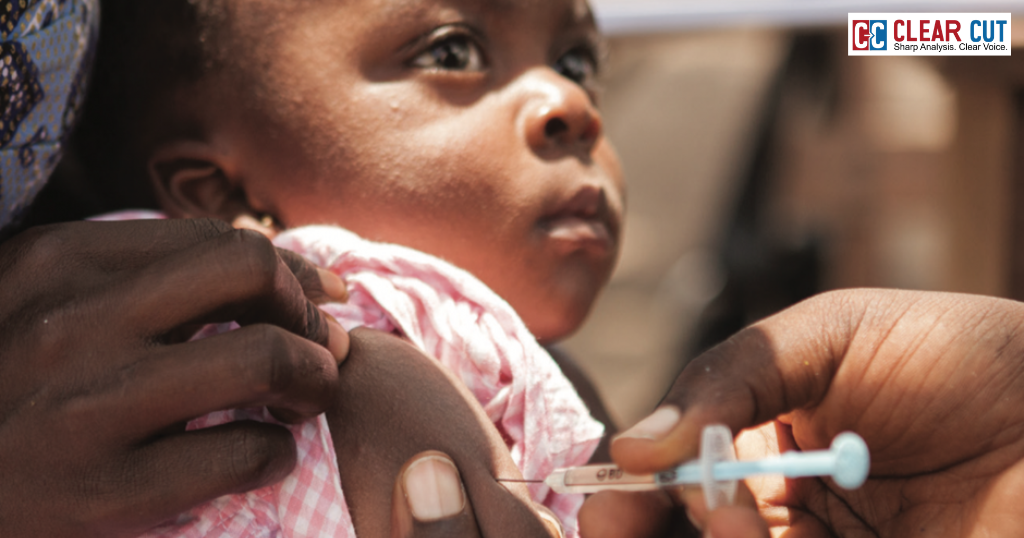
One afternoon at the Nakaseke General Hospital in Uganda, a mother named Nakanyike Annet was waiting to give her child Natasha, a scheduled vaccination. Everything felt smooth in the front, except for Natasha’s immunization depending on the availability of vaccines, unsurity of a cold chain break and a donor government meeting its promise, behind.
Fortunately, none of this happened for Natasha. However, for millions of children like her, it happens every day.
As per Gavi, the Vaccine Alliance’s annual report in 2024, nearly 10.2 million have not been vaccinated with DTP up until the age of one. Apart from the numbers, these are real children existing in countries, lacking a well-functioning health care system. Countries where getting a vaccine from faraway factory to a little arm is a miracle. That is why the background numbers of the Global Summit “Health and Prosperity through Immunisation” that took place in Brussels on June 25, 2025, look quite understandable.
What Was Pledged, What Fell Short.
The nation leaders came together at the Brussels Summit, to fund Gavi’s six-year strategy period, the “Gavi 6.0” from 2026 through 2030. There was a specific goal to raise US$11.9 billion, and help ensure vaccines reached 500 million children, hopefully saving up to 8 million lives (World Health Organisation [WHO], 2025). However, they achieved a little less than that at a total of US$9 billion, leaving them 21% short of their goal (Center for Global Development [CGD], 2025a).
This shortfall is much more than a number; it is lives lost to preventable diseases and potential epidemics left unchecked. Gates Foundation made a pledge of US$1.6 billion. In addition, the Team Europe consisting of the European Union and their member states, contributed more than €2 billion and thus became the largest donor group for Gavi. Canada made a contribution of CAD $675 million (Gavi CSO Constituency, 2025). For the first time in history, India took the role of a donor nation and donated US$20 million, citing the fact that they produce 60% of all vaccines.
Yet two of Gavi’s historically largest contributors stepped back. The United States, which has accounted for 13% of Gavi’s total funding since its founding in 2000, confirmed it would make no new contributions under the current administration (Kaiser Family Foundation [KFF], 2025). The United Kingdom, Gavi’s largest historical bilateral donor, reduced its development budget from 0.5% to 0.3% of gross national income, cutting its pledge accordingly. The result is a replenishment that is, in the words of the Centre for Global Development, “disappointing given Gavi’s strong business case.”
The Cost of Immunization; Not Immunising
The business case for vaccines is among the strongest in all public health. A study of 73 Gavi-supported countries found that for every US$1 spent on immunization in the 2021-30 period, US$21 are saved in healthcare costs, lost wages, and lost productivity due to illness and death.
In 2024 alone, according to Gavi reports, Gavi-supported programmes generated US$20 billion in economic benefits for lower-income countries. Since Gavi was set up in 2000, immunization investments have produced US$280 billion in cumulative economic returns.
Bluntly, 1.7 million lives have been saved in 2024 by Gavi-funded vaccines, marking the highest number ever reached within a year. It accounts for an additional 4,00,000 compared to the 2023 figures. Over the past 2 decades, the Vaccine Alliance aided in vaccinating over 1.2 billion kids in low-income countries, preventing 20.6 million deaths worldwide.
The mortality rates saw a 12% decline, dropping from 58.6 to 51.3 cases per 1000 live births, among infants aged under five years old in the 57 low-income countries. There lies something much more than the promising statistics, it is the total of all the Natashas receiving their vaccine.
Co-Financing: Partnership or Pressure?
But one unique characteristic of Gavi is its co-financing approach. The countries receiving funds from Gavi, are bound to provide a fair percentage of vaccine costs, depending on their wealth status. In 2024, implementing countries contributed a historic US$255 million towards the cost of their own vaccines. According to Gavi, this proves increasing ownership at the national level. As part of the Gavi 6.0 strategy, these countries are also mandated to make a historic US$4 billion investment over the course of five years.
Some defend the co-financing model by pointing out how it ensures long-term commitment from the government concerning immunization programs and helps self-reliance. However, one major problem with this approach is its ambiguity. When requesting Nigeria or Rwanda, which are both now offering financial aid to Gavi, to co-finance vaccines amid strained budgets, where does one draw the line?
A new model called “New Compact Envelope Financing” was proposed under the Gavi 6.0 framework to streamline and give countries more control over their financial allocations (Gavi CSO Constituency, 2025). Only time will tell if it serves to empower or overwhelm resource-constrained nations. The US$2.9 billion funding gap must be bridged.
What the Shortfall Means in Practice
As some donor governments were unable to make commitments at the summit due to domestic fiscal constraints and others had cut back their contributions, Gavi must solve an unpleasant arithmetical problem.
GSK and Bharat Biotech have committed to slash malaria vaccine price, down to less than US$5 per dose by 2028. Gavi itself pledged to reduce its secretariat expenses by 30% in 2026 (CGD, 2025b). However, these efforts are still far from closing the 3 billion USD gap.
What funds this gap becomes critical. Non-vaccine grants can be subject to large cuts. Health system strengthening cannot be considered a luxury, when the last mile to children’s immunization is off-road and relies on cold chain maintenance in coolers.
In addition, gaps in measles immunity remain significant. As of 2024, 15.5 million children in low-income countries did not receive the first dose of measles vaccine, accounting for 75% of the worldwide total of children who did not receive the vaccination leaving a mere 70% of coverage (Gavi, 2025e). It is still far below 95% that would prevent a disease outbreak. The number of countries experiencing large measles outbreaks rose to 60 in 2024, nearly doubling from 33 in 2022
Toward an Accountable Global Health Architecture
Gavi’s 6.0 replenishment occurred amidst an environment characterised by retreat. Aid cuts to developing nations, shifting political landscapes, and US withdrawal from health multi-laterals have added to an already overburdened health ecosystem worldwide.
However, the narrative surrounding Gavi is not only a tale of donor politics. It is also a testament to what we know the world is capable of, and what it will choose to continue doing. Immunization has reduced deaths among children under five by half in 78 poor countries since 2000 (WHO, 2025). These successes are a result of consistent multilateral funding.
Three actions must be taken moving forward. Priority to close the remaining $2.9 billion gap by further pledges. This will safeguard the health systems, strengthen them amid budget cuts, and reform the co-financing structure to prevent burdening the least capable governments.
Natasha received her vaccines. But what remains to be still seen in 2026-2030, is whether other children like her be able to access similar opportunities, or will the world fail to see their important needs once again. Global health equity is not an act of charity. It is a choice, and at present, the world continues to make its decision.
References
Centre for Global Development. (2025a). How Gavi 6.0 can take a bigger leap. https://www.cgdev.org/publication/how-gavi-60-can-take-bigger-leap
Centre for Global Development. (2025b). Mind the gap: Recapping Gavi’s pledging summit. https://www.cgdev.org/blog/mind-gap-recapping-gavis-pledging-summit
Gavi, the Vaccine Alliance. (2025a). Gavi’s impact in 2024 in seven key statistics. https://www.gavi.org/vaccineswork/gavis-impact-2024-seven-key-statistics
Gavi, the Vaccine Alliance. (2025b). World leaders recommit to immunisation amid global funding shortfall. https://www.gavi.org/news/media-room/world-leaders-recommit-immunisation-amid-global-funding-shortfall
Gavi, the Vaccine Alliance. (2025c). Gavi announces record-setting year for saving lives through immunisation. https://www.gavi.org/news/media-room/gavi-announces-record-setting-year-saving-lives-through-immunisation-2024
Gavi, the Vaccine Alliance. (2025d). Annual progress report 2024. https://www.gavi.org/progress-report
Gavi, the Vaccine Alliance. (2025e). 2024 global immunisation coverage estimates: Understanding the picture in lower-income countries. https://www.gavi.org/news/media-room/2024-wuenic-immunisation-lower-income-countries
Gavi CSO Constituency. (2025). Replenishment 2025. https://gavi-csos.org/replenishment-2025/
Gates Foundation. (2025). Record numbers globally pledge health, Gavi support. https://www.gatesfoundation.org/ideas/media-center/press-releases/2025/06/global-health-leaders-pledge-gavi-support
Kaiser Family Foundation. (2025). The Trump administration’s foreign aid review: Status of U.S. support for Gavi, the Vaccine Alliance. https://www.kff.org/global-health-policy/the-trump-administrations-foreign-aid-review-status-of-u-s-support-for-gavi-the-vaccine-alliance/
UNICEF. (2025, July 15). Global childhood vaccination holds steady, yet over 14 million infants remain unvaccinated. https://www.unicef.org/press-releases/global-childhood-vaccination-holds-steady-yet-over-14-million-infants-remain
World Health Organization. (2025, March 28). Fully funded Gavi, the Vaccine Alliance, is a lifeline for child survival, says WHO. https://www.who.int/news/item/28-03-2025-fully-funded-gavi–the-vaccine-alliance–is-a-lifeline-for-child-survival–says-who
These hyphens indicates AI content. Kindly rephrase it accordingly.
And remove the hyphens across the document and rephrase it accordingly
Clear Cut Health Desk
New Delhi, UPDATED: April 12, 2026 09:00 IST
Written By: Tanmay J Urs