
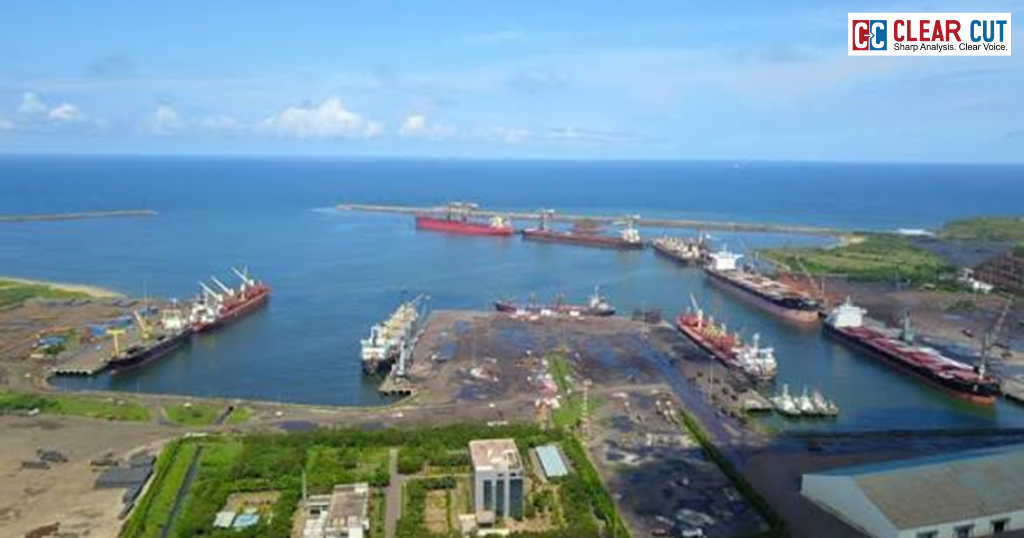
Andhra Pradesh awarded Adani Gangavaram Port for its CSR under the P4 model, which aims to align corporate funding with community-identified needs. The real impact, however, depends on whether this participatory approach delivers meaningful, long-term benefits on the ground.
What Happened in Visakhapatnam
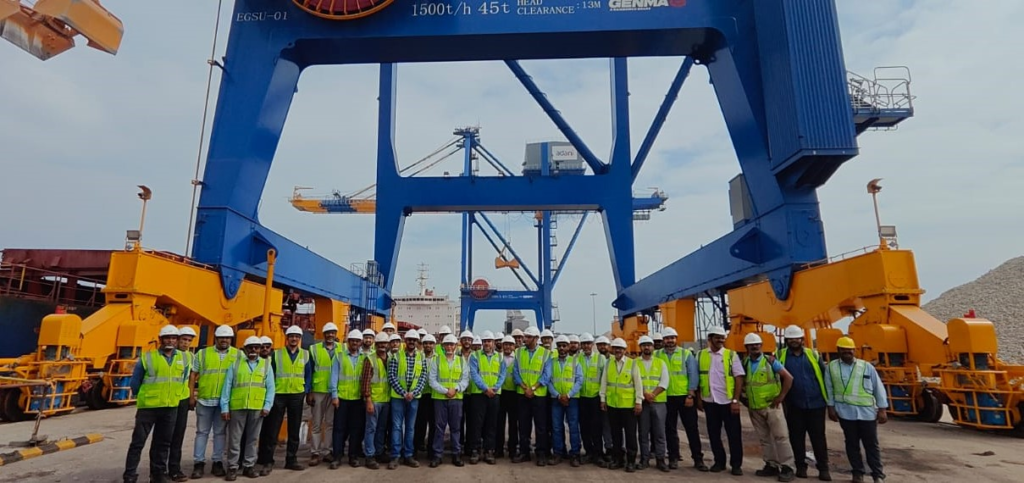
On April 10, 2026, Adani Gangavaram Port Limited received an Appreciation Award from the Government of Andhra Pradesh for its CSR participation under the P4 programme, which stands for Public-Private-People Partnership, embedded within the Bangaru Kutumbam initiative. The award was presented by Dr. Dola Sree Bala Veeranjaneya Swamy, the state’s Minister for Social Welfare, at a function in Visakhapatnam.
The P4 model is Andhra Pradesh’s attempt at something genuinely interesting. The premise is that CSR investment works better when local governments and affected communities identify the projects rather than when corporations decide what communities need and arrive with a cheque. Under Bangaru Kutumbam, which translates roughly to “golden family,” the state is trying to create a convergence framework for zero poverty, where corporate revenues flow through a structured mechanism toward community-identified priorities. Adani Gangavaram Port, operating one of India’s deepest ports on the state’s coastline, has aligned its CSR spend with this framework.
The award is real. What it means is a separate question.
The P4 Idea and Why It Matters
Most corporate CSR in India runs in one direction. A company identifies a focus area, usually from the safe end of Schedule VII, education or healthcare or skill development, finds an implementing NGO or runs the programme directly, and reports outcomes in its annual filing. The community at the receiving end has varying levels of input into what gets built, where, and for whom.
The P4 model inverts this, at least in principle. The community, working through local government structures, surfaces the priorities. The corporation funds them. The people who actually live with the outcomes of the investment have a say in what those outcomes are meant to be.
This is not a new idea in development theory. Participatory development has been a dominant framework in the international development sector since the 1990s. Its track record is mixed, not because the idea is wrong but because genuine participation is hard to operationalise. It is slower. It produces messier priorities than a corporate CSR team working alone. It requires local government capacity that is uneven across districts. And it creates accountability in both directions: the company is accountable to the community, and the community is accountable for identifying priorities that are genuinely achievable.
When it works, the outcomes are more durable. A bore well installed in a location chosen by the company may serve no one who needed it. A bore well installed where the community said it was needed tends to get used, maintained, and protected. That sounds obvious. It is surprisingly rare.
The Andhra Pradesh Context
The Bangaru Kutumbam initiative sits within the Swarna Andhra Vision 2047, the state government’s long-term development framework anchored around inclusive growth and zero poverty. Andhra Pradesh has been, since its bifurcation in 2014, a state that has had to rebuild its administrative and economic infrastructure from a significantly disrupted baseline. The state has leaned into private sector partnership as a development strategy in ways that some other states have not needed to.
The port sector specifically creates interesting CSR dynamics. Ports are capital-intensive, geographically fixed, and surrounded by communities that are directly affected by their operations. Fishermen displaced by port expansion. Coastal villages affected by land acquisition. Workers and their families in adjacent settlements. The social licence to operate is not an abstraction in port geography. It is a daily negotiation with people who live close enough to see the infrastructure going up.
A port company that engages with that negotiation through structured participatory CSR, rather than through community relations management, is doing something different in kind. Whether Adani Gangavaram Port’s P4 engagement represents the former or the latter is not something an award ceremony can answer. It is something that would require talking to the communities involved, visiting the projects funded, and checking whether the “people” in P4 were genuinely in the room when the priorities were set.
The Award and What It Incentivises
State government CSR awards are increasingly common across India. They serve a real function: they create positive reinforcement for companies to align their CSR with state priorities, they generate publicity that other companies notice, and they build political relationships that smooth other operational frictions. These are not cynical observations. They are how incentive architecture actually works.
The risk is that the award becomes the point rather than the work. A company that wins a CSR excellence award for P4 participation has an incentive to continue P4 participation in ways that produce more awards rather than in ways that produce better community outcomes. These are not the same thing. Award-producing CSR is legible, photographable, and aligned with government priorities. Outcome-producing CSR is sometimes none of those things.
The Bangaru Kutumbam framework is, from what is publicly available, a genuine attempt to build something more than ceremonial. The P4 framing, the zero-poverty target, the integration with village-level governance structures: these are ambitious design choices. The question worth asking is whether the communities in the districts where Adani Gangavaram Port’s CSR funds have flowed are measurably better off in ways they themselves would identify, not just in ways that appear in a Board report.
That question does not get answered at an award function. It gets answered over several years in the field.
Conclusion
Andhra Pradesh’s recognition of Adani Gangavaram Port is a data point about what the state values in corporate social investment. The P4 model it represents is, at its best, a more honest way to think about how corporations should engage with the communities adjacent to their operations. The idea that communities know what they need better than a CSR committee in a Gurugram head office is correct. Building the governance infrastructure that makes that knowledge actionable is the hard part. An award is encouragement. It is not evidence. The evidence comes later, and it lives in the villages, not the ceremony.
Clear Cut CSR Desk
New Delhi, UPDATED: April 16, 2026 09:00 IST
Written By: Tanmay J. Urs