

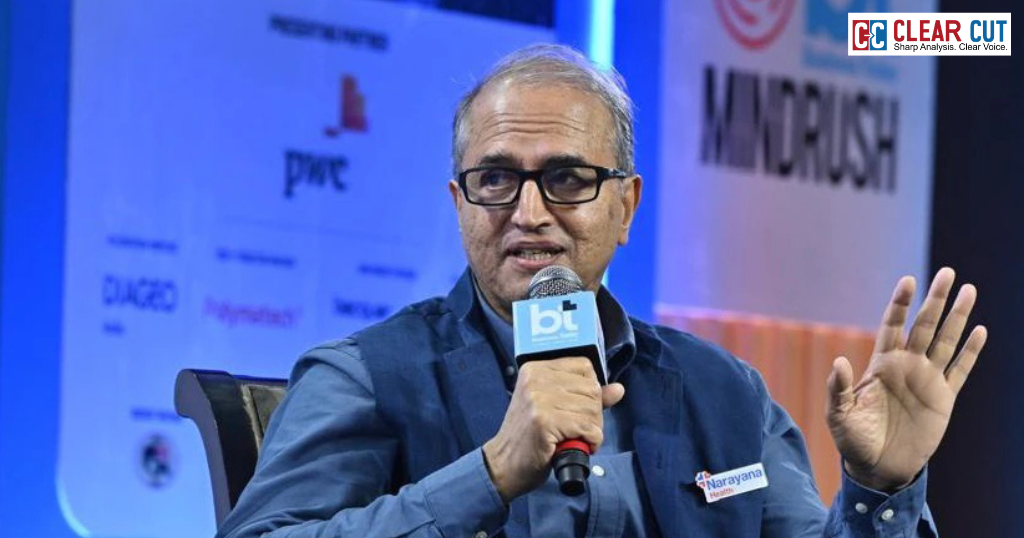
Dr. Devi Prasad Shetty transformed heart surgery into an affordable reality, challenging the idea that life-saving care is only for the rich. Through innovation and compassion, he built systems that made quality healthcare accessible to millions.
Dr. Devi Prasad Shetty not only built hospitals. He rewrote the belief, saving a life was a privilege only wealthy could afford. Somewhere in a small classroom in Kinnigoli, a village
Somewhere in a small classroom in Kinnigoli, a village in Karnataka, a school teacher walked in one morning in the 1960s, with a news that would change the world. Though nobody in that room knew it yet. She announces Christian Barnard, a South African surgeon, had just performed the world’s first heart transplant ever. The classroom erupted into murmurs. But one boy, the eighth of nine children, sat still. His eyes grew wide, and something ignited behind them, a quiet, fierce fire that would not go out for the rest of his life. That boy was none other than Devi Prasad Shetty. Right there in that classroom, where he decided he would become a heart surgeon one day.
Along with keeping the promise, he did something much bigger than just becoming a surgeon. He became, as The Wall Street Journal once called him, the “Henry Ford of heart surgery”. A man who asked, with a mix of anger and creativity, why the cost of a human heart beating should be higher than a farmer’s yearly wages.
A Life Shaped by the Weight of Hands
Growing up in a modest family in coastal Karnataka, Devi Shetty saw poverty with a close eye. He saw it not merely as a number but a face; the face of a neighbour who couldn’t afford medicine, a child who died from a treatable condition. His earliest lessons didn’t come from textbooks; they were written in the quiet suffering that took place around him. “If a solution is not affordable, it’s not a solution,” he would later say. This simple sentence is powerful because most of the world hasn’t acted on it. He earned his MBBS from Kasturba Medical College in Mangalore, and obtained his postgraduate training in general surgery. He then traveled to Guy’s Hospital in London for training in cardiothoracic surgery.
He returned to India in 1989, not to a hero’s welcome, but to the harsh reality of a country where more than two million people needed heart surgeries each year, and almost none could afford it. He may have been the second cardiac surgeon in all of eastern India. He saw a hundred patients a day. None would return for surgery. The money simply wasn’t there. It was in Kolkata that another great fire in his life was lit. He met Mother Teresa.
“Hands that serve, are more sacred than the lips that pray.”
She had suffered a heart attack. He operated on her and performed angioplasty. In the quiet aftermath of her recovery, she handed him something no medical school could provide: a philosophy. Those words, hands that serve are more sacred than the lips that pray, became the foundation for everything he would build. He served as her personal physician for the last years of her life, and she became, in his words, the inspiration behind Narayana Hrudayalaya. Some people are moved by ideas. Devi Shetty was inspired by a saint, and then he moved mountains.
The Henry Ford Insight
The genius of Devi Shetty lies not just in what he did, but in how he thought. When the medical world celebrated complexity, he focused on simplicity; not in care, but in cost. He looked at Henry Ford and saw not just a car manufacturer, but a champion of access. Ford had taken the automobile from the garages of the wealthy and made it available to everyday Americans. Dr. Shetty asked: why couldn’t the same be done for healthcare? In 2001, he founded Narayana Hrudayalaya, or the “House of God’s Compassion”, on the outskirts of Bangalore, built on former marshland. The imagery seems poetic: something remarkable growing out of past stagnation. He aimed to build a 300-bed hospital at 25% of the average cost, and finish it in six months instead of three years. Industry veterans shook their heads. He succeeded anyway. He applied factory logic to surgery, not in a cold and dehumanizing way, but in a meaningful and inclusive manner. Higher volume reduces cost. Performing thirty heart surgeries a day instead of one or two makes each surgery cheaper. If 10,000 beds share one infrastructure instead of ten separate hospitals, costs lower for patients. He bought 80% of inventory centrally, cutting costs by up to 40%. He used natural cross-ventilation instead of air conditioning. He trained the families of patients to help with post-surgical care. He innovated consistently not for novelty, but out of necessity.
The outcome? A coronary bypass surgery that costs $106,385 at Ohio’s Cleveland Clinic can be done at Narayana Health for $1,583. This isn’t done by cutting corners but by cutting waste. His hospitals have completed over 100,000 heart operations. They account for 12% of all heart surgeries in India, with 40% of those surgeries on children.
But even with subsidized surgeries, many still couldn’t afford care. So Dr. Shetty took further action. In 2003, he assisted the Government of Karnataka in launching the Yeshasvini Micro-Health Insurance scheme, offering complete medical coverage, including major surgeries, for five to seven rupees a month. That was less than a cup of tea, perhaps, lesser than almost anything else. In its first year, 1.6 million farmers enrolled. By the second year, that number grew to 2.2 million. Today, over four million people are covered.
Yeshasvini wasn’t just a policy. It was a proof that healthcare security for the poor in developing countries, rely more on organization than on resources. It inspired similar programs across India, such as Rajiv Arogyasree in Andhra Pradesh and Kalaingar Insurance in Tamil Nadu. One man’s idea created ripples, like rings in water.
He also partnered with ISRO, to bring telemedicine to remote areas of India. This way, a farmer in a distant village could still consult a specialist. Over 3 lakh patients have benefited at no cost. When thirty infants at Mumbai’s KEM Hospital were found waiting for heart surgeries, Shetty offered to treat all three hundred children on the waiting list at no additional charge. For him, the focus of care has never been money; it has always been about life.
Here’s an important detail: despite a net worth exceeding $620 million and a hospital empire with 47 facilities across India and into the Cayman Islands, Dr. Devi Shetty still walks into the operating room in blue scrubs. He jokes with nurses and takes the time, after days that stretch eighteen hours, to talk with each patient.
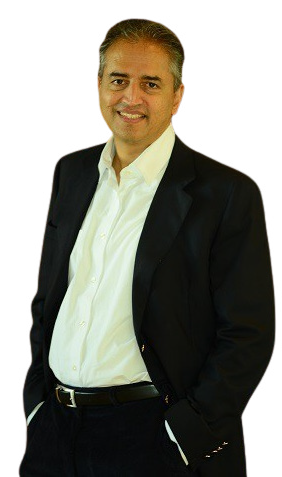
He sees 60-80 heart patients daily, and performs at least 1 or 2 major surgeries. He gives Skype talks to business schools in between operations. He is, by any standard, working at a pace that could exhaust someone half his age. Yet, when he speaks about it, there is no fatigue in his voice, all one sees is purpose.
“Work for me is not an effort,” he has said. “It’s a joy. It’s not philanthropy or charity. It’s my duty.” This statement shows that he has found a rare alignment of calling, ability, and conscience. His family has become a part of his mission. His son, who studied at Stanford Business School, chose to return and work with his father instead of pursuing opportunities elsewhere. Two other sons are cardiac surgeons. This isn’t a legacy built on wealth; it is a legacy built on belief.
His list of surgical firsts reads like a record of the impossible made ordinary. In 1992, he performed India’s first neonatal heart surgery on a twenty-one-day-old infant named Ronnie. He used micro-chip cameras small enough to fit in a newborn’s chest. He pioneered pulmonary endarterectomy, redo heart surgeries, valve repairs for newborns, and aortic aneurysm surgeries. He developed a new technique for treating pulmonary hemorrhage, reducing intraoperative blood loss from liters to mere milliliters. He holds a US patent for a digital health delivery system, part of his commitment to using technology to support human care.
He has received the Padma Shri (2004) and Padma Bhushan (2012)—India’s fourth and third highest civilian honors. He has won the Ernst & Young Entrepreneur of the Year award, The Economist Innovation Award, the Financial Times Boldness in Business Award, and the Nikkei Asia Prize. Harvard Business School has featured Narayana Health as a case study. He appears in Netflix’s acclaimed documentary series The Surgeon’s Cut. The world is paying attention.
The Legacy Still in Making
He is not finished. He has expressed, with quiet confidence and no arrogance, that he wants to lower the cost of a heart surgery to $800, within a decade. He aims to have 30,000 beds across India, Africa, and beyond. He is training a generation of young doctors through his Doctoring the Future program. He specifically seeks students from underprivileged backgrounds because, as he says, “they have compassion and a fire in their hearts that will turn them into outstanding doctors.”
He receives senior doctors’ financial details on his phone by midday every day. This is not due to distrust in his team, but because he knows that in a mission this significant, being aware is a form of care. He has patented algorithms for digital healthcare delivery. He has set up operations in the Cayman Islands, not for luxury, but to show that the Narayana model can spread. Affordable excellence is not just a local phenomenon; it is a possibility worldwide. His dream, expressed simply in a 2022 interview, is for India to demonstrate that a nation’s wealth has no connection to the quality of healthcare its citizens receive.
The Fire That Did Not Go Out
There is something almost legendary about Dr. Devi Shetty’s life story, yet it remains entirely human. A man who heard a story in a classroom and chose to live his life in response to it. He met a saint who helped reshape his perspective. He witnessed suffering and turned away from indifference. He saw an unfair system and, instead of feeling helpless, redesigned it.
To step into his shoes, even briefly, is to grasp what it means to hold a human heart. This understanding goes beyond the literal, surgical sense, even though he has done it over 100,000 times. It involves recognizing, that the heart does not care whether the hands that save it belong to someone rich or poor. It means believing, with every fibre of your being, that if you can save a life, you must. And then creating a world where this is not a heroic exception but a daily expectation.
That school boy in Kinnigoli who sat quietly while his classmates buzzed around him is still within the man who wakes before dawn, puts on his blue scrubs, and walks into the operating room where thirty surgeries will take place before sunset. The fire in his eyes never dimmed; it simply grew large enough to warm a nation.
Clear Cut Health Desk
New Delhi, UPDATED: April 15, 2026 05:20 IST
Written By: Tanmay J. Urs