Global supply chains continue to rely on child labour, with millions of children working in hazardous conditions—especially in agriculture and resource extraction. While new laws are pushing corporate accountability, real change requires deeper reforms beyond compliance, including community support and ethical sourcing practices.
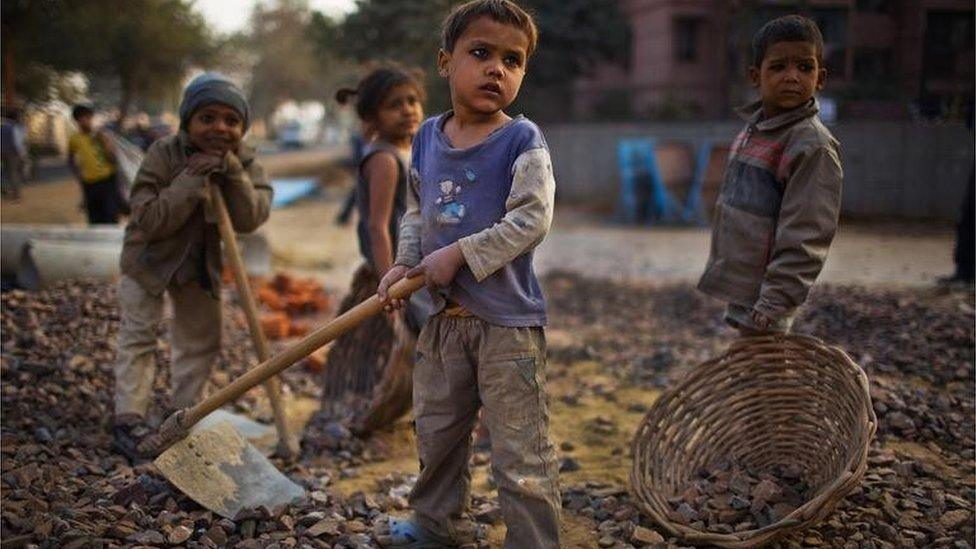
According to the International Labor Organization, 160 million children between the ages of 5 and 17 were child labourers in 2020, the first increase in absolute numbers in two decades. Approximately 70 percent of these children, or 112 million, work in agriculture in sectors like cocoa, coffee, tobacco, and cotton cultivation. About 79 million children are involved in hazardous occupations that endanger their health and well-being. These statistics do not represent historical occurrences but refer to the ongoing exploitation that occurs within supply chains that connect to the international consumer market.
It is important to note that corporate supply chains are not just a passive setting for this problem. They are often active participants in facilitating it. For instance, a study conducted in 2024 and published in Science Advances used data collected from 1,500 plastic brand audits in 84 countries and showed that the same concentration dynamics that govern plastic pollution also apply to labor exploitation: only a few large corporations source products from regions where the probability of child labor abuse is the highest. Both the ILO and UNICEF have noted that increasing consumer demand for inexpensive items, including ready-to-wear clothes, coffee, and electronic components, contributes to the economic feasibility of using children as cheap labor within agricultural communities.
Where the Problem Lives
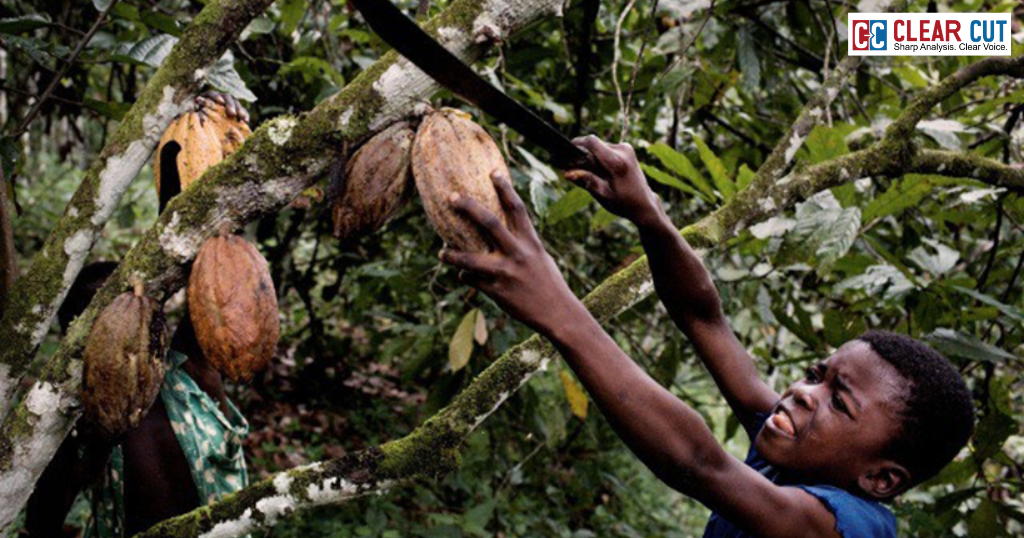
There is a disproportionate occurrence of child labour in different parts of the world. In Sub-Saharan Africa, there are 86.6 million child labourers, followed by Central and Southern Asia, where there are 26.3 million child labourers. There have been several cases of child labour in the cocoa industry within West Africa. Morningstar Sustainalytics has identified 612 human rights incidents associated with food supply chains between January 2014 and January 2024, with 27% of these incidents involving child labour on cocoa farms. A recent study conducted in Switzerland showed that the well-known chocolate company, Lindt, was associated with child labour in its cocoa farm in Ghana. Cargill was fined by Brazilian courts for child labour violations in its cocoa farm. CBS News also revealed in November 2023 that children aged five years harvested the cocoa used by Mars in their products (Sohal & Sharma, 2025).
Similarly, there are significant threats to children within the electronics industry, owing to the increasing demand for clean energy minerals like cobalt, lithium, and rare earth elements. According to UNICEF, the green energy transition has become a potential child rights risk because children suffer the ecological and social consequences of extracting these minerals without participating in the economic gains.
The Regulatory Momentum
Pressure for corporate accountability from legislation is increasing as well. In Germany, the new Supply Chain Act, adopted at the start of 2023, mandates that big businesses perform human rights due diligence in their global supply chains and report on their findings. Bill S-211, called the Fighting Against Forced Labour and Child Labour in Supply Chains Act in Canada, started being enforced since January 2024. Similarly, the European Union approved its Corporate Sustainability Due Diligence Directive, which would be applied to thousands of enterprises operating within Europe since 2024. Under those pieces of legislation, businesses will be liable to legal rather than only reputational responsibility for not detecting child labor in their supply chain.
For someone like Raju, a 12-year-old working long hours in a small textile unit instead of going to school, these laws are not just policies on paper. They represent a chance for a different life. If companies are required to trace and clean their supply chains, it means fewer children like him slipping through unnoticed, and more being given the opportunity to return to classrooms rather than factories.
Within industry responses to this problem, it is necessary to mention the Child Labour Monitoring and Remediation System (CLMRS) promoted by the International Cocoa Initiative. According to available data, this system can reduce child labor by more than half when properly implemented within three years. However, such an approach has not been widely applied and remained primarily optional for companies from various industries. As reported, by the beginning of 2024 more than 29,000 people have already petitioned governments demanding accountability for businesses using child labor in their supply chains.
The Limits of Compliance
However, any framework for due diligence that aims to prevent the use of child labor in corporate supply chains must contend with one major issue: removing child workers from their current situation without providing their parents with an alternative source of economic gain could have disastrous effects. In such a case, a child might find themselves forced into other, less stable means of working. Indeed, the ILO has long been critical of organizations breaking off ties with suppliers of child labor because doing so often does more harm than good.
A true exercise of corporate responsibility involves more than adhering to a company code of conduct. Binding agreements between corporations and their suppliers, which would include audits and funds allocated to educational programs within the community, would be an important step forward. Working with governments to establish robust social protections within communities, as well as publishing their findings, including their negatives, would be a further necessity.
References
International Labour Organization. (2022). Child labour: Global estimates 2020, trends and the road forward. ILO. https://www.ilo.org/ipec/Action/CSR/lang–en/index.htm
UNICEF. (2024). Children’s rights in global supply chains. UNICEF Child Rights and Business. https://www.unicef.org/childrightsandbusiness/workstreams/global-supply-chains
Cowger, W., Willis, K. A., et al. (2024). Global producer responsibility for plastic pollution. Science Advances, 10(17), eadj8275. https://www.science.org/doi/10.1126/sciadv.adj8275
Sustainalytics. (2024). Child labor in cocoa supply chains: Unveiling the layers of human rights challenges. Morningstar Sustainalytics. https://www.sustainalytics.com/esg-research/resource/investors-esg-blog/child-labor-in-cocoa-supply-chains–unveiling-the-layers-of-human-rights-challenges
BHR Navigator / UN Global Compact. (2025). Addressing child labour in business operations and supply chains. https://bhr-navigator.unglobalcompact.org/issues/child-labour/
Exiger. (2024). Child labor in supply chains: Understanding and overcoming the risks. https://www.exiger.com/perspectives/child-labor-in-supply-chains-overcoming-risks/
Clear Cut CSR Desk
New Delhi, UPDATED: April 18, 2026 02:30 IST
Written By: Tanmay J Urs