
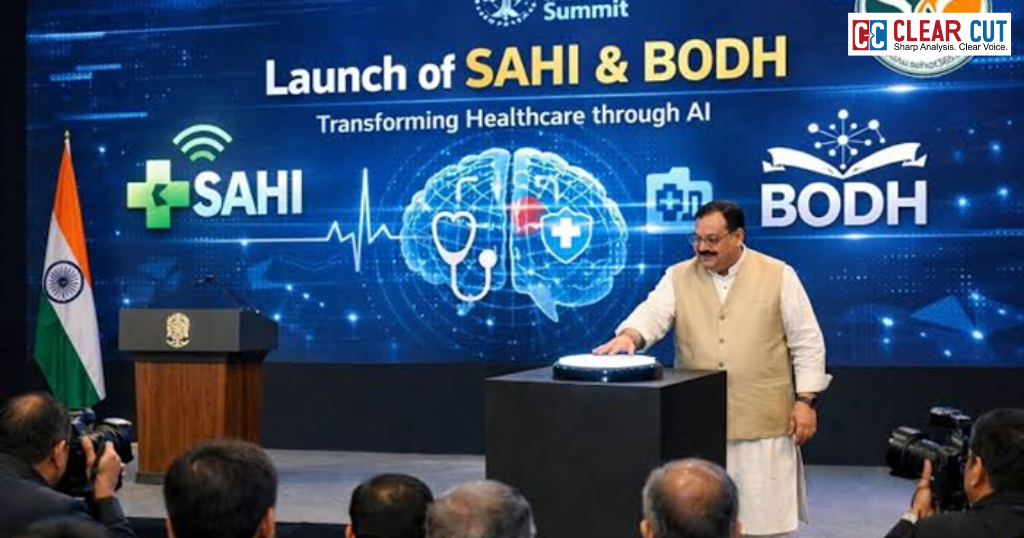
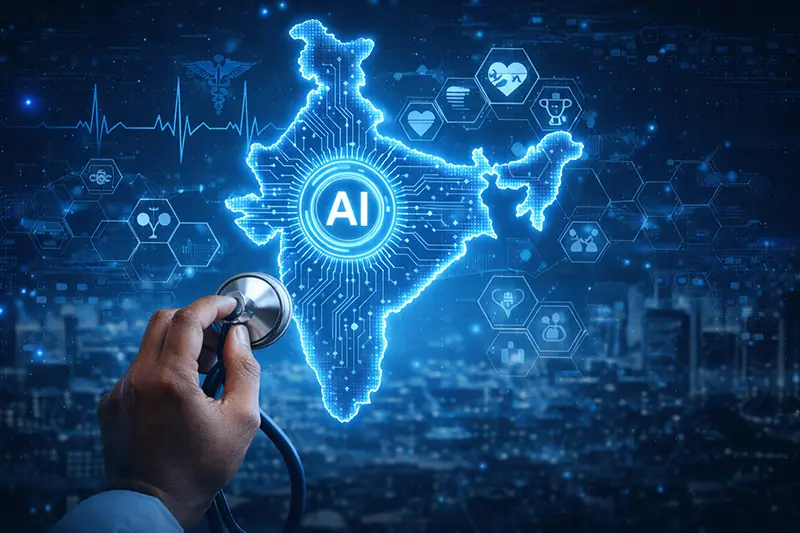
- India launched SAHI and BODH to regulate and evaluate AI tools used in healthcare.
- SAHI provides the policy framework for safe, ethical, and accountable use of AI in medical systems.
- BODH benchmarks and tests AI tools for accuracy, reliability, and patient safety before deployment.
- The initiatives aim to ensure human oversight and stronger accountability in AI-driven healthcare services.
The Doctor Who Couldn’t Trust the Algorithm
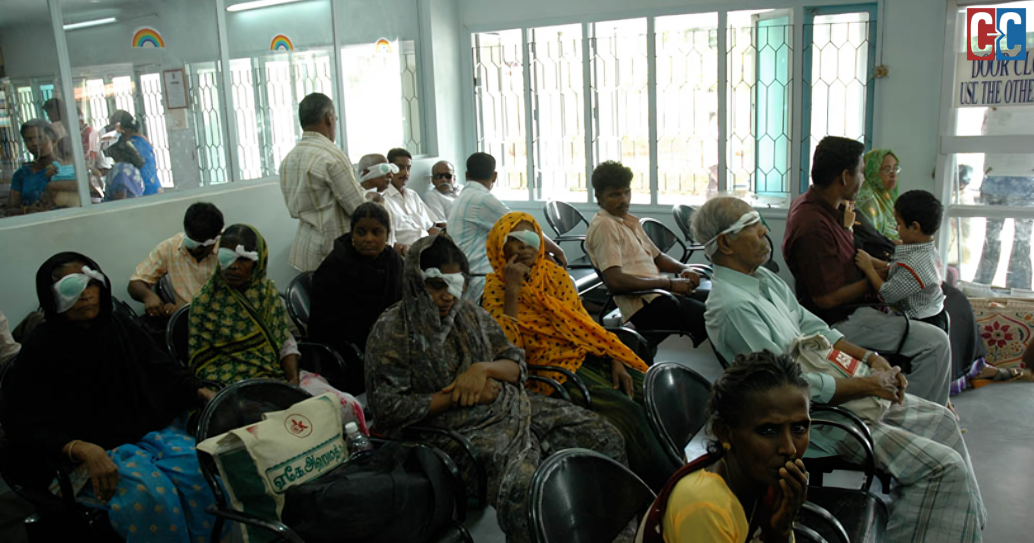
Meera Krishnamurthy is a pulmonologist practicing at a district hospital in Hyderabad. The implementation of the AI-driven diagnosis of chest X-rays by a private company began in 2024 at the place of Dr. Krishnamurthy’s work. Even though this method is fast and definite, there were errors made by the technology, such as misdiagnosing a shadow in the lungs of an elderly individual as malignant when it was post-surgical. Luckily, it was possible to overcome the problem as Dr. Krishnamurthy had enough authority to do so. After all, she had gained 20 years of experience in the field. At the same time, there was something else that worried Dr. Krishnamurthy – whether this system could be used in the primary healthcare centre run by a newly qualified doctor in a remote district where the closest pulmonologist lived four hours away. The product had no certifications. The company offering it did not hold any responsibility.
This is where the response to that query lies now, at least in its initial stages. On February 17, 2026, India AI Impact Summit took place in New Delhi where India’s Health Minister, Jagat Prakash Nadda, launched two key initiatives revolving around the use of AI technologies in the country. They include the Strategy for Artificial Intelligence in Healthcare for India (SAHI) and the Benchmarking Open Data Platform for Health AI (BODH). Both these projects represent the first step taken by India towards establishing a legal governance framework for AI applications in the Indian healthcare sector.
What Sahi and Bodh Are
SAHI: India’s first national strategy and governance framework for AI in healthcare, providing a policy compass for Union and State governments and private partners.
BODH: A structured benchmarking platform for testing and validating AI tools before deployment at scale.
PIB / MoHFW, February 2026
SAHI is not an output of technology. It is an architecture for governance. According to Union Health Secretary Punya Salila Srivastava, SAHI is a long-term commitment of policy that offers a unified framework for both the Union Government and State Governments, as well as private sector players. SAHI lays out the criteria AI technologies should meet in healthcare systems before implementation, including safety, efficacy, equity, interoperability, explainability, and adherence to digital personal data protection law. It also tries to ensure that there is human supervision over the application of clinical AI.
On the other hand, BODH represents an operating complement to SAHI. BODH was co-developed by academia, and it provides a systematic framework for the assessment and validation of any AI tool before implementation. To be considered as part of the healthcare system of India via BODH, any AI tool would have to perform according to certain set criteria based on standardized data, as well as meet the benchmarks for sensitivity, specificity, accuracy, and reliability under clinical settings. Developers of any AI would also need to document where they got their training data from and what their models’ limitations were.
In practical terms, the purpose of BODH is that of operating as an incremental benchmarking and validation system rather than simply certifying technical performance once and for all. While the initial stage of the operation involves sandbox testing of AI technologies using anonymized databases obtained via public health and research organizations, further development may include controlled pilots in some selected healthcare facilities. Crucially, the evaluation process will not only have to consider the technological effectiveness in terms of accuracy but also implementation-related metrics, including false positive rate, physician user-friendliness, and integration into hospital processes and patient safety.
It would seem that what BODH aims to achieve is similar to how the pre-market testing system for drugs works, in that case via the Central Drugs Standard Control Organisation. However, one key point that separates the two is that artificial intelligence is dynamic in nature – it learns, it changes, and in some cases even degrades when put into use among people who are outside of its initial training set. It is likely then that SAHI and BODH will gain credibility over time if there is an effective post-market surveillance system in place.
The Broader Governance Framework
In line with the India AI Governance Guidelines issued in February 2026 prior to the Summit, SAHI and BODH are part of a larger governance framework developed by India since the India AI Impact Summit. These guidelines are based on a principle-based, techno-legal framework which relies on seven fundamental principles or ‘sutras’. New institutions created include an AI Governance Group tasked to coordinate general policy, Technology and Policy Expert Committee for expert advice on governance issues at the national and international levels, and an AI Safety Institute established under the Safe and Trusted pillar of the IndiaAI Mission.

It is important to emphasize that the guidelines explicitly address the challenge of accountability: while the majority of AI-related risks can be managed using current legislation, its application requires predictability and timeliness of enforcement processes. Voluntary frameworks do not have legal force. It is not clear which entity is responsible for bearing liability, developers, deployers, or end-users.The WHO’s South-East Asia Regional Office, represented at the Summit by Officer-in-Charge Dr. Catharina Boehme, commended India’s leadership in digital health innovation. It is a meaningful endorsement given WHO’s role in setting global health AI norms. Estonian President Alar Karis pointed out that India was setting the agenda for technology, governance, and inclusion in the world. Dutch Ambassador for Artificial Intelligence, H.E. Harry Verweij emphasized the importance of human rights, transparency, accountability, and inclusion as part of the core of SAHI and BODH.
The Gaps That Must Be Closed
SAHI and BODH are elements of policy architecture. There is a very long journey between the policy and the ward bed. Three things have to take place for this system to work and find its way into Dr. Krishnamurthy’s colleague in the primary health center of Pratapgarh. One is that BODH benchmarking should not be an optional activity for any artificial intelligence diagnostic tool that aims to get itself procured as part of any central or state government health project. The vendor should not be able to sell his artificial intelligence diagnostic tool to the ASHAs and PHCs until it receives a certificate under the BODH system. The second thing is the definition of the liability framework, i.e., the entity that will be held liable when the patients face problems due to the AI tool.
Conclusion
History shows us how mandatory pre-market safety testing of drugs has never stifled innovation. It provided the foundation on which it was trusted to scale. So too can BODH and SAHI build the environment within which the physician at a PHC in Pratapgarh may rely on the diagnosis generated by the AI tool just like the one produced by Dr. Krishnamurthy’s stethoscope. Neither because the technology itself is infallible but simply because the systems surrounding it have been designed well enough that mistakes get caught early before becoming disasters.
India now knows the governing principles and the rules. What it needs to do next is to enforce them. Enact BODH as law. Ensure the independence of the AI Safety Institute, its funding, and powers. Be clear about who takes legal responsibility when something goes wrong and ensure that this is enforced. Most importantly, put the patient first by ensuring that no AI is deployed in the clinic without his prior approval.
Clear Cut Health Desk
New Delhi, UPDATED: May 13, 2026 09:00 IST
Written By: Tanmay J Urs