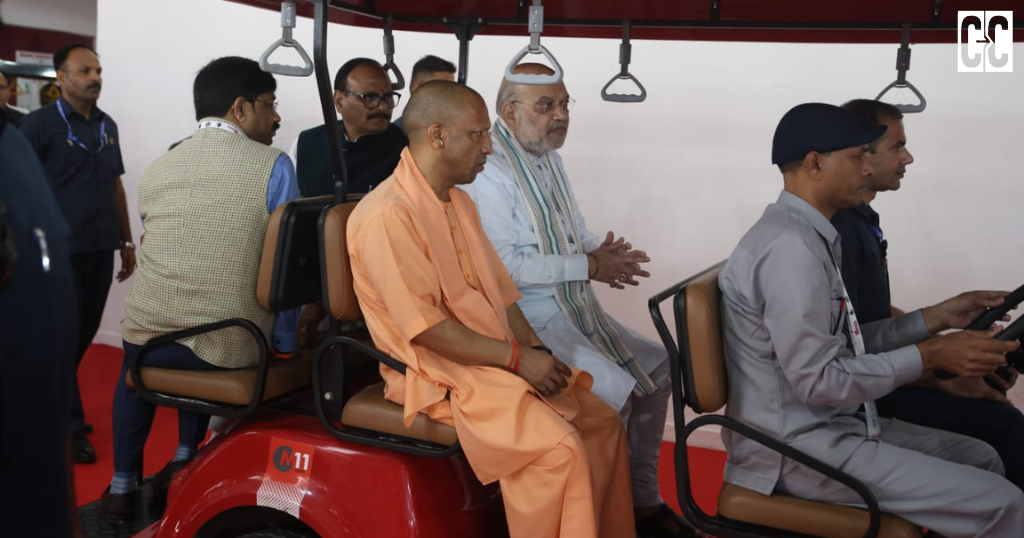

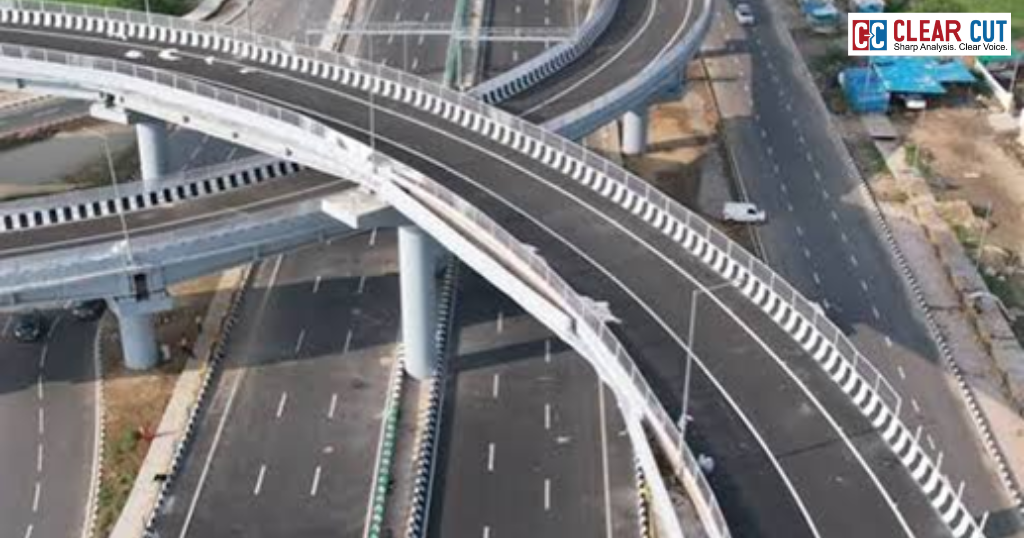
- The Delhi-Dehradun Economic Corridor will cut travel time from 5–6 hours to around 2.5 hours, improving connectivity between Delhi and Uttarakhand.
- The expressway is expected to boost tourism, agriculture, logistics, and industrial growth while reducing transport costs.
- The article also highlights concerns about land displacement and the need for inclusive development for villages bypassed by the corridor.
The road that always took five hours
Rajesh Bisht drives a goods vehicle between Delhi and Haridwar. He has done this route for fourteen years. The journey, on the old NH-58 and NH-334, takes between five and seven hours depending on traffic at Meerut, the condition of the Muzaffarnagar bypass, and whether there is a religious gathering at Haridwar. He has timed the journey in his head every week for a decade and a half. The fuel burned in that extra two or three hours of stop-start traffic is a cost he has never been able to pass on fully to his consignment price. When he heard that Prime Minister Narendra Modi had inaugurated the Delhi-Dehradun Economic Corridor at Dehradun on April 14, 2026, he called it the news he had been waiting for since he started driving this road.
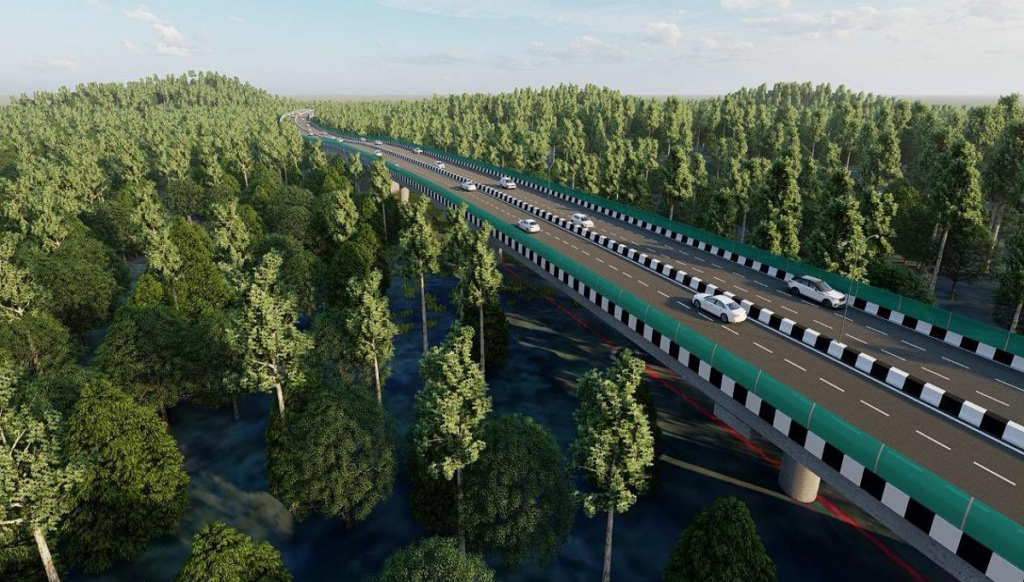
The Delhi-Dehradun Economic Corridor is a 210-kilometre, six-lane access-controlled expressway connecting Delhi with Dehradun, the capital of Uttarakhand, reducing travel time from the current five to six hours to approximately 2.5 hours. Inaugurated by Prime Minister Modi as part of his visit to Dehradun, the project includes an 8-lane elevated section, a 340-metre tunnel through the Shivalik hills, and wildlife crossing structures designed to minimise disruption to the elephant and tiger corridors of the Rajaji-Corbett landscape. It is part of the National Highway Authority of India’s broader PM Gati Shakti infrastructure push, estimated to cost approximately Rs. 13,000 crores (Source: PIB).
Why Connectivity Infrastructure Matters to more than commuters
Delhi-Dehradun Economic Corridor: 210 km, six-lane. Travel time: 5-6 hours reduced to approximately 2.5 hours. Cost: approximately Rs. 13,000 crore. Includes wildlife crossings for Rajaji-Corbett elephant corridor. – PIB / NHAI 2026
The corridor’s economic significance extends well beyond travel time. Uttarakhand’s economy is heavily dependent on tourism (Char Dham Yatra, Rishikesh, Mussoorie, Dehradun’s institutional clusters), horticulture (apples, citrus, ginger), and pharmaceutical manufacturing in Haridwar and Roorkee’s industrial estates. Each of these sectors is constrained by logistics friction: slow, expensive, unreliable road connectivity that increases supply chain costs and reduces the competitiveness of Uttarakhand-produced goods in Delhi’s markets and export facilities.
A 2.5-hour journey means that Uttarakhand’s fresh agricultural produce can reach Delhi’s mandis in a time window that allows same-day price discovery rather than next-day distress sale. It means that industrial inputs can move from Delhi’s distribution hubs to Haridwar’s pharmaceutical plants in a predictable, plannable time window. It means that Dehradun’s growing IT and educational services sector can credibly position itself as a satellite hub for Delhi-NCR’s skilled workforce, offering quality of life at commutable distance.
The Equity Question that Expressways Must Answer
Infrastructure projects of this scale generate displacement, and India’s expressway programme has a documented record of inadequate attention to the communities displaced by right-of-way acquisition. The Delhi-Dehradun corridor passes through or adjacent to several rural communities in western Uttar Pradesh and Haridwar district. The land acquisition process, conducted under the Right to Fair Compensation and Transparency in Land Acquisition Act, 2013, requires documented consultation, fair compensation, and resettlement support.
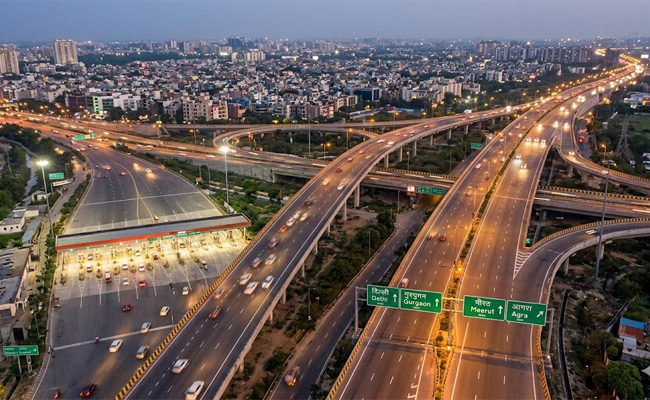
Beyond displacement, expressways generate spatial economic inequality: they redirect economic activity toward interchange-adjacent zones while communities without access ramps see declining economic relevance. The villages that the Delhi-Dehradun corridor bypasses without an interchange have not gained from the connectivity. They have simply been bypassed faster. India’s infrastructure planning must systematically address this: every economic corridor project above a defined investment threshold should include a corridor economic inclusion plan, showing and investing in the communities next to the route that will not receive help from proximity to an interchange.
Conclusion
Rajesh Bisht will save fuel and time on the new corridor. That is a genuine and tangible economic benefit for a worker who has spent fourteen years losing both to bad roads. The Delhi-Dehradun Economic Corridor is excellent infrastructure. It connects two important cities, reduces friction in a high-value supply chain, and has been designed with more ecological sensitivity than most comparable projects.
What it must not be is a symbol of infrastructure that serves the wealthy commuter and the logistics company while leaving the adjacent village without a feeder road to the nearest town. India’s infrastructure ambition for Viksit Bharat 2047 is genuinely transformative in scale. The test of that ambition is not the ribbon-cutting photograph. It is the decade after, whether the economic acceleration reaches the farmer in the Shivalik foothills, the woman carrying produce to the mandi, and the daily wage worker for whom a 2.5-hour expressway journey is still an unaffordable fare. Build the connectivity. Build the inclusion. The road is the means. The destination is a more equitable country.
Clear Cut Livelihood, Research Desk
New Delhi, UPDATED: May 17, 2026 06:00 IST
Written By: Janmojaya Barik