- India’s textile exports grew to ₹3.16 lakh crore in FY26, driven by garments, handicrafts, and expanding global markets.
- Despite this growth, artisans and weavers still struggle with low incomes, rising costs, and limited direct access to export profits.
- The article highlights the need for fair wages, stronger labour protections, and better support for handloom workers.
The Loom that earns in Dollars but pays in rupees
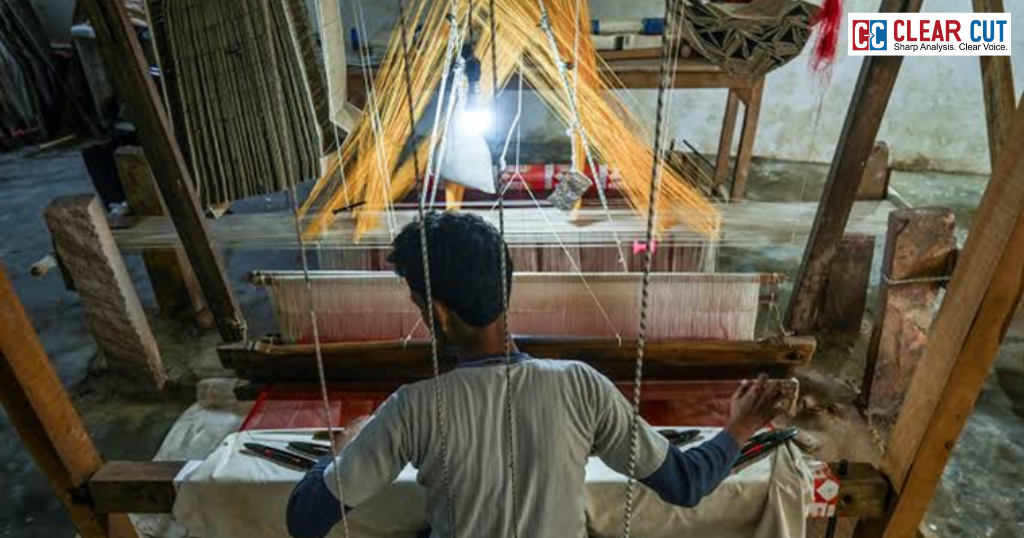
Mohammed Irfan has woven Banarasi silk for 23 years. His loom, in a narrow lane off Varanasi’s Kadipur neighbourhood, produces fabric at a rate that would satisfy any export order. What it does not produce is certainty. The price he receives per metre from the power loom cooperative that aggregates his output has not increased in three years. The yarn cost has. The electricity cost has. The middleman’s margin has not moved. Irfan’s position in a global supply chain that just recorded its best annual performance in India’s history is, paradoxically, not much better than it was when the performance was average.
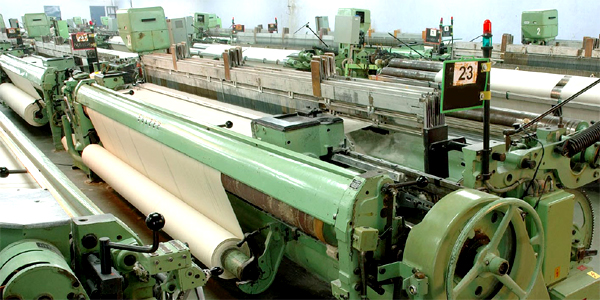
India’s textile and apparel exports, including handicrafts, rose 2.1% in FY 2025–26 to ₹3,16,334.9 crore (USD 33.01 billion), up from ₹3,09,859.3 crore in FY 2024–25, according to Ministry of Textiles data released by PIB on April 22, 2026. This performance was achieved despite a challenging global trade environment, including steep US tariffs that weighed on the sector for most of the financial year. Ready-made garments remained the largest contributor, growing 2.9% to ₹1,39,349.6 crore. Man-made textiles posted stronger gains at 3.6%. Handicrafts, excluding handmade carpets, were the fastest-growing segment, rising 6.1% to ₹15,855.1 crore.
What drove the growth
India textile exports FY26: ₹3,16,334.9 crore (USD 33.01 billion), up 2.1%. RMG: ₹1.39 lakh crore (+2.9%). Handicrafts: ₹15,855 crore (+6.1%). Growth recorded in 120+ countries. — Ministry of Textiles – PIB, April 22, 2026
The growth was geographically diversified and strategically significant. Between April 2025 and February 2026, export growth was recorded in over 120 countries compared with the same period the previous year. African markets showed particularly strong expansion: Egypt grew 38.3%, Senegal 54.4%, and Sudan a remarkable 205.6%. UAE grew 22.3% and Nigeria 21.4%. This is not merely a volume story, it reflects India’s deliberate market diversification strategy as a hedge against US tariff exposure.
India’s FTA agenda provided structural tailwinds. The India-UK CETA (Comprehensive Economic and Trade Agreement), signed in July 2025, opened preferential access to one of India’s most significant textile markets. The India-EU FTA, concluded on January 27, 2026, is potentially transformational for the sector: the EU is the world’s largest import market for clothing and textiles, and India’s current tariff disadvantage against competing exporters like Bangladesh and Vietnam will be significantly reduced when the agreement enters into force. The government also extended the ROSCTL (Rebate of State and Central Taxes and Levies) Scheme and the RoDTEP Scheme beyond March 31, 2026, maintaining export incentive continuity.
The structural gaps
India’s textile sector employs approximately 45 million people directly and 100 million in allied activities, making it the country’s largest industrial employer after agriculture. Yet the sector’s contribution to total textile and apparel global trade remains below its potential, estimated at 4.5–5% against China’s approximately 33% share. The gap is partly a productivity gap, partly an infrastructure gap, and partly a product diversification gap. India remains heavily concentrated in cotton-based products at a time when global demand is shifting toward performance fabrics, technical textiles, and sustainable fibre alternatives.
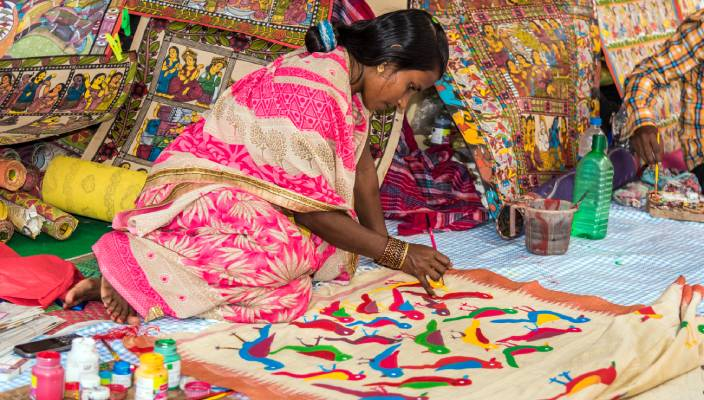
The handicrafts sector’s 6.1% growth is the most analytically interesting number in the data. It suggests that artisan-produced, design-led exports, products that compete on craftsmanship rather than price are growing faster than commodity textile categories. This is where India’s competitive advantage lies in a world where Bangladesh and Vietnam compete aggressively on basic garment price. Mohammed Irfan’s Banarasi silk is precisely this category. The policy question is whether the value capture from that export reaches him.
The policy demand of linking export performance to artisan income
The Ministry of Textiles must introduce an annual artisan and handloom worker income survey, published alongside export data, so that the relationship between export performance and producer welfare is visible and accountable. The India-EU FTA’s labour chapter must include enforceable standards on minimum wages and working conditions in the textile sector. And the handicrafts sector’s 6.1% growth must be channelled into formal weaver cooperative infrastructure that allows artisans like Irfan to access export markets directly, not only through intermediary aggregators who capture the premium.
Conclusion?
References
1. PIB / Ministry of Textiles. (2026, April 22). India’s Textile Exports Register Growth of 2.1% in FY 2025–26. pib.gov.in/PressReleasePage.aspx?PRID=2254367
2. Business Standard. (2026, April 22). India’s Textile Exports Grow 2.1% to ₹3.16 Lakh Crore in FY26 Despite US Tariffs. business-standard.com
3. Fibre2Fashion. (2026, April). India’s Textile Exports Rise 2.1% in FY26; FTAs to Boost Outlook. fibre2fashion.com
4. TV BRICS. (2026, April 24). India Textile Exports Grow 2.1% in FY2025–26 Driven by Hand-Woven Segment. tvbrics.com
5. AEPC Chairman A. Sakthivel, quoted in PTI. (2026, April 22). On RMG Growth and Global Resilience.
Clear Cut Livelihood, Research Desk
New Delhi, UPDATED: May 16, 2026 01:00 IST
Written By: Janmojaya Barik