

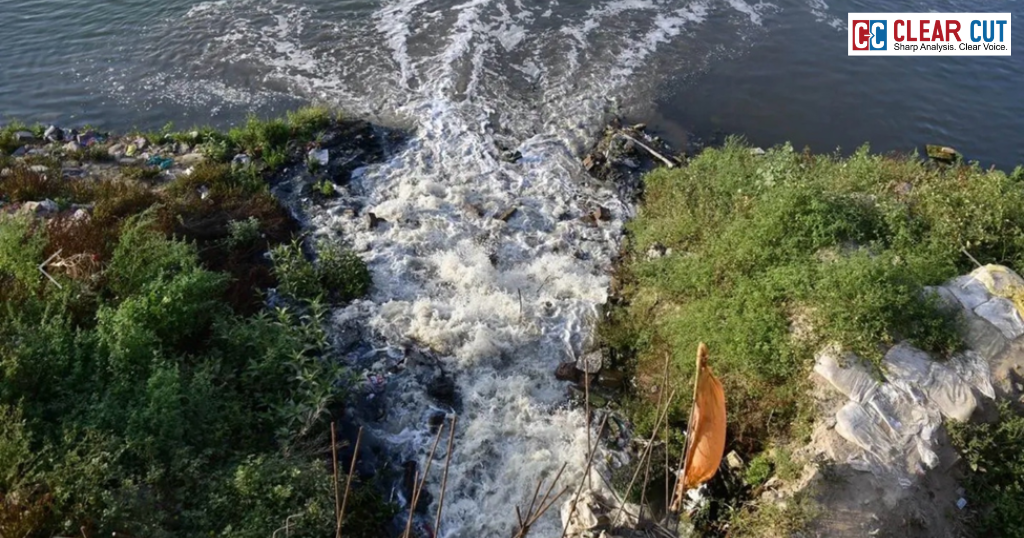
- NMCG added 538 MLD sewage treatment capacity in FY 2025–26 under the Namami Gange mission to reduce untreated sewage entering the Ganga.
- The article highlights that while infrastructure expansion is important, many STPs still face operational and maintenance challenges.
- It argues that real river cleaning depends on effective functioning and monitoring, not just installed capacity.
She has been watching the river her entire life
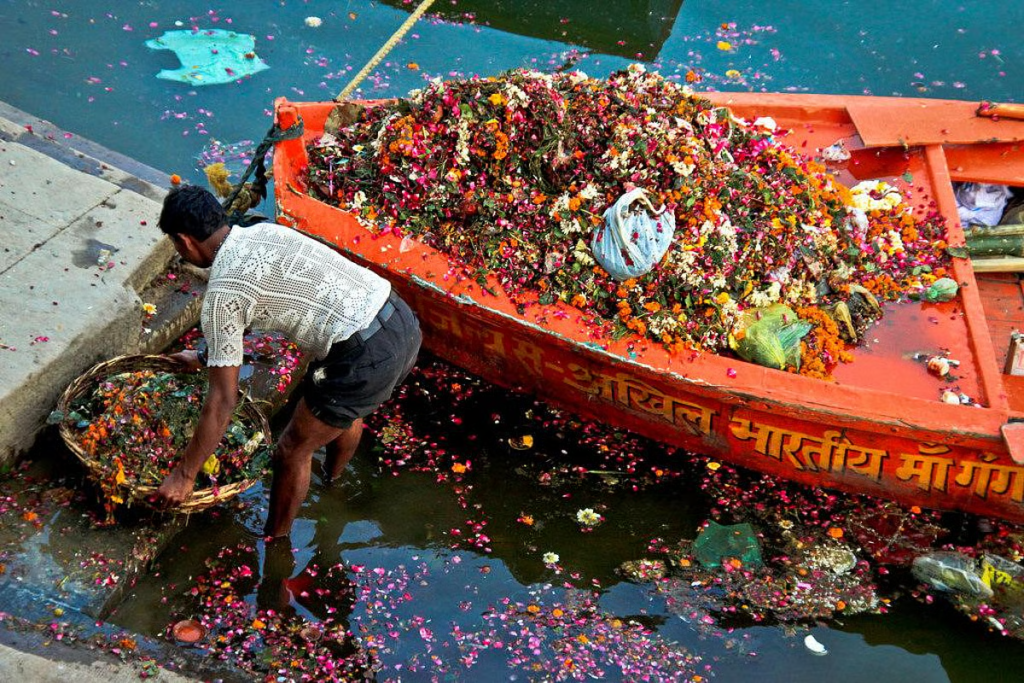
Annapurna Devi has lived on the ghats of Varanasi for sixty-three years. She has watched the river in every season and every decade. She watched it in the years when it ran dark with effluents from tanneries upstream. She watched it after Namami Gange was launched in 2015 with a budget of Rs. 20,000 crore and the promise of a clean river by a defined timeline. She watches it now, in 2026, when the National Mission for Clean Ganga has announced that 538 million Litres per Day of new Sewage Treatment Plant capacity was added in FY 2025-26. She says the water is better in some stretches. She says it is not clean. Not yet.
The NMCG’s achievement is real and must be acknowledged as such. Adding 538 MLD of STP capacity in a single financial year is a significant operational delivery, in a mission that has historically been criticised more for announced projects than for commissioned capacity. The cumulative sewage treatment infrastructure created under Namami Gange now exceeds the levels that existed before the mission’s launch by a substantial margin.
What 538 MLD means in Practice
NMCG added 538 MLD of sewage treatment capacity in FY 2025–26, the largest single-year addition under Namami Gange. India’s total STP capacity under the mission now represents excellent progress against the estimated 3,000+ MLD of untreated sewage entering the Ganga daily. – NMCG / PIB 2026
A Million Litres per Day is not an abstract unit. It is the volume of raw sewage that, if left untreated, flows directly into the river, carrying pathogens, nitrogen, phosphorus, and chemical oxygen demand loads that strip the water of dissolved oxygen and kill aquatic life. The 538 MLD added in FY 2025-26 represents a meaningful increment in India’s capacity to intercept what was previously going in untreated. Cities along the Ganga that now have functional STP coverage include expanded capacity in Uttar Pradesh, Bihar, and Uttarakhand.
The Namami Gange programme, launched in 2015 with an outlay subsequently enhanced to over Rs. 37,000 crore, takes a multi-pronged approach: sewage infrastructure, riverfront development, industrial effluent monitoring, biodiversity conservation, and public awareness. The sewage treatment pillar is the most technically measurable and the most consequential for water quality. When STPs are built and functional, Biochemical Oxygen Demand levels in river stretches drop measurably. When they are built but not functional due to power supply failures, maintenance gaps, or operator capacity deficits, they represent infrastructure investment without environmental benefit.
The gap between capacity and compliance
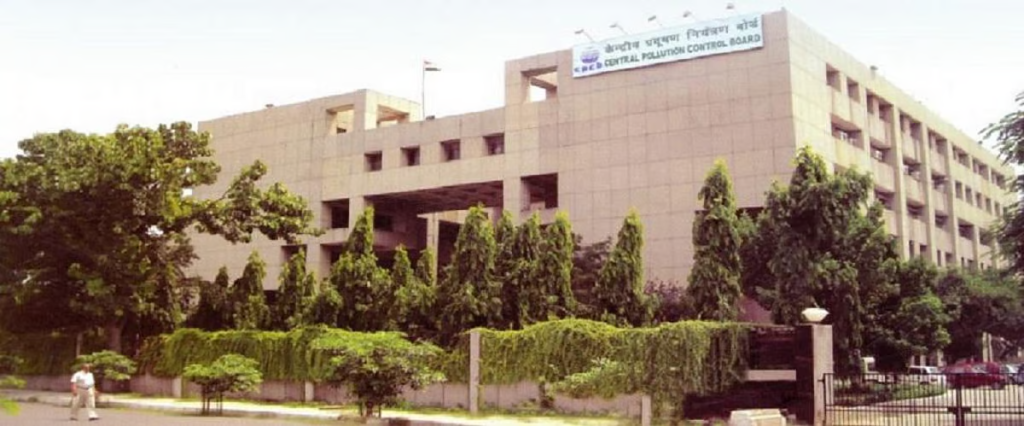
India’s STP story has a documented underperformance problem. The Central Pollution Control Board’s own assessments have found that a significant proportion of India’s installed STP capacity operates below design capacity, intermittently, or not at all. Power supply irregularities disable biological treatment processes. Sludge management systems are incomplete.Operator training is inadequate. A plant commissioned at 80 MLD that operates at 40 MLD does not contribute 80 MLD of treatment benefit. It contributes 40 or less, if the untreated overflow bypasses the system during high-flow events.
The 538 MLD achievement must therefore be accompanied by a commissioned capacity verification: how much of the new capacity is operating at or above 80% of design capacity? NMCG’s public data releases report commissioned capacity, not operational efficiency. These are not the same thing, and Annapurna Devi’s river cannot afford to conflate them.
Conclusion
Ganga has received investment at a scale unprecedented in its post-independence history. The NMCG’s 538 MLD addition is the most tangible proof yet that the plumbing is being built. What must now be built with equal urgency is the operational management system, the real-time compliance monitoring, the power supply reliability, and the community grievance mechanism that ensures the river’s health is tracked not in annual project reports but in the water itself.
Annapurna Devi says the river is better. She also says it is not clean. Both things can be true at once. The goal is not for both things to remain true in 2030. The goal is for the second one to stop being true. Make the 538 MLD actually treat. Make every MLD of capacity an MLD of consequence for the river. The Ganga has waited long enough for the plumbing to match the promise.
Clear Cut Climate, Research Desk
New Delhi, UPDATED: May 16, 2026 05:30 IST
Written By: Janmojaya Barik