
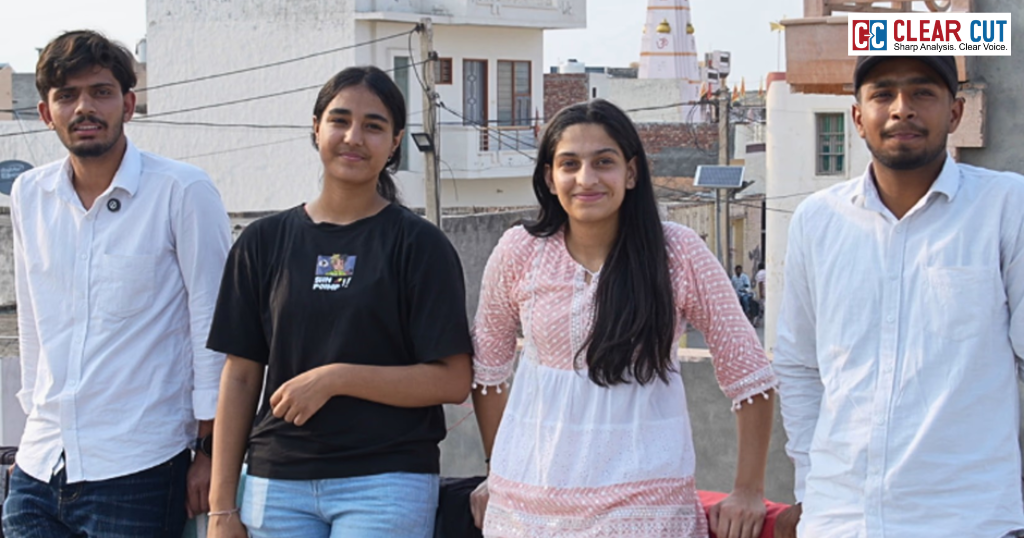
Four Class 12 students from a government school in Hisar, Haryana — Pallavi Kaswan, Neha Loura, Pritam Suthar, and Anand Bansal — are challenging the silence around menstrual pain through a student-led innovation called Her Ease, a portable menstrual comfort kit designed for discreet pain relief in schools and public spaces.
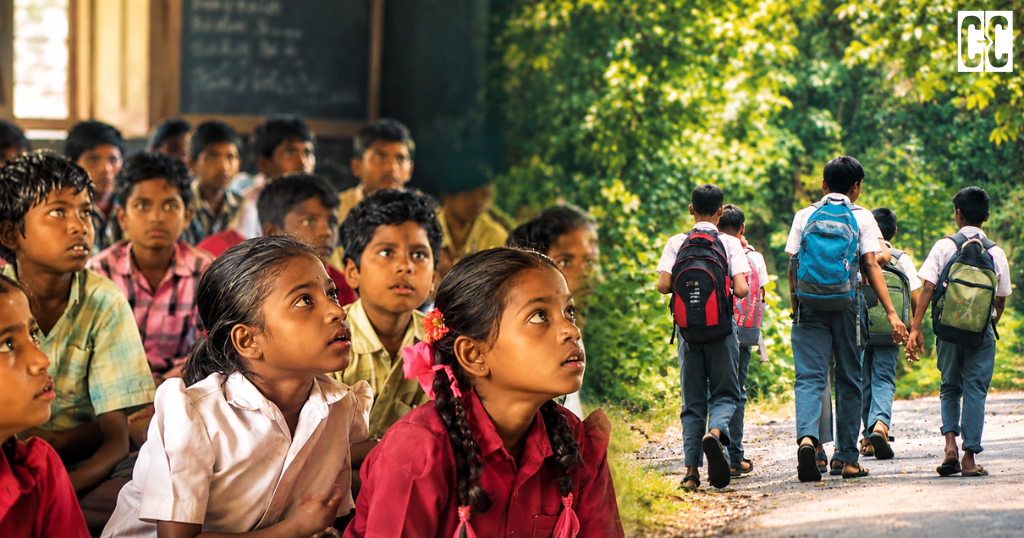
Every month, in classrooms across India, countless girls try to sit through lessons while quietly battling menstrual pain. Some miss school altogether. Others stay, pretending everything is normal because discomfort is still something many are expected to endure silently. At a government school in Hisar, Haryana, four Class 12 students decided that silence should not be the only option.
Pallavi Kaswan, Neha Loura, Pritam Suthar, and Anand Bansal — students at Aarohi Model Senior Secondary School came together to build Her Ease, a portable menstrual comfort kit designed to help girls manage cramps discreetly during school hours and while travelling. The idea did not emerge from a laboratory or a startup incubator. It began with something much simpler: watching their classmates’ struggle.
Idea Born Inside the Classroom
The team noticed a pattern among girls in their school. Some regularly missed classes during their periods, while others sat through the day visibly uncomfortable. There were whispered conversations about cramps, improvised solutions, and the constant effort to hide pain from everyone around them. What struck the students most was how normalised the discomfort had become.
The idea for Her Ease did not come from a textbook or a science exhibition brief. It came from something the students saw almost every month inside their own classrooms.
Girls missing school. Friends sitting through lectures with visible discomfort. Quiet requests to visit the washroom. Long absences during exams and practical sessions. What adults often dismiss as “normal period pain” was, for many students, interfering directly with concentration, attendance, and confidence.
Problem They Refused to Ignore
Research shows these experiences are far from isolated: A 2025 systematic review published in The Open Nursing Journal, which analysed 54 studies involving more than 41,000 schoolgirls, found that 26.5% of girls missed school during menstruation. The review identified severe menstrual pain (dysmenorrhea) as the single biggest factor linked to absenteeism. Girls experiencing severe pain showed absenteeism rates of over 42%, significantly higher than those with mild symptoms. The average duration of absence was nearly two school days per menstrual cycle.
Instead of treating it as “just part of life,” they began asking questions. They spoke to women and girls locally and conducted basic market research in Hisar. According to the students’ own survey findings conducted during product research, nearly 70% of respondents reported experiencing significant menstrual discomfort. National figures show how widespread the issue is. India is home to more than 355 million menstruating women and girls, according to estimates cited by UNICEF India and data from NFHS-5. That gap between everyday experiences and accessible solutions shaped the idea behind Her Ease.
Small Product, Big Idea
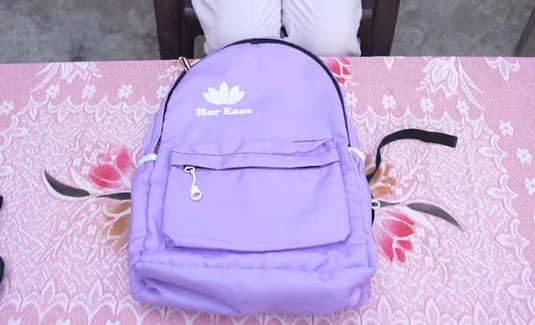
Her Ease combines a portable heating pouch, herbal pain-relief remedies, and compact storage inside a discreet carry bag that can fit easily into a school or college backpack. The product is intentionally simple. The students were not trying to create cutting-edge medical technology. They were trying to solve an everyday problem in a way that felt practical, affordable, and non-embarrassing for girls their age.
That focus on dignity became central to the design. The kit does not announce itself. It allows someone to manage pain quietly, whether they are in a classroom, on a bus, or at work. In a country where menstruation is still surrounded by hesitation and social discomfort, even that small sense of privacy matters.
The team launched the product in December 2025. Before pausing work to prepare for their board examinations, they had already sold 15 units and received around 20 pre-orders, according to information shared during presentations under the Kushal Business Challenge programme.
Kushal Business Challenge
Her Ease was developed through the Kushal Business Challenge, an entrepreneurship initiative under Haryana’s Samagra Shiksha programme. The challenge encourages government school students to identify real problems from their surroundings and build workable business ideas around them. Students receive mentoring from teachers trained in entrepreneurship facilitation and present their ideas through district- and state-level competitions.
The programme curriculum was developed in collaboration with Haryana State Council of Educational Research and Training (SCERT) and implemented with support from the Udhyam Learning Foundation, an organisation focused on entrepreneurship education for young people.
According to programme data released by Udhyam Learning Foundation, the initiative has engaged over 25,000 students across Haryana’s 22 districts. The organisation also states that it has worked with nearly 2.9 million students and trained more than 37,000 teachers across multiple Indian states through entrepreneurship-focused education programmes.
Innovative Minds the name chosen by the four students for their team, first presented Her Ease at a local-level competition in Hisar. From there, they progressed through district rounds and eventually won at the state level, securing ₹1 lakh in seed funding to continue developing the product. For the students, the funding meant more than financial support. It was validation that a problem often dismissed as “private” or “minor” deserved serious attention.
Changing Who Gets to Talk About Menstrual Health
In India, menstrual health conversations have long carried an invisible boundary line around men. Her Ease crosses that line gently, with two teenage boys helping build a solution instead of looking away from the problem. Pritam Suthar, and Anand Bansal, both became part of a venture centred on menstrual health.
Pritam and Anand chose a different response. They listened. They learned. And instead of distancing themselves from the issue, they became part of solving it. That shift matters. Because menstrual health stops being a burden carried quietly by girls alone when boys begin to see it not as an awkward subject, but as a normal part of life that deserves empathy and support.
In many ways, their involvement reflects the direction India itself is slowly moving toward. In its 2026 ruling in Dr. Jaya Thakur v. Government of India, the Supreme Court recognised menstrual health and hygiene as part of the fundamental right to life and dignity under Article 21, while also calling for menstrual awareness and sensitisation through NCERT and SCERT curricula.
What policymakers are now trying to build into classrooms, these students had already begun practising naturally: the simple idea that understanding someone else’s discomfort should never depend on gender.
Beyond Policy, Toward Everyday Comfort
India has made visible progress on menstrual hygiene awareness over the last decade through initiatives such as the Menstrual Hygiene Scheme under the National Health Mission and adolescent health programmes like the Rashtriya Kishor Swasthya Karyakram (RKSK). Access to menstrual sanitary products has improved significantly in many regions. According to NFHS-5 (2019–21), 77.3% of women aged 15–24 in India reported using hygienic methods of menstrual protection.
But access alone does not solve the daily realities of menstrual discomfort. Girls still attend classes while managing cramps. Many continue to feel hesitant about seeking help in public spaces. Pain, fatigue, and embarrassment remain largely invisible parts of school and work life. That is the space Her Ease attempts to address, not through large-scale policy, but through a practical tool created by students who had personally witnessed the problem.
Why The Story Matters
What makes this story memorable is not only the product itself, but the environment it emerged from. For years, innovation in India has often been associated with elite institutions, expensive labs, and urban startup ecosystems. Her Ease challenges that assumption. These are government school students from Hisar who identified a problem in their immediate surroundings and built a solution with the resources available to them.
Pallavi Kaswan and Neha Loura spent time speaking directly with girls and women to understand their experiences. Pritam and Anand focused on manufacturing and financial planning. Together, they approached the project not as a classroom Her Ease is a small kit. But the idea behind it is much bigger: that pain women quietly endure every day should not be dismissed as routine, invisible, or “just part of life.” Four students from Hisar understood that early and chose to do something about it.
Clear Cut Health, Education Desk
New Delhi, UPDATED: May 19, 2026 06:30 IST
Written By: Muskan Pal