
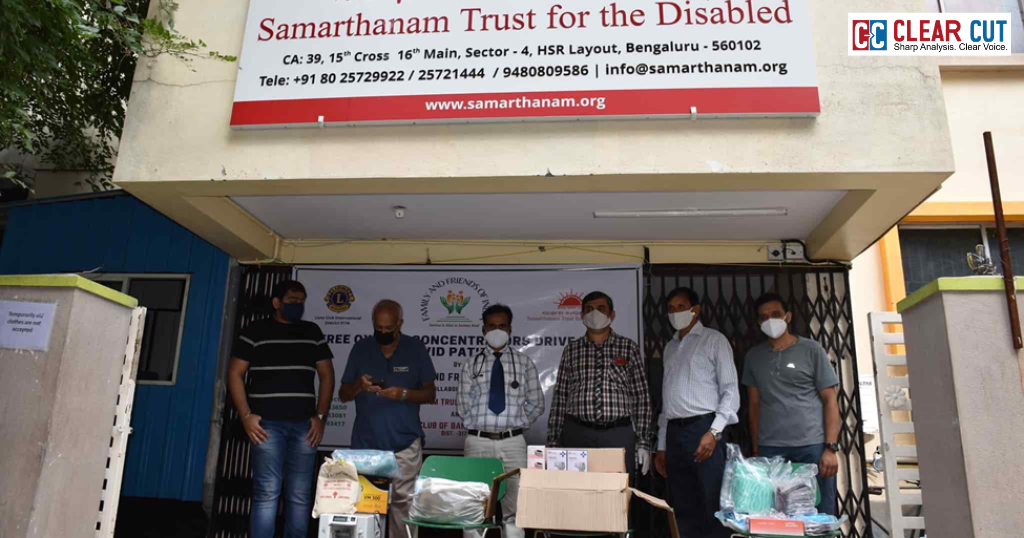
- Branch International and Samarthanam Trust held a health initiative in Bengaluru for over 220 people.
- The program focused on women’s health, disability inclusion, and breaking social taboos.
- Health screenings and awareness sessions were conducted in trusted community spaces.
- The initiative highlighted the need for more inclusive and accessible healthcare in India.
What happened in Bengaluru this week? Branch International, a digital financial services company, teamed up with Samarthanam Trust for the Disabled and ran a health initiative in the city. India CSR reported it on May 5, 2026. They reached over 220 people most of which were women or persons with disabilities and provided them with health screenings and hands-on awareness sessions. The highlight wasn’t just the numbers. The sessions dug into important topics. They set out to break social taboos and actually talk face-to-face about things that aren’t supposed to be talked about.
Samarthanam Trust, started back in 1997 right here in Bengaluru, knows this territory. They’ve built a strong track record, working where mainstream health services rarely reach, blending disability inclusion, education, and community health in a way that really meets people where they are. Then there’s Branch International’s India arm, a digital lender with a big presence in lower-income urban and peri-urban neighborhoods. They have access to the “last mile”, getting services to people who don’t show up on formal maps. So, bring these two together, a fintech CSR initiative and a disability-focused grassroots group and you get something more interesting than just the simple math of people reached. It’s a partnership model that actually makes sense for the problems at hand.
Why is “breaking taboos” always the toughest part? Community health programs in India are usually built around things that are easy to tick off on a spreadsheet. Blood pressure readings, BMI checks, blood sugar tests as those are simple to measure, easy to explain, and they do have value. But they skip right past the deeper causes of preventable illness in women in low-income areas: reproductive health issues that get hidden because talking about them is off-limits; menstrual problems no one mentions because everyone thinks they’re normal; mental health struggles that get brushed aside or misinterpreted; poor nutrition linked to food insecurity, which families can’t admit openly.
It’s easy to think you’re battling the stigma with a good pamphlet and a microphone, but that’s not how it works. It’s a trust issue, not a communication issue. When a health worker or NGO staff member rolls in for a single-day health camp and asks a group of women to talk about menstruation or gynecological health maybe in front of relatives and neighbors, people they see every day it’s no surprise the real problems stay hidden. What you get is polite nods and leaflets tucked into bags, unread. Lasting change only comes when you build the thing on repeated interactions, with facilitators drawn from the community, in physical spaces where people actually feel safe enough to open up without fear of being exposed.
Having Samarthanam involved a group with nearly thirty years of hard-earned trust in Karnataka and gives this effort a real leg up over the typical corporate-run health camp that just shows up and disappears. One more point stands out: they didn’t leave disabled people out or run the disability agenda in a separate lane. That rarely happens in Indian CSR. Usually, you get a women’s health camp on one side, and a disability-referral day on the other, with little overlap ignoring all the data showing women with disabilities face higher rates of reproductive, nutritional, and mental health challenges compared to non-disabled women and even disabled men.
India’s RPwD Act, 2016, spells out that people with disabilities have a right to healthcare. But the law’s reality on the ground is messy. Most government clinics aren’t equipped, and most staff aren’t trained to handle disabled patients well. So when a community program like this one makes the call to include disabled women alongside everyone else instead of shunting them into a different program, it fills a gap that so many others ignore.
So what happened? Two hundred and twenty people showed up in Bengaluru. A digital finance company and a disability trust took on health topics most groups shy away from. The numbers are small, but the approach matters: focus on taboos, real inclusion, and building trust with a partner people already know. That’s what makes the difference between yet another blood pressure reading and someone actually willing to seek the help they need. That’s where health CSR either starts to matter or just fades into another line on the annual report. And it’s that difference most corporate health projects don’t stick around long enough to face, because one is easy to count and the other takes years before you can really measure it.
Clear Cut Health, CSR Desk
New Delhi, UPDATED: May 14, 2026 09:00 IST
Written By: Janmojaya Barik