

- India’s welfare schemes like PMJDY, PMAY, and PM-KISAN have expanded financial inclusion, housing, and direct benefits for millions of marginalised citizens.
- Despite progress, deep gaps in employment, education, nutrition, and caste equity continue to limit real social and economic mobility.
- The article argues that true inclusion requires moving beyond access toward agency, accountability, and equal opportunity for all communities.
The First Name on the Document
Laxmi Bai is the first person in her family to have a bank account in her own name. She is 41. Before the Pradhan Mantri Jan Dhan Yojana account was opened for her in 2016 at a banking correspondent’s stall in her village in Bundelkhand, Uttar Pradesh, money had always passed through her husband’s hands, to the landlord, to the ration shop, to the government scheme. She was the beneficiary. She was never the account holder. That changed with one form and one government identity document. It is not a sufficient change. But it was a beginning.
Laxmi’s experience maps onto a national story that India’s latest policy backgrounder, published by PIB under the heading ‘Haashiye se Mukhyadhara ki Aur’ (From Margins to Mainstream). This basically attempts to chronicle, quantify, and accelerate. The document covers financial inclusion, social welfare, education access, housing, and livelihood for India’s most marginalised communities: Scheduled Castes, Scheduled Tribes, Other Backward Classes, women, persons with disabilities, senior citizens, and minorities.
The Numbers That Define the Gap and the Progress
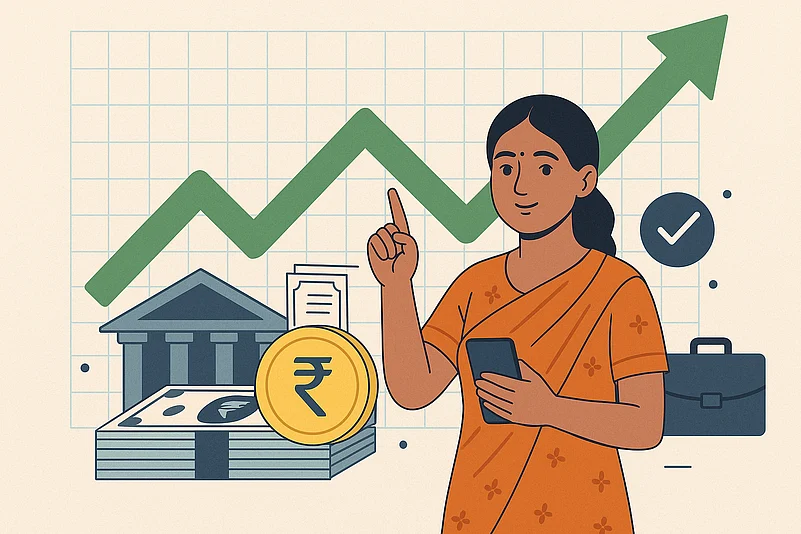
PMJDY: 530 million accounts opened as of 2025. PM Awas Yojana: 4 crore homes built in rural areas. PM-KISAN: Over ₹4.27 lakh crore disbursed to farmers in 22 instalments as of March 2026. [PIB / Ministry of Finance / Ministry of Agriculture, 2026]
India has made verifiable and substantial progress in basic access. The Pradhan Mantri Jan Dhan Yojana has opened 561 million zero-balance bank accounts, bringing the formally unbanked into the financial system as of August 2025. PM Awas Yojana has delivered Over 4 crore houses have been constructed under PMAY across rural and urban India. PM-KISAN has disbursed over ₹4.27 lakh crore directly to farmer accounts, bypassing intermediaries that historically captured welfare transfers. The Ujjwala scheme has provided 100 million LPG connections to women below the poverty line. The Jal Jeevan Mission has brought tap water to over 75% of rural households, with SC and ST habitations prioritised under the mission’s equity framework.
Education access has expanded significantly. The Eklavya Model Residential Schools programme, targeting tribal children, has grown to over 700 schools with 1.5 lakh students. Scholarships under the Post-Metric Scholarship for SC/ST/OBC students have reached millions annually. The Pradhan Mantri Anusuchit Jaati Abhyudaya Yojana (PM-AJAY) has merged earlier fragmented SC welfare schemes into an integrated development programme.
The Gaps That Progress Has Not Closed
The gap between access and outcome persists with uncomfortable consistency. A bank account that holds no balance is not financial inclusion; it is financial registration. PM Awas Yojana homes in many states are built at locations far from livelihood sources, reducing the scheme’s impact on household economic stability. Scholarship disbursements to SC and ST students have been chronically delayed in multiple states, forcing students to drop out while waiting for funds that were promised months earlier. The National Family Health Survey-5 data shows that child malnutrition is still highest among Scheduled Tribe households at 43.6% stunting in tribal communities. This is despite decades of ICDS and supplementary nutrition schemes.
Caste-based discrimination in the labour market is documented. Dalits and Adivasis remain concentrated in informal, low-wage sectors disproportionate to their population share. The unemployment rate among SC graduates is structurally higher than the national average. No comprehensive caste and occupation survey exists to quantify this gap at the labour market level, though the push for a Socio-Economic Caste Census is gaining legislative traction.
The Policy Demand: From Access to Agency
Three structural interventions would accelerate the journey from margin to mainstream. First, a 60-day scholarship disbursement guarantee for SC/ST/OBC students, with automatic late-payment penalties on state governments that miss the deadline. Missing a scholarship cycle should not cost a student their semester. Second, mandatory gender and caste disaggregation of all government welfare scheme beneficiary data, published annually at the district level and accessible to researchers and civil society without RTI applications. Third, the Aspirational Districts Programme’s success metrics must explicitly include inter-community equity measures. This enables tracking whether SC and ST households in the district are closing the development gap with other communities, not merely whether average district indicators are improving.
Inclusion Is the Productivity Argument, Not the Charity Argument
Laxmi Bai’s bank account is a foundation. Her capacity to save, invest, insure, and transact on her own terms is the productivity story India needs for its next phase of growth. McKinsey estimates that advancing gender equality in economic participation alone could add USD 770 billion to India’s GDP. The economic case for caste and community inclusion is equally compelling: a country that leaves 22% of its population (SC) and 9% (ST) at the economic margins is not merely being unjust. It is being inefficient.
India’s future vision of a Viksit Bharat is only coherent if it is a Viksit Bharat for everyone. The PIB backgrounder’s title is right: from the margins to the mainstream. But the margins are not moving toward the mainstream fast enough on their own. They need the mainstream to move toward them, with policy, with resources, and with the same urgency it applies to infrastructure, exports, and defence. Laxmi Bai is waiting. So are 300 million others.
Clear Cut Livelihood, Research Desk
New Delhi, UPDATED: May 22, 2026 05:00 IST
Written By: Tanmay J Urs