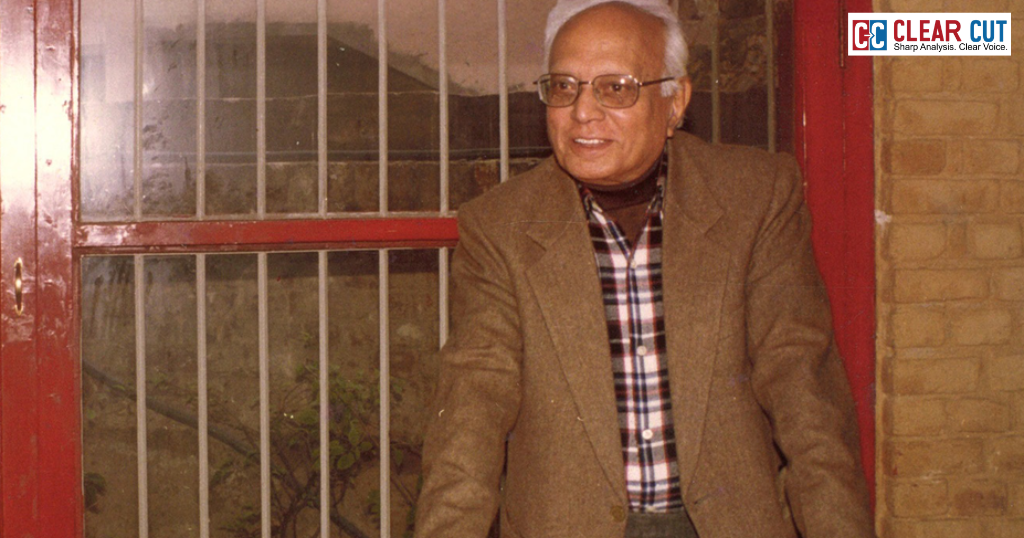
- T. S. Sankaran dedicated his life to turning India’s labour laws into real protections for bonded labourers, construction workers, and the unorganized sector.
- As an IAS officer and policy reformer, he helped shape major labour welfare systems and pushed governments to make social justice a lived reality rather than just a constitutional promise.
- His legacy continues to inspire debates around workers’ rights, inclusive growth, and accountable governance in modern India.
Every democracy has its steady hands and its showmen. Some folks make sure the government just Works; others are happy to grab the spotlight, dressing up the daily business with big words. But, once in a while, you meet a third kind someone who quietly bridges the gap between what’s written in law and what’s right. T. S. Sankaran stood out as one of those rare people.
He was born on January 3, 1926, in Taruvai, a small village in Tamil Nadu’s Tirunelveli district. His start in life was pretty humble, no early fireworks or hints at what was coming. But his sharp mind was hard to miss. Sankaran studied physics at Presidency College in Allahabad and graduated right at the top of his class. In the 1950s India, that could have led to an easy, prestigious life as a professor, or a well-paid job in the private sector. Instead, he chose the Indian Administrative Service (IAS). It wasn’t about climbing the ladder, either. He saw the IAS as a way to turn the Indian Constitution’s big promises into something people could actually feel.
To understand how much Sankaran did, you have to get the odd contradiction at the heart of the Indian government. India has no shortage of laws; its rulebook is loaded, especially when it comes to labor and welfare.
The Minimum Wages Act, 1948, Promised dignity for workers, and the Bonded Labour System (Abolition) Act, 1976, aimed to wipe out one of the worst kinds of exploitation. Yet, for millions scraping by in the unorganized sector, these powerful laws were nothing but distant ideals. The gulf between writing a law and living its reality wasn’t just an occasional slip-up; it was built into the system.
T. S. Sankaran turned policy into lived justice quietly ensuring laws reached the most invisible, redefining what true public service means.
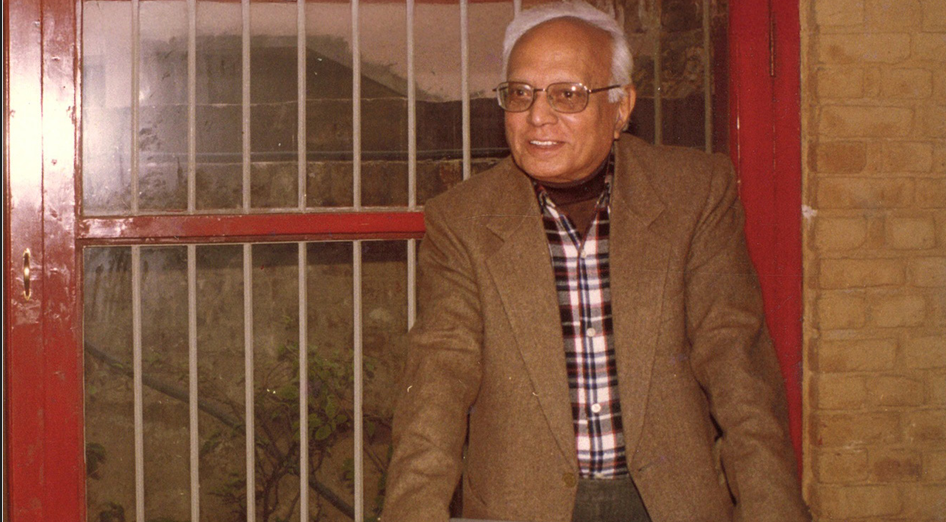
This is where Sankaran really mattered.
When he became Labour Commissioner of Tamil Nadu, he brought a rare kind of clarity and purpose. Most bureaucrats pride themselves on being “neutral” but Sankaran saw the game for what it was. Refusing to pick sides often just helped the powerful. In conf licts between laborers and factory owners, the government ignoring a problem wasn’t neutral, it was another way of letting the boss win. Sankaran believed fairness isn’t passive. You have to step in and fix what’s skewed.
He made his office proactive, not just reactive. Factory inspections? No more box-ticking—these were chances to bring the forgotten and exploited into view. For him, enforcing the minimum wage wasn’t a side task; it was a core duty. What set Sankaran apart even more: he didn’t just look after organized factory workers. He pushed for protections for the gigantic unorganized sector agricultural laborers, construction crews, contract hands and the people barely visible in official records.
He saw policy work as more than scribbling new laws; the real magic was making old promises real for actual people. His work came into sharpest focus with the fight against bonded labor. Passing the law in 1976 should have made bonded labor history. But it dragged on kept alive by local bosses, bureaucratic laziness, and the invisibility of the victims. Sankaran saw this clearly: the problem wasn’t the law’s spirit, but what happened on the ground.
By championing this report, Sankaran didn’t just document poverty; he forced the state to recognize ‘unorganized’ work as a legitimate pillar of the Indian economy, setting the stage for every social security law that followed. Sankaran understood something vital: good policy isn’t a one-and-done thing. It needs patience, sequencing, and a real awareness of the messy realities it’s supposed to help.
Another most enduring victory was his role in the forty-year struggle for the rights of construction workers—a group he often called the most exploited and invisible in the urban landscape. In the mid-1980s, when the movement for a national law began to gain momentum, Sankaran moved beyond the traditional role of a retired bureaucrat to become a core pillar of the National Campaign Committee for Central Legislation on Construction Labour (NCC-CL). Alongside figures like Justice V.R. Krishna Iyer, he lent his immense technical knowledge of labor law to draft a ‘model bill’ that centered on the workers themselves.
This draft introduced the revolutionary concept of a Tripartite Board and a social security ‘cess’ collected from builders—a mechanism that ensures millions of workers today have access to healthcare and education. By the time the central laws were finally enacted in 1996, they bore the deep thumbprint of Sankaran’s belief that a policy is only as good as the protection it offers to the person at the very bottom of the ladder.
When he became Chairman of SIPCOT, his skill at navigating the dangerous waters of industrial policy showed again. The late 20th century was all about pushing industry as India’s engine of growth. In this narrative, labor laws looked like obstacles. Sankaran pushed back. To him, industry and social justice were partners, not enemies.
He made sure growth didn’t mean trampling over workers’ rights, or careless land grabs. The term “inclusive growth” became popular decades later, but Sankaran quietly lived it in his decisions. He proved economic development didn’t have to abandon what really matters, that’s the government’s conscience.
After retiring, Sankaran didn’t fade into the background or take up cushy consulting gigs, like so many peers. He went the other way toward civil society. Alongside people like V. R. Krishna Iyer and Rajni Kothari, he co-founded Lok Raj Sangathan.
Their idea was both simple and radical: democracy must be more than voters turning up every five years. Sure, elections are vital but that alone doesn’t guarantee power reaches the poor. Sankaran believed ordinary people need ways to keep holding the government to account, all the time.
This spirit showed up in the Committee for People’s Empowerment in 1993. Sankaran wanted more than fancy reports; he looked for mechanisms to let everyday folks shape decisions about their lives. He was allergic to hollow talk. He wanted real tools and practical, grounded reforms.
But to only talk about his institutions and reforms misses something just as important—who he was as a person. People rarely called him by official titles. They called him “Mama” a Tamil word for “uncle,” filled with warmth and respect. This wasn’t some forced informality; it was just how he lived, doing his job with an easy humility.
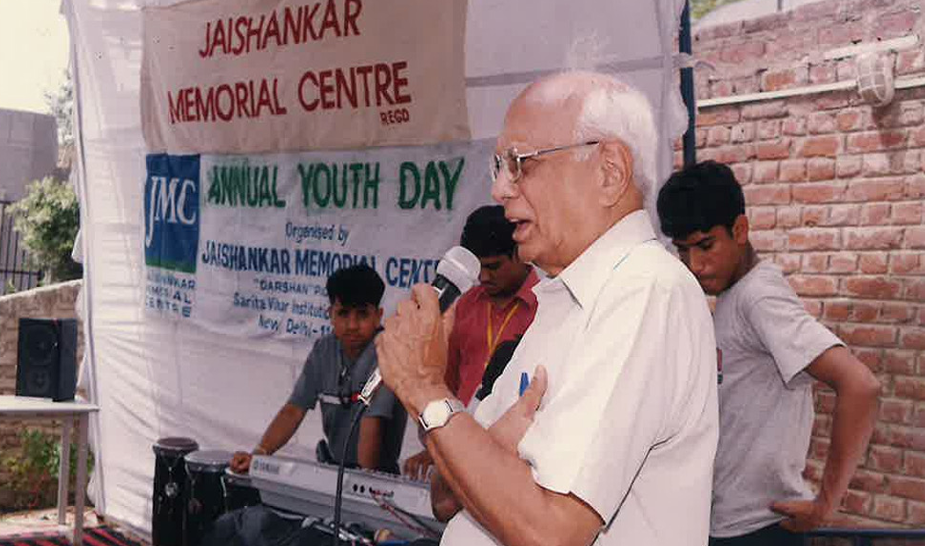
“The worker’s rights were at the core of our collaborative works of over two decades. One of the main issues of Shri. T. S. Sankaran, immense concerns, despite him being a bureaucrat, was to ensure workplace rights and benefits accruable under the Central and State legislations as also India’s ratified the ILO Conventions. His deep understanding of governments’ labour policies and their implications on the workers’ welfare frequently brought him face to face with the organisations of workers and employers, which they greatly appreciated.” – Dr. Pravin Sinha, Ph.D.; DPESS (NOTTOM); CHR & Dip. ADR (Seattle)]; Secretary General – National Labour Law Association [NLLA] & President – India Chapter of the ISLSS
His simplicity wasn’t for show. He avoided the privileges that come with power, preferring to stick to the values he worked for. He kept reading law, economics, history, literature and when you spoke with him, it was a real conversation, not a lecture. These days, public life seems built for spectacle. Sankaran’s calm and quiet style can feel out of sync. Yet, that’s exactly why his example matters. The biggest changes happen out of the spotlight, in the background work of making systems fairer. That’s rarely glamorous, and you won’t find it in headline announcements.
Sankaran’s most enduring legacy within the Ministry of Labour was his role as a silent architect of the 1988 Shram Shakti Report. While the commission was famously led by Ela Bhatt, it was Sankaran’s administrative rigour and deep empathy that helped bridge the gap between grassroots activism and state policy. He helped peel back the curtain on the lives of millions of self-employed women—vendors, rag-pickers, and home-based weavers—who had been historically invisible to the law.
At both state and national levels, including as Additional Secretary in the Ministry of Labour, Sankaran helped set up the nuts and bolts, so abolition meant something. He made identification a methodical process, not just good luck. Districts had to hold surveys, give out release certificates, keep records the “moral” task became a part of daily government routine. And crucially, he insisted that freeing people wasn’t enough. They needed land, jobs, security otherwise, they’d just slip back into bondage.
If anything, his way of working is even more urgent now. Indian labor has changed a lot. Gig work is everywhere, old protections are shaky, and merging labor laws into codes brings new doubts about real enforcement. The unorganized sector is still the vast majority, still short on support.
Sankaran’s key lesson policy matters only if you make it work matters more than ever. We need to build teams and cultures that don’t just write better laws but actually bring them to life. Pretending to be “neutral” in a system rigged against the weak? That’s not fair, it’s just surrender.
Sankaran never chased honors, and honestly, he didn’t get many. On his centenary in January 2026, there weren’t big parades or TV specials. Just simple gatherings with people who had worked with him or carried forward his ideas. In a strange way, that felt right. He always put substance above show, and quiet gratitude above noisy praise.
Still, maybe we should talk more about what he did. Not to build him up into some untouchable saint, but to remind ourselves what real public service looks like. Sankaran shows us that a good official isn’t measured by the titles he collects, but by the real changes people feel because he was there.
In the end, he was a translator when laws turned into daily life, rights into something you could reach, big promises made real. He knew the distance between paper policy and true justice isn’t set in stone. It changes, based on who steps up and what they do with their power. To bridge that gap, you need more than skill—you need conviction. Sankaran brought both, every day.
Remembering T. S. Sankaran asks us to rethink what we expect from those who serve. It’s not enough for government to just work; it has to work for those most easily lost in the shuffle. Laws aren’t enough, they must leave the page and enter into the messy, daily reality.
This was the quiet magic Sankaran practiced all his life: turning policy from words into something people feel. That’s an alchemy we still need, badly. If we took his lesson to heart, maybe our democracy would finally live up to its promises.
Clear Cut Gender, Education Desk
New Delhi, UPDATED: May 24, 2026 06:00 IST
Written By: Tanmay J Urs