
- India has made progress in reducing child stunting, with NFHS-6 showing the rate falling to 29.3%, but wasting, underweight, and anaemia remain major public health concerns across the country.
- Significant regional disparities persist, while the growing double burden of undernutrition and obesity highlights the need for stronger, data-driven, and decentralized nutrition policies to achieve national and SDG targets.
Malnutrition remains one of the most important and persistent public health problems in India. It is estimated that undernutrition directly or indirectly contributed to more than 68% of under five deaths in the country. Its long-term effects of cognition impairment, lesser educational outcomes, lesser productivity in life and intergenerational poverty are a structural drag on India’s human capital and economic potential.
At the same time, the country has a chronic undernutrition burden (e.g. overweight/obesity) as well as a chronic malnutrition burden (e.g. endemic undernutrition) among its urbanized people. Ministry of Health and Family Welfare conducts the National Family Health Survey (NFHS) which contains the most comprehensive nationally representative nutrition indicator data for India. The three most recent rounds NFHS-4 (2015–16), NFHS-5 (2019–21) and the recently released NFHS-6 (2023–24) which offers a longitudinal perspective on the nutrition trajectory of children and women and help evaluate if the massive nutrition programme investments are delivering commensurate nutrition benefits.
1. NFHS Trend Analysis: What the Data Reveal
1.1 Stunting: Meaningful Progress, But Still Above Crisis Threshold
The surveys saw the greatest progress on stunting which occurs when a child is much shorter than the WHO median height for their age as a result of chronic malnutrition. Stunting went from 38.4% in NFHS-4 to 35.5% in NFHS-5, to 29.3% in NFHS-6; a 9.1 percentage point fall in about 8 years. It averages a 1.1 percentage point fall per year; that falls from NFHS-5 to NFHS-6 averaged a steeper 1.55 ppts/year compared to 0.58 ppts/year between NFHS-4 and NFHS-5. However, this still doesn’t amount to the target rate of falling by 2.0 ppts/year in order to achieve the SDG target by 2030.
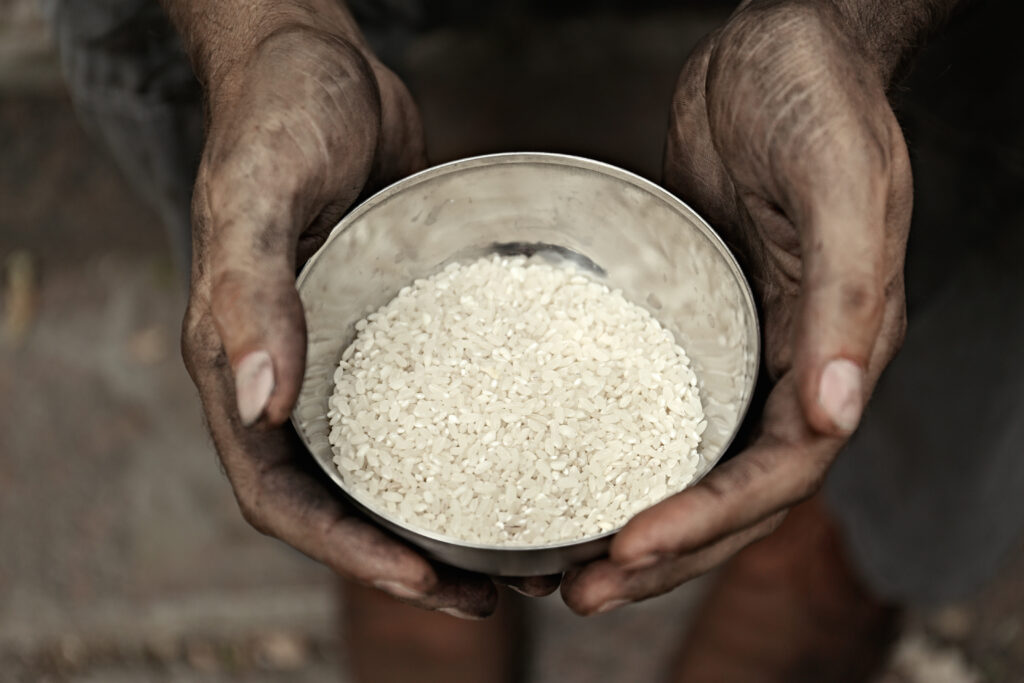
Even though there has been some progress; almost one in three Indian children suffer from chronic malnutrition at 29.3%, which is much too high. There are vast regional differences too: Uttar Pradesh, Jharkhand, Bihar, and Meghalaya have much higher proportions than Kerala, Goa and Tamil Nadu which are closest to internationally recognised standards. States such as Assam and Meghalaya showed a similarly high level in the previous two survey rounds as well indicating areas in the East of India to still lag far behind international standards. National averages may obscure needs for targeting programs at where it is most required.
1.2 Wasting: A Decade of Near-Stagnation
Wasting-height for weight below two standard deviations for acute malnutrition, has been the most worrying aspect of India’s malnutrition problem: wasting has barely moved, with the numbers falling from 21.0% in NFHS-4 to 19.3% in NFHS-5, to 19.0% in NFHS-6; only a meager drop of 2 percentage points in eight years of intensive work. Severe wasting, which is most deadly for small children, dropped from 7.7% to 5.2% from NFHS-5 to NFHS-6, though this only goes to show how high total rates of wasting remain.
Crucially the fall in stunting in the period NFHS-5 to NFHS-6 has completely masked increases in wasting levels in certain states such as Madhya Pradesh where the percentage jumped from 18.9% to 23.8%. The steep increase in wasting in MP can be attributed to many factors, including disruption to nutrition programs by the pandemic, reduced access to food, and the shutdown of angawadi centers, indicating that long-term issues became amplified when the pandemic hit just as the acute nutrition problem needed addressing even more acutely than the more chronic problem of stunting.
1.3 Underweight: Slow but Consistent Improvement
Undernourishment-weight for age below two standard deviations, also declined from 35.8% in NFHS-4, to 32.1% in NFHS-5, to 31.8% in NFHS-6, though at a slower rate over time has just 0.3 percentage point fall in the last period compared to 3.7 ppts in the survey before that. At this rate, underweight falls would not reach POSHAN Abhiyaan’s goal of < 25%.
1.4 Anaemia and the Micronutrient Dimension
Data on nutritional status goes beyond body size and weight: in NFHS-5, over 57% of women aged 15 to 49 years and nearly 67% of children aged 6 to 59 months were anaemic according to NFHS-5; these proportions put India in a protracted public health crisis based on WHO criteria. Though programs such as Anemia Mukt Bharat, and iron-folic acid supplementation have improved in scale; underlying causes relating to poor absorption and issues with compliance and infections continue to impede progress. While waiting for the data from NFHS-6 on anemia trends to come in to show the extent of improvements in the second round of the POSHAN 2.0 scheme, the ongoing rates suggest India has far to go.
1.5 The Emerging Double Burden
NFHS also shows a rise in the proportion of women who are overweight and obese, and based on NFHS-5 data, linear regression shows a relationship between literacy and increased risk of obesity; meaning India’s nutritional transition has taken a sharp turn towards faster acceleration in line with social-economic status, a complex nutritional transition with programs not adequately addressing the double burden.
2. Why does malnutrition persist: structural and systemic challenges
The continued persistence of malnutrition in India despite over four decades of the largest early childhood programme in the world-and the latter POSHAN Abhiyaan’s ambitious national mission architecture-requires a serious account of structural failure.
Conclusion
For the future, India’s nutritional policies need to move from being generic to becoming data-driven, decentralized and lifecycle based. Higher burden areas will require additional efforts for enhanced implementation, timely monitoring, greater involvement of communities, higher quality of Anganwadi services and better convergence of various health, nutrition, water, sanitation, education and social protection programs. Equally critical is making nutrition actions more resilient in the face of shocks such as pandemics, climate change and food price volatility.
Ultimately, efforts to combat malnutrition are investments in the future of India. Well-nourished children are those who go to school, grow into productive adults, and help India achieve its goal of becoming a developed country. Fighting malnutrition is not just a health concern – it is a necessary condition for the country’s future economic and social development. India’s task now is not finding solutions to the problem but implementing them.
Clear Cut Health Desk
New Delhi, UPDATED: July 10, 2026 17:00 IST
Written By: Clear Cut Editorial Team