
- India’s dust pollution crisis, mainly caused by road dust and construction activity, has become a major contributor to PM10 air pollution in cities like Delhi, Mumbai, and Bengaluru.
- The article highlights how constant exposure to dust particles is damaging public health, increasing respiratory diseases, silicosis cases, and long-term health risks for workers and children.
- It argues that while policies like NCAP exist, weak enforcement and temporary solutions have failed to address the root causes of dust pollution in India.
However, India’s dialogue on air pollution is far more developed than a decade ago. Air quality monitors display real-time PM2.5 figures on public websites. Cities release their respective plans on clean air action. People examine the pollution index before going out. However, amidst all this progress, there has been one particular aspect of the ongoing environmental issue that has been receiving much less attention than it should have been – dust.
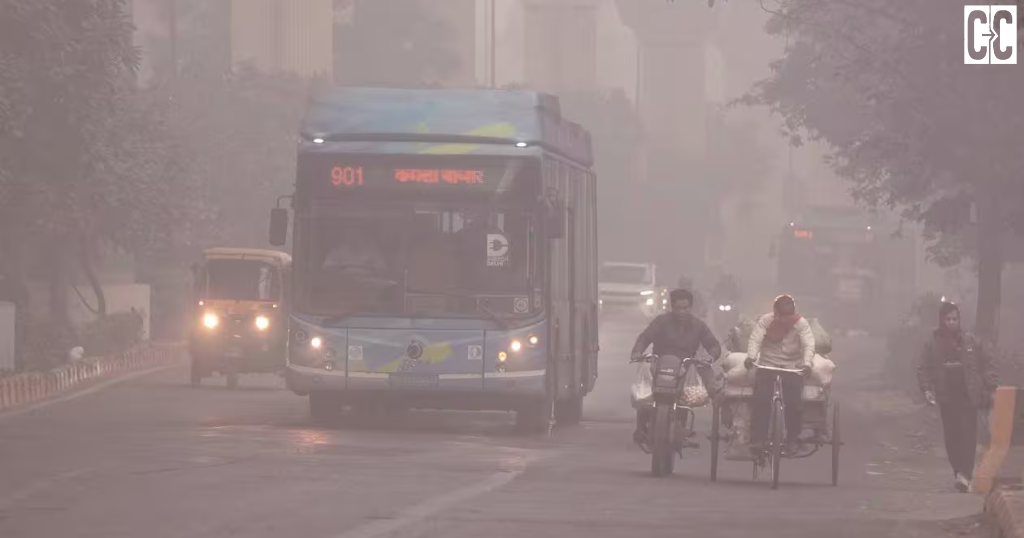
It’s not the smog of winter time, nor is it the increase in pollution levels due to firecrackers in Diwali or stubble burning in Punjab. It is the steady, almost constant accumulation of dust that finds its way to the ground, hangs in the streets and gets into the lungs of millions of citizens on an everyday basis. Dust particles are no bigger than ten micrometers in size and originate not from any combustion processes, but purely from the stirring of the earth’s surface through construction, unpaved roads and vehicles.
The explanation for such prevalence and neglect of the problem comes from analyzing the source, impact and the existing regulation.
Where the Dust Comes From
The biggest source of PM10 in Indian cities is resuspended road dust. In Indian cities, almost all arterial roads have unpaved shoulders, which is essentially barren soil beside the tarmac. As cars pass, they pull soil particles from the shoulder and drop them on the tarmac, where tyres turn them into fine dust. With each car that passes afterwards, this dust is resuspended in the air.
In source apportionment tests carried out in 17 non-attainment cities in India, it was found that the contribution of road dust to PM10 levels in urban monitoring sites ranged from 20 to 52 percent [Universal Group of Institutions, 2025 citing IIT-Delhi silt load studies]. The situation in Delhi is worse. According to the IIT Kanpur Comprehensive Air Pollution study, the share of road dust in the PM10 load of Delhi could be up to 56 percent an insight that was known to policy-makers as early as 2016 and not addressed appropriately [IIT Kanpur, 2016].
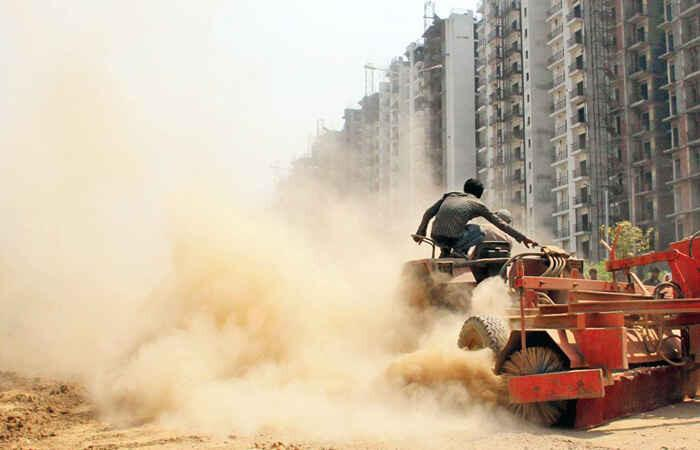
Construction also provides a second important dimension. The infrastructure development programme of India, which includes the development of metros, broadening of highways and redevelopment of urban housing infrastructure, is among the most ambitious in the world. At the same time, this development programme is also among the biggest sources of fine particles in the air in India. According to the research carried out by NEERI in Mumbai, construction dust and dust particles from the soil dragged along with construction vehicles onto the roads account for about 70 percent of the total load of PM10 pollution in Mumbai [NEERI, Mumbai Air Quality Assessment]. In Bengaluru, CSTEP has listed soil dust from the unpaved road verges as a major source of PM10 [CSTEP, Emission Inventory for Bengaluru].
In addition to these local sources, PM10 pollution in some regions also results from regional dust events. For example, in April 2026 in Delhi, the PM10 concentration exceeded the annual guidelines of the World Health Organisation by 800 µg/m³ 58 times, due to dust storms and road dust re-suspension during the windy dry season [IQAir, April 2026].
The Health Burden
Health impacts caused by the long-term presence of PM10 in the environment have been extensively researched, although such studies get comparatively less media coverage compared to the impact of finer particulate matter. Although the PM10 does not enter the bloodstream as easily as the PM2.5 does, coarse dust made up of silica, pulverised cement, tyre rubber, and heavy metals in the Indian cities causes a lot of mechanical damage to the lungs.
An academic study conducted in Agra and published in Scientific Reports in 2025 found that particulate pollution was responsible for 78.4 percent of the prevalence of chronic bronchitis, 79.2 percent of respiratory diseases, 65.65 percent of lung cancer and 55.38 percent of ischemic heart disease among participants [Kushwaha, Saxena & Kumar, Scientific Reports, 2025]. The statistics are just an example of how much worse the problem is at the national level.
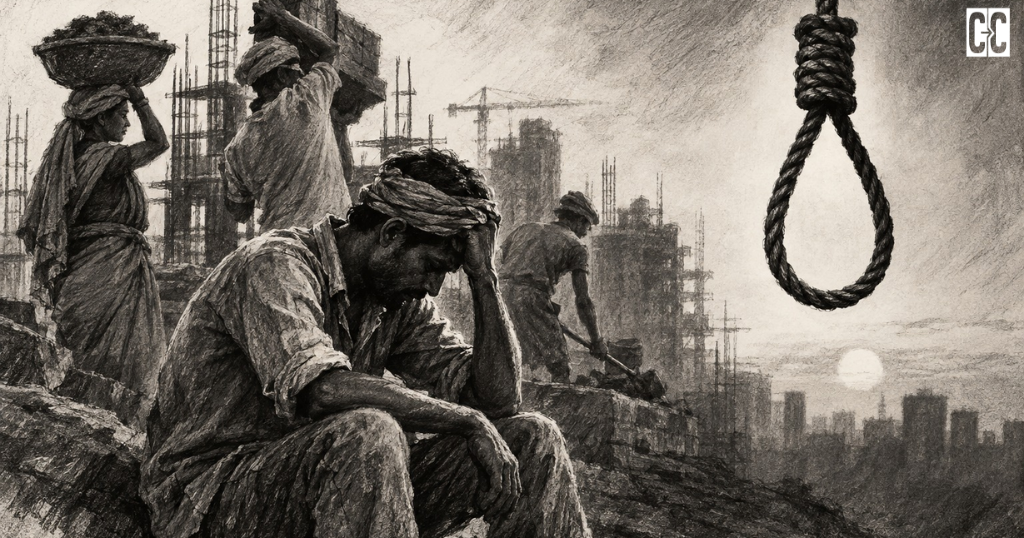
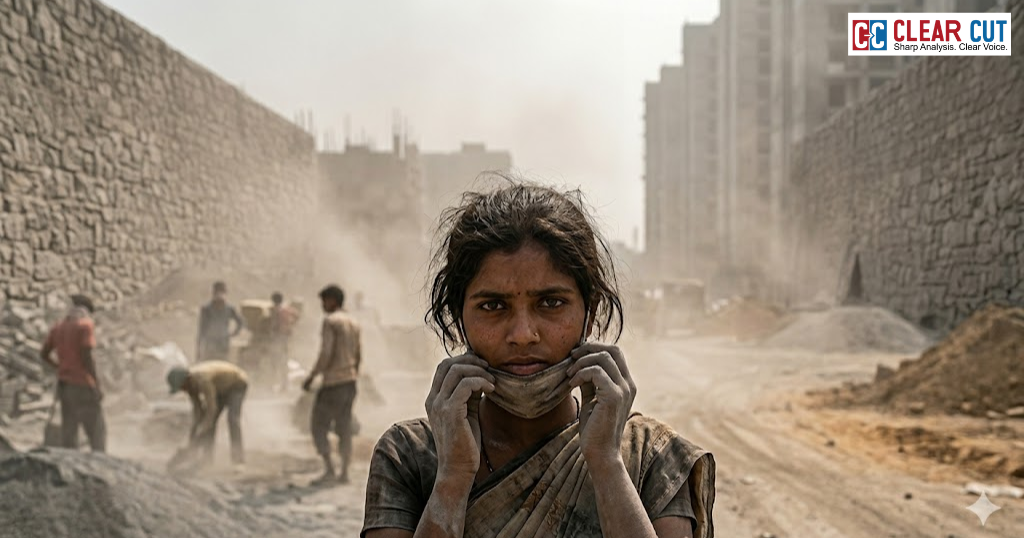
For those engaged in construction work, mining, and stone processing, the danger is even greater. Silicosis is a chronic and irreversible ailment marked by fibrosis of the lungs due to inhalation of crystalline silica dust and is expected to affect about 52 million workers in India in 2025, especially those involved in mining, quarries, stone-cutting, and construction sectors [The Logical Indian, 2025]. In Rajasthan, a state in India where a lot of work occurs in sandstone quarries, the prevalence rate of silicosis among stone mine workers is between 38% and 79%, based on the particular type of occupation performed [Journal of Occupational Medicine and Toxicology, 2023]. According to estimates, 230 million individuals are at risk of silica dust exposure worldwide, out of which 34 million reside in China and India [Discover Public Health, 2025].
According to [Journal of Occupational Medicine and Toxicology, 2023], the permitted exposure limit for crystalline silica in Indian mines is 0.15 mg/m³ three times higher than the American limit set by OSHA, which is 0.05 mg/m³, and six times higher than the acceptable concentration threshold recommended by the ACGIH.
The exposure risks for children are completely different. Due to the fact that PM10 particles are heavy, they accumulate on the lower level of height just at the altitude that corresponds to children in strollers or those going to school. According to the research on respiratory deposition in Delhi conducted over five years and presented in Scientific Reports in 2025, the peak PM10 level was observed at 826.7 µg/m³ and the highest dose of respiratory deposition was reported in evening commuter hours, which are the times when children are active outside [Scientific Reports, 2025].
The total impact of air pollution in India can be assessed by its financial damage and health effects, both combined. According to a study carried out in Lancet, there were around 1.67 million mortalities related to air pollution in India in 2019; the economic output damage caused by air pollution amounted to $28.8 billion. According to another Lancet Planetary Health study conducted in 2024, about 7.2 percent of mortalities daily occurred in the most polluted cities of India due to PM2.5 concentrations above WHO recommendations [Lancet Planetary Health, 2024].
What Policy Has and Has Not Achieved
The core strategy used by India against dust pollution takes place in the framework of the National Clean Air Programme (NCAP) of the Ministry of Environment, Forest and Climate Change, adopted in January 2019. It includes 131 non-attainment cities in 24 states and union territories, with a revised goal of achieving a 40 percent reduction in particulate matter concentration by 2026 from the 2017 baseline [Ministry of Environment, Forest and Climate Change; PIB India].
No notable progress has been made. A study conducted by the Centre for Science and Environment revealed that 64 percent of all funds utilized in the NCAP and 15th Finance Commission projects have been spent on mitigating road dust using mainly the purchase of mechanical road sweepers and water tankers [CSE, NCAP Agenda for Reform]. According to an IDR Online report (2026), most pollution reductions achieved between 2014 and 2021 have occurred due to favorable weather and not program activities, and only a few of the cities targeted are likely to meet the goals set by 2026.
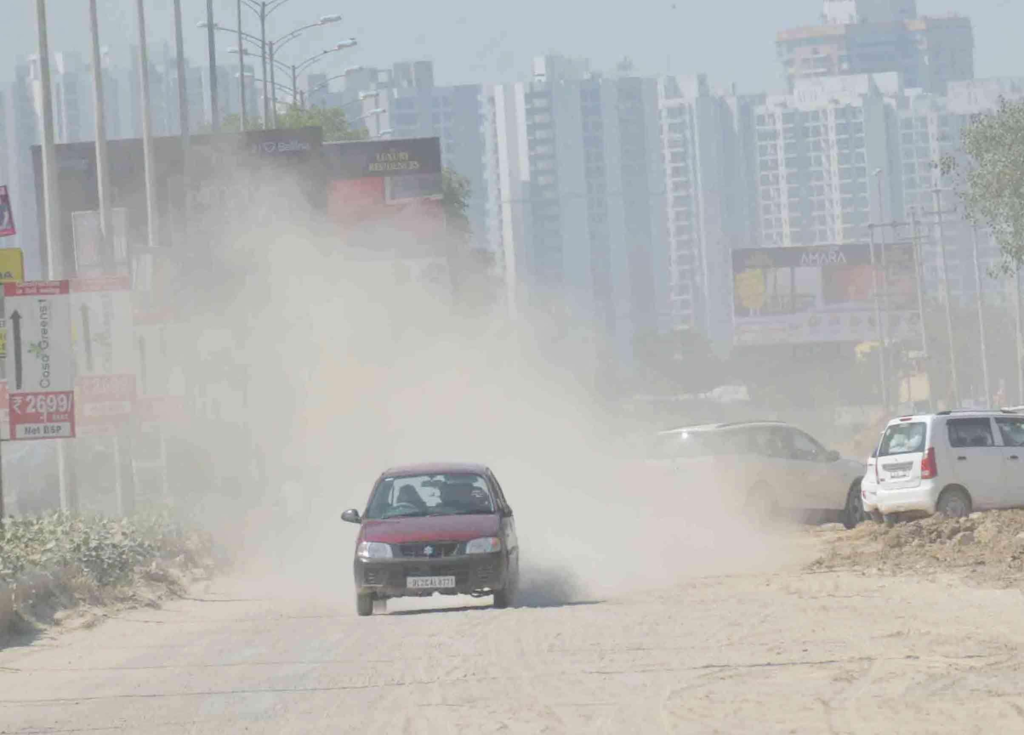
However, mechanical sweepers, the core of the dust management budget today, simply shifts these particles from the middle of the road to its dusty shoulders, where they become dry and get resuspended very soon due to the passage of vehicles. The action only removes the effect but does nothing about its cause, which is, again, the dusty road surface that requires entirely different infrastructure solutions.
The Way Forward
Strategies that will lead to long-term reduction of the PM10 have already been documented in the literature as well as in India’s regulations. What has always been lacking is their enforcement.
Sealing or greening the shoulders of roads by paving them will eliminate the main cause of road dust re-suspension. This strategy is recommended by the NCAP itself, but its implementation on a countrywide scale has not been enforced among the cities not meeting their emission standards [PIB India, NCAP Guidelines, 2023].
Implementation of the dust control measures that include mandatory watering, use of wind barriers, covered storage of materials, washing of the tyres of construction site vehicles leaving the site will help decrease PM10 emissions. NCAP recommends deployment of antismog guns based on the size of the construction site, but there is not enough manpower to enforce this directive.
When it comes to urban greening and when done correctly with proper species selection, it will help in the supplementary capture of particulate matter. In fact, studies regarding the air pollution tolerance index of Indian tree species have proven that the leaves with a rough surface such as Terminalia arjuna and Ficus benghalensis capture more PM10 as opposed to the smooth leaves [ResearchGate, 2012].
In terms of occupational health problems, ensuring that the allowable exposure level for crystalline silica matches those of other countries, health protection of workers in the informal sector, and scaling up early detection campaigns of silicosis using artificial intelligence for chest x-rays will take care of the human element faced mainly by construction and mining workers [The Logical Indian, 2025].
Conclusion
The problem of dust pollution cannot be seen as marginal to the issue of air pollution in India. Far from it, it plays a central role. It works all year round; it arises from sources that are easily identifiable; and the public health risks it poses, especially to people living in urban settings, to children, and especially to workers in the construction industry, have been amply demonstrated.
Here, the problem is not so much one of lacking knowledge about it. The problem lies in how it has been addressed by policy. The current regime has focused a disproportionate amount of efforts in treating the problem after the fact instead of addressing the causes of dust pollution. Fixing this imbalance through infrastructure, better enforcement of laws, and regulation as strict as those regulating smoke pollution becomes essential.
Clear Cut Climate, Health Desk
New Delhi, UPDATED: May 25, 2026 05:30 IST
Written By: Anaina Tomy